
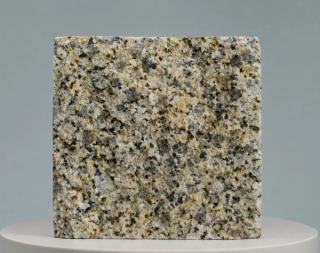
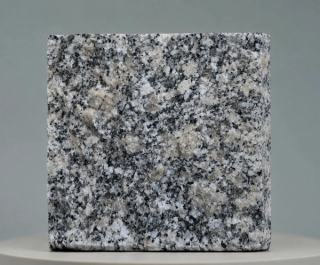
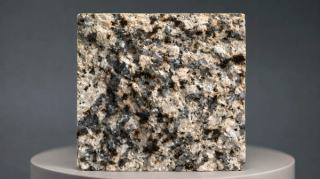
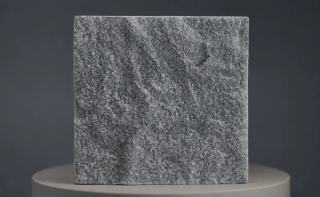
Crystal density is the key indicator determining the service life of Horseshoe Stone, and there is a vast disparity between standard, mass-produced goods and high-quality products in this regard. Low-priced, standard Horseshoe Stone on the market is often made from low-grade granite with a porous crystal structure, characterised by numerous internal pores and weak intergranular bonding; High-quality horse-hoof stone, on the other hand, utilises high-density, fine-grained granite with a tightly packed crystal arrangement and a dense, solid structure; the physical strength and weather resistance of the two are worlds apart.
The primary flaw of ordinary horse-hoof stone with a loose crystal structure is its susceptibility to weathering. When exposed to the outdoors for extended periods, friction from wind and sand, coupled with rainwater erosion, continuously wears away the stone’s surface, causing loose crystal particles to gradually flake off. Initially, the surface merely loses its lustre and becomes rough; after 1–2 years of use, the surface begins to sand and powder off over large areas, and one can feel the loose stone powder simply by rubbing it with one’s hand. In regions with high rainfall and strong winds, the rate of weathering accelerates further, and what was once a neat and uniform paved surface becomes mottled and unsightly.
Differences in density can also be readily discerned by physical weight. For stones of the same dimensions, ordinary, porous horse-hoof stone feels lighter and lacks a sense of heft when held; high-density, high-quality stone, on the other hand, is substantial, with products of the same specification weighing 15% or more than their lower-quality counterparts. Ordinary stone with large pores also has a correspondingly high water absorption rate. Rainwater accumulates in large quantities within these internal pores, not only accelerating weathering but also inducing cracking in freeze-thaw conditions, creating a vicious cycle of ‘water absorption – freeze cracking – weathering’.
In engineering applications, the use of porous stone is absolutely not recommended for high-traffic squares or courtyards that remain exposed to the elements year-round. In high-latitude regions of Europe, where winters are long and freeze-thaw cycles are frequent, low-density standard cobblestones often do not last beyond two heating seasons. In contrast, high-density, high-quality cobblestones possess a stable crystalline structure and strong resistance to erosion and weathering; under normal conditions, they will not show significant signs of weathering for over ten years.
During procurement and inspection, in addition to weighing and comparing samples, one should also examine the cross-section of the stone: ordinary material has a rough cross-section with obvious pores; high-quality material has a fine, smooth cross-section with almost no visible pores. Do not be lured solely by low prices; crystal density directly determines the stone’s service life. Outdoor paving is a long-term project; choosing high-density stone can significantly reduce the frequency of future maintenance, offering far better overall value for money than cheap, porous material.