

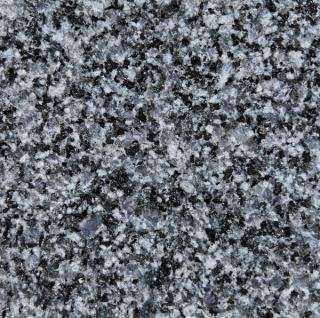
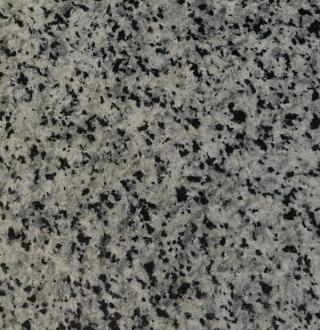
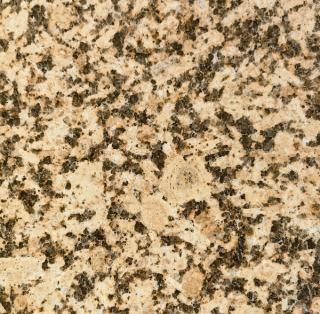
Natural granite offers high strength, abrasion resistance and long-term outdoor durability, making it widely used for urban plazas, commercial entrances, hotel forecourts, public pedestrian areas, residential landscapes and vehicular paving.
However, when a project is located in a region with cold winters, prolonged snowfall or frequent temperature fluctuations around freezing point, simply selecting a “frost-resistant” granite is not enough to ensure long-term paving stability.
The real challenge is not low temperature alone. It is what happens when water enters the paving system and is repeatedly exposed to freezing, thawing, drainage conditions and winter de-icing practices.
Freeze-thaw cycles, drainage and de-icing salts should therefore be considered as interconnected parts of the same paving system.
Freeze-thaw performance begins with water management
When selecting granite for outdoor use in cold climates, frost resistance is naturally an important consideration.
However, the moisture conditions to which the stone and paving structure will actually be exposed are equally important.
Rainwater, melting snow and cleaning water can enter through joints, edges and transitions within the paving. When temperatures fall below freezing, this moisture may freeze and then thaw again as temperatures rise.
If this process occurs repeatedly throughout winter, the paving system experiences continuous freeze-thaw cycles.
For this reason, the same granite can perform differently in two projects.
A well-drained pavement allows rainwater and meltwater to leave quickly. Another installation using exactly the same stone may contain low points, trapped moisture or poorly designed drainage paths, leaving parts of the system wet for much longer.
The objective is therefore not simply to resist cold temperatures, but to reduce the amount of water that remains within the paving structure.
If granite has low water absorption, why is drainage still important?
High-quality natural granite is generally dense and has relatively low water absorption, which is one reason it performs well outdoors.
But a paving system consists of much more than the stone itself.
Below the granite are bedding or bonding layers and the base structure. There are joints between units, while the paving may also connect with drainage channels, inspection covers, steps, building entrances and planted areas.
Water does not need to penetrate deeply into the granite itself to create problems.
If rainwater or meltwater enters through joints and cannot drain effectively from the underlying structure, moisture may remain beneath slabs or granite setts.
During winter, these areas can repeatedly freeze and thaw.
After multiple seasonal cycles, changes may first occur within joints, bedding materials or the base rather than in the granite itself. Eventually, the surface may show movement, unevenness, damaged joints or chipped edges.
A frost-resistant pavement in a cold climate therefore needs to be a system that manages water effectively.
Surface drainage and subsurface drainage must work together
Large granite paved areas are normally designed with falls that direct water towards linear drains, gullies or other drainage systems.
However, the absence of visible standing water on the surface does not necessarily mean that the entire paving structure is dry.
Some water can still enter through joints.
Cold-climate drainage therefore needs to answer two questions: can surface water leave the paved area efficiently, and can water that enters the structure find an appropriate drainage path?
Commercial entrances, plaza edges, landscape steps, linear drainage channels and inspection covers deserve particular attention because they often combine changes in slope, stone cutting and structural transitions.
These details should ideally be resolved during paving layout and technical detailing before stone fabrication rather than through improvised cutting on site.
Snowmelt is an easily overlooked source of water
Drainage design in cold climates should not consider rainfall alone.
During snowfall, large quantities of water are temporarily stored as snow on the paving surface. When temperatures rise, sunlight increases or de-icing materials are applied, this snow can rapidly turn into meltwater.
At the same time, drainage outlets may still be partially blocked by snow, ice or debris.
Snow-clearing operations around hotel drop-off areas, building entrances and urban roads may also concentrate snow along paving edges.
For this reason, designers should consider not only where rainwater flows, but also where meltwater will go when accumulated snow begins to thaw.
Why should de-icing salts not be considered separately?
De-icing salts and other ice-control materials are commonly used in cold climates to reduce winter slipping hazards.
These materials move across the paving surface with meltwater and may also enter the paving structure through joints.
Where drainage is effective, much of this saline water can leave the area relatively quickly.
Where water remains trapped, however, saline moisture may stay within the paving system for longer periods while the installation repeatedly passes through wetting, freezing, thawing and drying cycles.
The question is therefore not simply whether de-icing salt can affect the granite surface.
It is also important to understand how salt-bearing water enters the paving, where it remains and how it eventually drains away.
This is why freeze-thaw performance, drainage and de-icing salts need to be considered together.
Large-format granite slabs require particular attention below the surface
Large-format granite paving slabs are increasingly used around modern commercial buildings, cultural facilities, corporate headquarters and major public spaces.
Larger units reduce visual joints and create a more continuous architectural appearance, but they also place higher demands on base stability, installation accuracy and drainage.
If voids or moisture-trapping areas exist beneath large slabs, repeated winter freeze-thaw cycles may gradually change the support conditions below the stone.
For cold-climate projects, slab layout, joints, base construction, drainage direction, linear drains and inspection covers should therefore be coordinated before fabrication.
Granite setts also depend on a stable and well-drained base
Granite setts have a long history of use in European streets, plazas, historic districts and vehicular areas.
However, because sett paving contains many joints, drainage below the surface remains important.
If meltwater repeatedly enters through joints while the base remains poorly drained, freeze-thaw cycles may gradually affect its stability.
Over time, individual setts may begin to settle, become uneven or loosen.
This is particularly important in hotel drop-off zones, driveways and commercial entrances exposed to vehicle loads.
Durable stone does not eliminate the need for a properly designed paving structure.
Slip resistance cannot depend on stone texture alone
Public spaces in cold climates also need to address winter pedestrian safety.
Granite can be finished with flamed, bush-hammered or natural textured surfaces to provide suitable outdoor slip resistance.
However, if poor drainage allows water to remain and freeze into a layer of ice, increasing stone roughness alone cannot solve the problem.
A better approach combines an appropriate stone finish with effective drainage and suitable winter maintenance.
Cold-climate conditions should be identified during stone procurement
The earlier a stone supplier understands the actual project environment, the easier it is to provide appropriate material and fabrication recommendations.
In addition to colour, dimensions, thickness and quantity, buyers should indicate whether the project will experience frequent freeze-thaw cycles, prolonged snow cover or regular use of de-icing salts.
They should also clarify whether the granite will be used in pedestrian areas, vehicular paving, building entrances, steps or large public plazas.
For custom granite projects, this information can help determine suitable slab dimensions, thicknesses, finishes, edge treatments and fabrication solutions for complex details.
Cold climates require a complete granite paving system
Natural granite offers excellent strength, abrasion resistance and outdoor durability, which explains its long history of use in cold-climate architecture and urban landscapes.
But high-quality stone is only one component of a successful pavement.
A durable cold-climate granite installation must consider stone performance, surface drainage, moisture below the paving, joints, technical details and winter de-icing practices together.
Freeze-thaw cycles determine what happens to moisture at low temperatures. Drainage determines how much water remains within the system, while de-icing salts further change the winter moisture environment.
The real question is therefore not simply:
“Is this granite frost resistant?”
It is:
“Can the entire paving system remain stable through repeated winters of snow, melting, freezing and everyday use?”
When stone selection, technical detailing, fabrication and installation are coordinated around this complete system, the long-term durability of natural granite can be fully realised.