
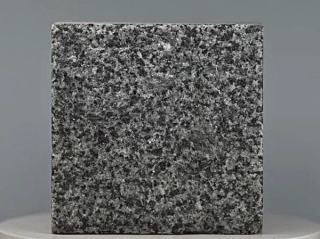
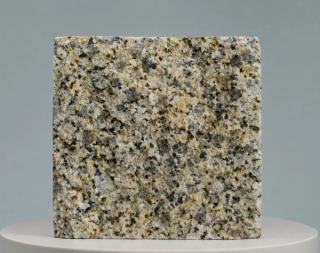
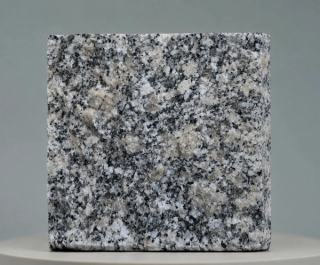
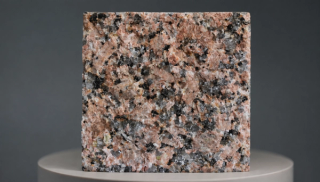
Even when granite cobblestones are made from the same stone, have the same color, and are specified at the same nominal size—such as 100 × 100 × 50 mm—the final paving result can vary significantly depending on how they are processed.
In some projects, the joints are consistent, the paving lines are clear, and the natural texture of the stone remains well balanced with the overall layout. In others, individual cobblestones may look acceptable on their own, but during large-scale installation, workers have to continuously adjust stone positions and joint widths. Even after installation, some areas may show uneven joints or noticeable variations in surface level.
These differences are not always caused by installation.
Machine cutting, splitting, surface texturing, and tumbling all affect the dimensions, edges, and surface condition of granite cobblestones. These characteristics ultimately influence the joints and the appearance of the finished paving.
Therefore, when selecting cobblestones for a project, it is not enough to confirm the color and nominal dimensions. Another important question should be considered:
How were the dimensions and surfaces of these granite cobblestones actually produced?
The Same Nominal Size Can Perform Differently in Paving
Project drawings usually specify clear cobblestone dimensions, such as 100 × 100 × 50 mm.
With natural stone, however, these dimensions need to be understood together with the processing method.
If the length, width, and thickness are mainly established through machine cutting, the dimensions can generally be maintained within a relatively controlled range. If some sides are naturally split, the granite breaks according to its own mineral structure, creating more natural variation along the edges.
As a result, two products both specified as 100 × 100 × 50 mm may behave differently during installation.
What matters is not only the nominal size shown on the drawing, but also the actual dimensional variation and where that variation occurs on the stone.
Why Does Machine Cutting Make Joint Control Easier?
One of the main functions of machine cutting is to establish a relatively stable geometric base for the cobblestone.
When the main side faces are machine-cut, the boundaries between adjacent stones become more clearly defined. This makes it easier for installers to control joint widths and maintain continuous straight lines, staggered layouts, or other regular paving patterns.
For example, if a design requires joints of approximately 10 mm, relatively consistent stone widths and side dimensions allow installers to control the overall paving lines mainly by adjusting the position of each stone.
If the sides of individual stones vary significantly, the same 10 mm joint becomes much more difficult to maintain. Some joints may need to be widened or narrowed to absorb dimensional differences.
For this reason, hotel entrances, modern residential developments, commercial forecourts, and other spaces with highly organized paving layouts generally require better dimensional stability.
This does not mean that every surface of a cobblestone needs to be machine-cut.
In many projects, the sides and bottom can provide dimensional control, while the visible top surface retains the natural texture of granite.
Why Does Splitting Create More Natural Joint Variation?
Splitting works differently from machine cutting.
Instead of cutting the stone along a predetermined straight line, splitting uses the natural structure of granite and allows the stone to break along a relatively natural path.
As a result, split edges are usually not as straight and regular as machine-cut edges. They may contain slight projections, recesses, and natural dimensional variations.
When these cobblestones are installed next to one another, the joints naturally follow the irregularities of the edges, creating subtle variations in joint width.
In traditional courtyards, areas surrounding historic buildings, and landscapes designed to emphasize the character of natural stone, these variations are not necessarily defects. They can help reduce an overly mechanical appearance.
The important factor is the degree of variation.
If split dimensions are not adequately controlled, natural joint variation can turn into a dimensional problem that installers must continually correct on site.
High-quality split granite cobblestones are therefore not about making the stone “as irregular as possible.”
The objective is to:
Preserve natural edge characteristics while keeping dimensional variation within a range that can be reasonably absorbed by the designed joints.
Joints Are Also Part of Dimensional Control
The joints between granite cobblestones are not only visual separations. They also help accommodate reasonable dimensional variations in natural stone.
If a batch contains only minor dimensional differences, installers can distribute these variations across the paving area by making small adjustments to stone positions and joint widths.
However, if dimensional variation is relatively large while the design requires very narrow joints, the two requirements can conflict.
Installers may then need to continuously select stones, change their orientation, or adjust individual joint widths, increasing installation difficulty.
Processing accuracy and joint design should therefore be considered together.
Generally, the narrower the joints and the more regular the paving pattern, the greater the requirement for dimensional stability. Paving intended to create a more traditional or natural appearance can accommodate slightly greater variation in edges and joints.
Why Does Surface Processing Affect the Level of Finished Paving?
Length and width mainly influence the horizontal relationship between adjacent cobblestones, while surface processing also affects the level and evenness of the finished paving.
A machine-cut surface is relatively flat. Naturally split surfaces, textured finishes, and other three-dimensional surface treatments naturally contain higher and lower points.
If the surface relief varies too much from one cobblestone to another, noticeable local height differences may remain even when the bottom installation levels are relatively consistent.
For hotel entrances, public pedestrian areas, and commercial landscapes, natural textured finishes therefore need to be evaluated not only for slip resistance but also for walking comfort.
A good natural texture does not need to be completely flat.
The objective is to preserve the visual character and slip resistance of natural granite while keeping surface relief within a range appropriate for actual use.
Why Are the Bottom and Side Faces Also Important?
Once paving is completed, people mainly see the upper surface of the cobblestones. From an installation perspective, however, the bottom and side faces are also important.
A relatively stable bottom surface makes it easier to control installation levels, while dimensionally stable sides make joint widths easier to manage.
This becomes particularly important where paving needs to follow drainage gradients, connect with building entrances, or transition into large-format granite paving slabs.
If the bottom and side faces vary excessively, installers need to spend more time adjusting individual stones on site.
A practical processing approach is therefore:
Let the visible surface express the natural texture of granite, while the bottom and selected side faces provide the dimensional control required for installation.
This approach preserves the natural appearance of granite while improving installation control.
Why Does Tumbling Change the Visual Appearance of Joints?
Tumbling primarily changes the edges and corners of granite cobblestones.
Freshly machine-cut stones usually have relatively sharp and clearly defined edges. Once installed, these edges make the geometric outline of each cobblestone more visible.
After appropriate tumbling, the corners and edges become softer. Even if the actual joint width remains almost unchanged, the joints can appear more natural to the eye.
Sharper edges tend to create a cleaner and more contemporary paving appearance, while gently tumbled edges reduce the mechanical character and create softer transitions between individual stones.
However, the degree of tumbling should remain coordinated within the same production batch.
If some cobblestones have heavily rounded edges while others remain noticeably sharp, the finished paving can appear inconsistent even when the dimensions are similar.
Different Paving Patterns Require Different Levels of Dimensional Stability
Granite cobblestones can be installed in straight courses, staggered patterns, curves, fan patterns, and other layouts. Each pattern responds differently to dimensional variation.
Regular straight-line paving creates continuous visual reference lines, making local dimensional differences easier to notice.
Curved or fan-shaped paving can accommodate some reasonable dimensional variation through changes in stone orientation and joint direction.
This does not mean that more complex paving patterns can use poorly controlled products.
Instead, it means that:
The processing method, dimensional range, and paving design should be considered together.
If a project has already specified a precise straight-line layout with narrow joints, the corresponding dimensional requirements should be established before production rather than relying entirely on installers to make corrections after the stone arrives on site.
Processing Methods, Joints, and Paving Results Should Be Considered Together
Natural granite cobblestones are different from industrially manufactured paving units.
If every dimension, edge, and surface is made completely identical, some of the natural variation and character of the stone may be lost. But without sufficient processing control, joints, paving layouts, and finished surface levels can become difficult to manage.
The right approach is therefore not simply to choose between “perfectly regular” and “completely natural.”
The real question is which parts of the cobblestone need to remain stable and which parts can retain natural variation.
Machine cutting can establish the basic dimensions. Splitting and texturing can create a natural surface. Tumbling can modify the edges, while properly designed joints can accommodate reasonable dimensional variation.
The final paving result is determined not only by granite color and nominal size, but by whether the processing method, dimensional control, joint design, and paving pattern work together as one complete system.
When these factors are considered before production, granite cobblestones can retain the authentic texture of natural stone while also meeting the practical requirements of installation, pedestrian use, and the overall landscape design.