
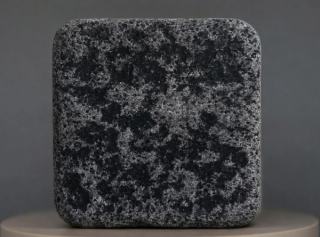
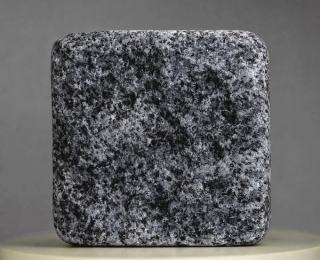
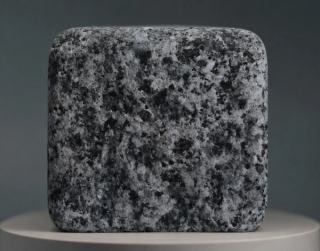
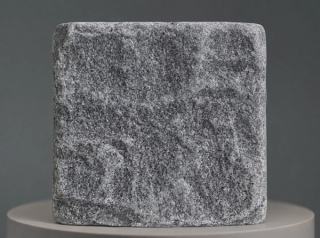
In the natural granite cobblestone market, antique finishing and standard tumbling are often discussed together. Both can create softer edges and a more natural surface appearance, so designers, buyers and contractors encountering these products for the first time may assume that antique-finish cobblestones are simply granite cobblestones that have been tumbled for longer.
In reality, they are different products.
Standard tumbling is a conventional stone-finishing method, while Shanghai Minji’s independently developed antique-finish granite cobblestones use a distinctive finishing process to shape the edges, surface texture, mineral colours and overall visual character of natural granite.
The objective is not simply to round the edges. It is to reveal natural colour contrasts, richer mineral depth and a time-worn character, creating a distinctive paving material for premium residences, estates, hotels, heritage renovations and character-driven landscape projects.
1. What Are Standard Tumbled Granite Cobblestones?
Tumbling is a well-established finishing method in the natural stone industry.
After tumbling, the sharp or mechanically cut edges of granite cobblestones become softer and more rounded, while the surface acquires a gentler and more natural appearance.
The main characteristics are therefore:
rounded edges, softened surfaces and a more natural overall appearance.
Tumbled granite cobblestones are widely used for driveways, courtyards, walkways, plazas, commercial landscapes and public spaces. They offer mature production methods, a wide range of dimensions and reliable supply for large-scale projects.
Fundamentally, however, standard tumbling mainly changes the edges and basic surface condition of the stone.
That is different from the visual objective of a distinctive antique finish.
2. Antique Finishing Is Not Simply “Longer Tumbling”
This is the most important distinction.
A distinctive antique effect cannot be achieved simply by extending the tumbling time.
Increasing the degree of conventional tumbling mainly affects edge roundness and surface wear. Excessive processing may even weaken the natural grains, crystals and textures that give granite its character.
Shanghai Minji’s antique-finish development instead focuses on a different question:
How can a distinctive finishing process reveal the natural colours, minerals, crystals and textures of granite in a richer and more recognisable way?
Antique finishing is therefore not simply about making new stone look worn. It is about shaping the overall visual character of the material.
3. One of the Biggest Visual Differences: Natural Colour Contrast
Natural granite is not an industrial material with perfectly uniform colour.
Different granites contain different minerals, crystal structures, grain sizes and overall tones. Even within the same granite, natural variations occur from piece to piece.
Standard tumbling generally preserves the stone’s dominant original colour. Grey granite remains predominantly grey, while black granite retains its darker overall tone.
A distinctive antique finish goes further by working with the granite’s inherent mineral and colour characteristics. Different minerals, crystals, base colours and textures become more visually expressive, creating recognisable natural colour contrasts.
Some stones develop strong black-and-grey variation; others reveal combinations of deep green and dark minerals. Blue-grey stones can display layered interaction between their base colour and natural crystals, while warmer granites may reveal combinations of gold, rust, pale minerals and darker grains.
These contrasts are not simply colours added to the surface. They originate from the natural characteristics of the granite itself.
As a result, every granite can develop its own antique-finish personality.
4. Standard Tumbling Emphasises Uniformity; Antique Finishing Emphasises Controlled Variation
As a mature engineering product, standard tumbled cobblestone generally prioritises dimensional consistency, stable edges and a relatively uniform overall appearance.
Antique finishing follows a different design logic.
Naturally aged stone does not have perfectly identical colours, textures and edges. If every cobblestone looks exactly the same, much of the character of natural stone is lost.
However, more variation is not automatically better.
The objective is to preserve natural differences between individual stones while maintaining harmony when hundreds or thousands of pieces are installed together.
An individual piece should have character; several pieces should create variation; and a large paved area should still form a coherent visual composition.
This “controlled variation” is one of the key qualities of a high-quality antique finish.
5. Antique Finishing Expresses Natural Granite Rather Than Hiding It
Different natural granites have fundamentally different material characteristics.
Some contain strong black-and-white mineral grains, some have blue-grey crystals, others reveal green mineral layers, while warmer granites may combine gold, rust and darker minerals.
For this reason, different granites do not produce identical results after antique finishing.
A well-developed antique finish should not remove or conceal these natural characteristics.
Instead, it should allow the granite’s colour, minerals, crystals, texture and natural tonal variation to become more expressive.
This is why different granites can develop distinctly different antique design languages.
6. Sixteen Granites Create a Complete Antique Colour Palette
Shanghai Minji has currently developed an antique-finish collection comprising 16 distinctive natural granites, covering black, grey, blue-grey, green, white, yellow and warm colour families.
This means antique finishing is no longer limited to a single product. It has developed into a broader natural granite colour system.
Dark collections can create restrained, sophisticated and architectural paving.
Grey tones integrate easily with both contemporary and historic architecture.
Blue-grey and green stones provide more distinctive cool-toned options.
White and light-grey granites suit brighter architectural environments.
Golden and warmer stones can reinforce the welcoming, time-worn character associated with estates, courtyards and traditional architecture.
Designers are therefore no longer limited to asking:
“Should we use antique cobblestones?”
They can instead ask:
“Which antique colour palette and material character best suit this architecture?”
7. Why Is Antique Finish Particularly Suitable for Premium Landscape Design?
In premium residences, private estates, boutique hotels, resorts, heritage renovations and distinctive commercial landscapes, designers rarely consider only the basic function of a paving material.
They also consider the relationship between paving and façades, planting, architectural colour palettes and the long-term character of the space.
New stone can sometimes appear overly precise or industrial.
Antique-finish granite cobblestones retain the durability, strength and outdoor performance of natural granite while introducing softer edges, richer textures and tonal variation.
The cobblestone is no longer simply a paving unit.
It becomes part of the architectural and landscape design language.
8. Antique Finish Is Also Different from Genuine Reclaimed Stone
Some traditional European architecture and landscape projects use genuinely reclaimed natural stone that has been worn through decades or even centuries of use.
Such materials possess authentic historical wear and have their own unique value.
Antique-finish granite cobblestones are not intended to imitate or be presented as genuine historic reclaimed stone.
Their value lies in using new natural granite and a specially developed antique-finishing process to create time-worn edges, textures and colour depth while still meeting modern project requirements for dimensions, quantities and continuous supply.
They therefore provide a distinctive option between the visual language of old stone and the practical requirements of modern natural-stone projects.
9. Which Should You Choose: Standard Tumbled or Antique Finish?
Neither option is inherently better. The right choice depends on the project.
If the priorities are standard dimensions, large-scale paving, project cost, reliable supply and a relatively uniform appearance, standard tumbled granite cobblestones are a mature and practical solution.
If the project places greater emphasis on architectural aesthetics, natural colour contrast, individuality, time-worn character and visual depth across large paved areas, distinctive antique-finish granite cobblestones provide greater design possibilities.
In simple terms:
Standard tumbling primarily addresses a surface-finishing requirement; distinctive antique finishing goes further by addressing material expression and landscape design.
10. True Quality Should Be Judged Across the Entire Paved Area
An antique-finish granite cobblestone should not be judged from a single sample alone.
A real landscape project may contain hundreds, thousands or tens of thousands of individual stones.
It is therefore important to consider whether individual pieces look natural, whether multiple stones create balanced colour variation, whether different pieces remain visually harmonious, and whether the completed paved area forms a stable and coherent overall appearance.
A truly successful antique finish should work at the scale of the entire landscape, not just on one attractive sample.
Conclusion: From Surface Finishing to a Landscape Material Language
The fundamental difference between standard tumbled granite cobblestones and distinctive antique-finish granite cobblestones is not simply how rounded the edges are or how long the stone has been processed.
The real difference lies in their objectives.
Standard tumbling primarily changes the physical finishing condition of the stone. Distinctive antique finishing goes further by shaping the visual language of natural granite.
Through Shanghai Minji’s independently developed antique-finishing process, the natural minerals, crystals, textures and tonal variations of different granites can be expressed more fully, creating natural colour contrasts, time-worn character and visual depth that conventional tumbling alone cannot easily achieve.
The real value of antique finishing is therefore not simply to make a new granite cobblestone “look old”.
It is to give natural stone a richer, more expressive and time-worn character while retaining the dimensional control, durability and supply capability required by modern landscape projects.
That is the essential difference between antique-finish granite cobblestones and standard tumbled granite cobblestones.