
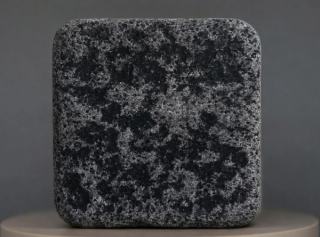
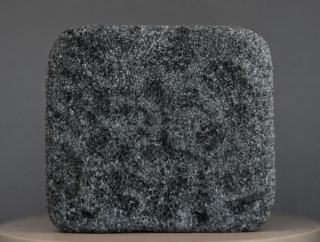
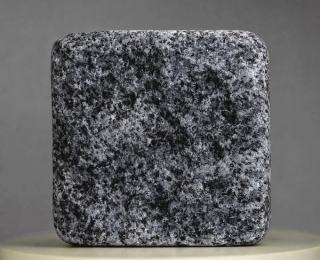
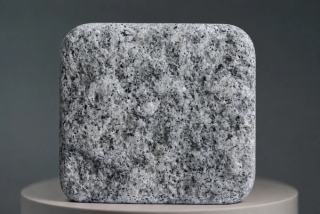
Across many historic European streets, estates, courtyards, and traditional architectural settings, natural granite cobblestones can still be found after decades—or even centuries—of use.
Continuous foot traffic, vehicles, rainfall, weathering, and natural ageing gradually soften their edges, wear their surfaces, and create rich variations in colour and texture. These traces of time give European reclaimed granite cobblestones a distinctive character, making them particularly attractive for historic architecture and traditional landscape projects.
At the same time, newly quarried natural granite can be developed with a specialised antique finish to create cobblestones with an aged appearance and the character associated with traditional stone paving.
Both materials can create a sense of history, but there are important differences in their origin, surface character, colour expression, dimensional control, and suitability for large-scale project supply.
1. One Carries Real History; the Other Reinterprets the Character of Time
The defining quality of European reclaimed granite cobblestones is that they have genuinely aged through use.
These stones may have been installed in old streets, courtyards, or around historic buildings for many decades. Long-term traffic, impact, weathering, and environmental exposure have left different degrees of wear, softened edges, and colour variation on every piece.
Reclaimed cobblestones therefore represent:
Authentic history shaped by time.
Antique finish granite cobblestones, by contrast, are produced from newly quarried natural granite.
They are not intended to be presented as genuinely historic stones. Instead, specialised finishing creates more naturally softened edges, richer surface variation, and an overall appearance that evokes the passage of time.
They represent:
A reinterpretation of traditional aged stone paving using newly produced natural granite.
This is the fundamental distinction between the two materials.
2. An Antique Finish Is More Than Simply Rounding the Edges
This is particularly important when understanding antique finish granite cobblestones.
Conventional tumbling can reduce the sharpness of newly cut edges, soften corners, and create a certain degree of aged appearance.
A more complete antique character, however, involves more than simply making the edges round.
The finished stone should be considered in terms of:
how naturally the edges appear softened, how the surface expresses age, how rich the overall colour becomes, how the natural minerals are revealed, and whether the entire stone develops a balanced and convincing aged character.
For this reason, an antique finish should not simply be understood as another name for a conventional tumbled finish.
What matters most is not the name of the processing method, but the final appearance of the stone.
A well-developed antique surface should convey the softness and natural variation associated with age while still allowing the grains, textures, minerals, and inherent character of the granite to remain visible.
3. Natural Colour Contrast Gives Each Granite Its Own Antique Character
The overall colour of European reclaimed cobblestones develops through a combination of the original stone and decades of environmental exposure.
Reclaimed stones from different locations and periods may show very different levels of wear, tonal variation, and surface colour. This unpredictability is an important part of their appeal.
New antique finish cobblestones offer another possibility: different colour directions can be established through the selection of natural granite itself.
Black, grey, blue-grey, green, yellow, and warm-toned granites naturally contain different minerals, crystals, and colour variations.
With an antique finish, the existing relationships between darker and lighter areas, mineral grains, and natural tonal variations can become more visually distinctive, creating natural colour contrasts and layered surface effects.
One point is particularly important:
These colours are not created by artificial colouring.
They originate from the natural granite itself.
The role of the antique finish is to allow the stone’s inherent colour, mineral structure, and texture to participate more strongly in the final visual character.
4. Reclaimed Stone Celebrates Unrepeatability; New Antique Stone Offers Greater Design Flexibility
Authentic European reclaimed cobblestones are inherently unique.
Their colours, dimensions, edges, and degree of wear reflect their previous use. For historic restoration and projects where material authenticity is essential, this uniqueness can have exceptional value.
However, it also means that the design must, to some extent, adapt to the available material.
New antique finish granite cobblestones offer a different design approach.
Landscape architects and designers can select different natural granite colour families according to the architecture, choose dimensions and thicknesses according to the paving design, and establish a clearer overall material direction while still preserving the natural variation of stone.
In simple terms:
With reclaimed cobblestones, the design begins with the historic material that is available.
With newly produced antique finish cobblestones, the natural stone can be selected according to the design requirements.
Neither approach is inherently better. They serve different design intentions.
5. Dimensional Control and Volume Supply Matter in Modern Projects
For a small courtyard, historic property, or project where irregularity is part of the desired character, the dimensional variation of reclaimed cobblestones may be an advantage rather than a limitation.
The situation changes when a project requires thousands or tens of thousands of pieces.
Hotels, residential developments, commercial landscapes, private driveways, and large courtyards may require greater consideration of dimensions, thickness, installation efficiency, total quantity, and future material requirements.
Because reclaimed cobblestones depend on the availability of existing historic material, dimensions, colours, and quantities can vary between batches.
Antique finish cobblestones produced from new natural granite can provide more consistent control over dimensions, thicknesses, and project-scale supply, while still retaining the natural variation expected from genuine stone.
The ideal result is not to make every stone identical.
Instead:
Dimensions provide construction order, while surfaces retain natural variation; individual stones have their own character, while the completed paving remains visually coherent.
This balance can be particularly valuable in contemporary landscape projects.
6. Which Type of Cobblestone Is Better Suited to Your Project?
For projects where historical authenticity is fundamental—such as heritage restoration, historic streetscapes, conservation environments, or traditional estates—European reclaimed granite cobblestones offer something that new stone cannot genuinely reproduce.
In these settings, the history of the material itself may form part of the design narrative.
Antique finish granite cobblestones are suited to a different range of projects.
Luxury residential courtyards, private driveways, boutique hotels, resorts, newly built estates, distinctive commercial environments, and landscapes combining traditional materials with contemporary architecture may require an aged natural stone appearance together with clearer colour choices, controlled dimensions, and reliable project-scale supply.
The two materials are therefore not simply substitutes for one another.
The real question is whether the project requires genuine historic material or new natural granite capable of combining an aged character with contemporary design and construction requirements.
Conclusion: Authentic History and a Reinterpretation of Time
The beauty of European reclaimed granite cobblestones comes from genuine time.
Decades of use have created worn surfaces, softened edges, complex colours, and historic traces that newly quarried stone cannot truly reproduce.
Antique finish granite cobblestones follow a different path.
Starting with newly quarried natural granite, the objective is not simply to round the edges through conventional tumbling. Greater attention is given to the aged surface character, overall colour expression, natural colour contrast, mineral texture, and the appearance of the completed paving.
At the same time, newly produced stone can provide clearer colour selection, dimensional control, and volume supply for contemporary landscape projects.
Therefore:
Reclaimed cobblestones preserve history; antique finish cobblestones reinterpret the character of time.
A successful antique finish should not make every stone look identical. It should respect the natural colours, crystals, minerals, and textures already present in the granite, allowing each stone to retain individual variation while thousands of pieces come together to create a coherent landscape surface.
Ultimately, the choice is not about which material is “more premium.”
It is about what kind of history, material character, and landscape expression the designer wants the stone to bring to the space.