
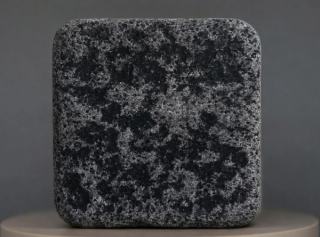
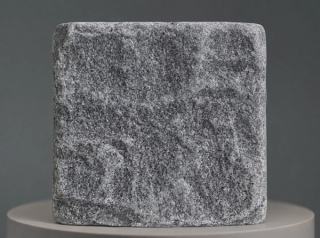
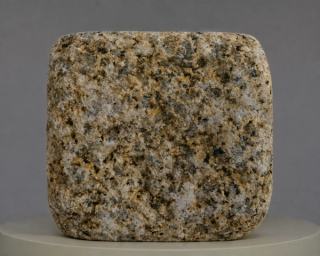
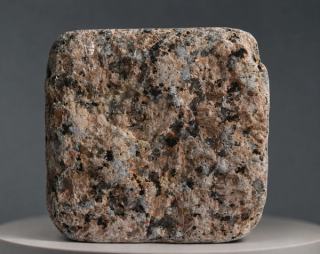
In European old towns, historic building courtyards, manor estates, traditional streets, and older commercial spaces, natural stone paving may have been in service for decades or even longer.
After years of pedestrian traffic, vehicle loads, and natural weathering, these old granite setts gradually develop softened edges, naturally worn surfaces, and blended colour variations. For this reason, when historic spaces are renovated, designers often prefer to retain as much of the existing stone as possible rather than remove and replace the entire paved area.
In practice, however, old cobblestones or setts can rarely be reused in full.
Some stones may be cracked, chipped, or excessively worn. Others may have old mortar firmly attached to the underside and remain unsuitable for relaying even after cleaning. Changes to drainage, underground utilities, accessible routes, or landscape layouts may also increase the total paving area.
When the quantity of reusable old stone is insufficient, new antique-finish granite setts can provide a practical supplementary material.
The real challenge is not simply to find a new stone that “looks old”. It is to make sure that the new granite works naturally with the existing paving in terms of colour, dimensions, thickness, surface character, joints, and overall paving layout.
First Determine How Much of the Existing Cobblestone Can Actually Be Reused
The first step in a historic paving restoration project should not be calculating how much new stone to order. It should be sorting and assessing the existing setts after removal.
Stones that remain structurally sound, have sufficient thickness, and are in good surface condition can usually be cleaned and reused. Stones with minor edge damage but adequate structural integrity may still be suitable for secondary areas. Setts with significant cracks, severe damage, or insufficient thickness are generally unsuitable for reuse.
For example, an existing paved area of 1,000 m² does not necessarily provide 1,000 m² of reusable stone after dismantling.
If only 720 m² remains suitable for reuse, while the redesigned paving area increases to 1,100 m², the project already has a shortage of approximately 380 m². Additional allowance may also be required for site adjustments and reasonable installation wastage.
Therefore, the quantity of reusable existing stone combined with the new design paving area provides a much more reliable basis for calculating the amount of new antique-finish granite setts required.
Do Not Measure Only One Existing Sett
Historic cobblestone paving rarely has the dimensional consistency of modern machine-produced stone.
After decades of use, repairs, and partial replacement, several different sizes may exist within the same paved area.
For example, stones that appear to be approximately 100 × 100 mm may actually measure 95 × 100 mm, 100 × 105 mm, or vary even further.
When new antique-finish granite setts are required for repair work, one old stone should therefore not be used as the sole production reference.
A better approach is to select representative stones from several parts of the site and record their length, width, thickness, general colour range, surface condition, and edge characteristics. The approximate joint widths of the existing paving should also be measured.
This information helps determine an appropriate dimensional range for the new granite and identifies potential compatibility issues before production begins.
New Granite Does Not Need to Replicate Every Existing Stone
Historic paving usually contains natural variations already.
Trying to make every new antique granite sett exactly match the colour, dimensions, and surface of one particular old stone can actually produce a less convincing overall result.
The objective should be to control the overall relationship rather than create exact copies of individual stones.
If the existing paving contains a blend of dark grey, grey-black, and occasional lighter grey tones, for example, the new stone can be selected around this overall colour range.
Designers should consider whether the new material looks excessively uniform, creates obvious colour blocks, appears too different in surface character, or creates a visible boundary between old and new areas.
For this type of project, evaluating how a batch of stone works within the overall paving is usually more important than asking whether two individual pieces look identical.
Why Are Antique-Finish Granite Setts Suitable for Repair Work?
Even when the colour is similar, newly produced granite with sharp edges and a highly regular surface can look noticeably different when installed beside stone that has been in use for decades.
This is because time changes more than colour. It also affects the edges, surface texture, and overall character of the paving.
Appropriately processed antique-finish granite setts can reduce the overly sharp and mechanical appearance of newly produced stone, allowing the material to integrate more naturally with existing paving.
However, a stronger antique effect is not necessarily better.
The purpose of antique finishing in a restoration project is to create a new material that works with the existing environment, rather than to produce an exaggerated artificial ageing effect.
The Distribution of Old and New Stone Is Equally Important
Even when the new stone matches the existing material reasonably well, concentrating all the new granite in one area can create an obvious visual division.
The distribution of old and new materials should therefore be considered as part of the paving design.
Where the historic core remains well preserved, original stone can be prioritised in the most visually or historically important areas, while new antique granite setts are used in extensions or newly constructed zones.
Where new and existing paving meet directly, a transition zone can help gradually adjust dimensions, colour variation, and joint patterns.
In some projects, old and new setts can also be mixed in controlled proportions. However, mixed paving should not mean completely random installation. Where noticeable colour variation exists, basic distribution principles should be established in advance to prevent concentrated patches of colour.
Consider Thickness and Finished Paving Levels
After many years of use, existing setts may have considerable variations in thickness, while newly produced granite is normally supplied within a more clearly defined thickness range.
When old and new materials are installed together, surface dimensions alone are therefore not enough. The final paving level must also be considered.
Differences in stone thickness may need to be accommodated through the bedding or installation layer so that the finished surface remains continuous.
This is particularly important around building entrances, drainage channels, accessible routes, and direct transitions between new and existing paving.
Even if the colour and surface finish are well matched, poor level control can still compromise the quality and usability of the finished pavement.
Joint Width Can Determine Whether Old and New Paving Connect Naturally
Joints in historic cobblestone paving are rarely perfectly uniform.
If newly produced antique granite setts are extremely consistent in size and installed with very narrow, regular joints, the new section may contrast strongly with the surrounding historic pavement.
Joint design should therefore take into account the dimensional range of the old setts, the specification of the new stone, existing joint conditions, and the intended laying pattern.
The transition between old and new paving is particularly important.
If the final rows create excessive small cut pieces, wedge-shaped joints, or suddenly wider gaps, the setting-out or paving module should be adjusted rather than leaving these problems to be solved at the edge.
Build a Sample Area Before Large-Scale Installation
Individual stone samples are useful for checking colour and surface finish, but they cannot fully demonstrate how old and new materials will look when installed together.
For larger or visually sensitive restoration projects, a representative trial area can therefore be useful before full installation begins.
Existing setts, new antique-finish granite setts, the intended joint width, and the proposed jointing material can all be included in the mock-up.
Designers, contractors, and clients can then assess whether the overall colour balance, dimensions, joints, and proportion of new to old materials are appropriate.
If the new stone appears too concentrated, the colour difference is excessive, or the joints do not work well, adjustments can be made before large-scale installation.
What Information Should Be Provided When Requesting a Quotation?
When new antique-finish granite setts are required to supplement existing historic paving, complete project information helps the supplier evaluate the most suitable material and production approach.
Overall photographs of the existing pavement help explain the architecture, street, and surrounding environment. Close-up photographs of individual stones help show colour, mineral character, surface texture, and edge condition.
Several representative stones should be measured to establish a realistic range of length, width, and thickness rather than relying on a single nominal dimension.
The project should also provide an estimate of the quantity of existing stone that can be reused, the additional paving area, the approximate quantity of new stone required, and whether the design intends to separate, transition, or mix the old and new materials.
Where available, paving drawings, construction details, or setting-out plans should also be provided.
For more demanding restoration projects, representative physical samples of the existing stone can further assist with the selection of the new granite, dimensional specification, and surface finish.
The Objective Is Not to Make New Stone “Pretend It Has Been Used for 100 Years”
The unique character of historic cobblestone paving comes from genuine changes created by long-term use and exposure to the environment. These effects of time cannot be completely reproduced through stone processing.
New antique-finish granite setts should therefore not be treated as exact replicas of the existing historic stones.
Their real purpose is to provide a compatible new material when the quantity of reusable old stone is insufficient, while still meeting the engineering requirements of the renovated project.
From sorting existing stone, measuring dimensions, and calculating shortages to selecting new granite, controlling thickness, designing joints, planning the paving layout, and approving a trial area, every stage can influence how successfully the new and existing materials work together.
For designers, contractors, and procurement teams, understanding the actual condition of the existing paving before specifying the dimensions and quantity of new antique-finish granite setts is far more important than simply searching for a new product that “looks old.”