
In premium residences, boutique hotels, estate courtyards, and contemporary architectural landscapes, a single paving format may not always provide enough flexibility to define spatial hierarchy, circulation, and architectural proportions. Increasingly, landscape designers are combining small-format natural granite cobblestones with large-format granite paving slabs to create contrast in scale, texture, color, and paving direction.
Granite cobblestones offer rhythm, detail, and flexibility for complex layouts, while large-format slabs create cleaner, more continuous surfaces with a stronger architectural character. Successful combination design is therefore not simply about placing two different stone sizes together. It is about using their individual strengths to establish a clear and coherent spatial structure.
1. Why Do Granite Cobblestones and Large-Format Slabs Work Well Together?
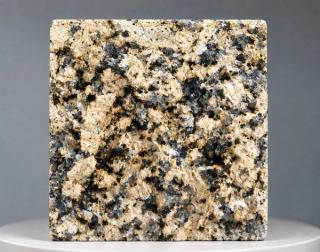
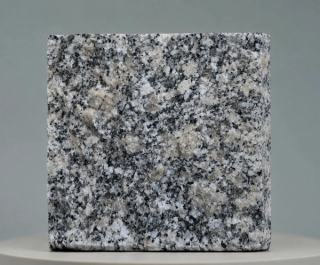
Granite cobblestones consist of many small individual units. Their numerous joints and compact dimensions make them suitable for straight layouts, curves, fan patterns, and irregular boundaries, while creating a distinctive rhythm and texture across the paving surface.
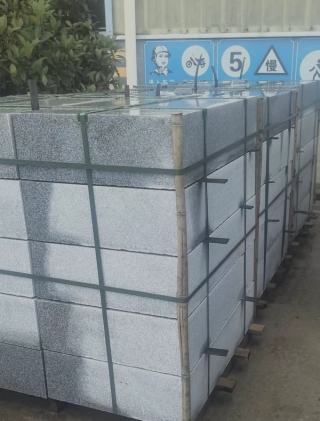
Large-format granite slabs provide almost the opposite visual effect. Their broad surfaces, fewer joints, and clear geometric proportions create a calmer, cleaner, and more architectural appearance.
The fundamental value of combining these two materials therefore comes from contrast in scale.
Large slabs can define the main spaces, while cobblestones can create transitions, borders, details, or areas of visual emphasis. One primarily defines surfaces; the other introduces lines, texture, and rhythm.
Used together, they can establish a much clearer hierarchy within the landscape.
2. Define the Primary Material Instead of Using Both Equally
One common mistake in mixed-format paving design is giving both materials equal visual importance.
If large slabs and cobblestones repeatedly alternate across the same area, the paving can become fragmented and overly complicated, reducing the sense of continuity often required in premium landscapes.
A more effective approach is to first establish one material as the primary paving language.
For example, a contemporary residential entrance may use large-format granite slabs to define the main pedestrian route, while cobblestones are introduced along borders, corners, or vehicle areas.
A traditional estate courtyard may reverse this relationship. Cobblestones can form the principal paving surface, while large granite slabs emphasize an entrance axis, terrace, seating area, or architectural forecourt.
The important question is not which material occupies more square meters, but whether the design clearly communicates:
Where is the main space? Where is the transition? And which areas require emphasis?
3. Use Cobblestones to Create Transitions Around Large Slabs
Large-format slabs create strong geometric order, but they can become more difficult to use around curved paths, circular courtyards, tree pits, steps, and irregular architectural boundaries, where extensive cutting may otherwise be required.
This is where small-format cobblestones become particularly useful.
Their smaller dimensions allow them to adapt more naturally to curves and complex boundaries, making them an effective transition material between large slabs and surrounding landscape elements.
For example, a large-format slab walkway approaching a circular courtyard can gradually transition into cobblestone paving. A cobblestone band can also separate a slab-paved building entrance from a driveway.
In this way, changes in material solve practical geometric problems while also creating intentional visual transitions.
4. Create Depth with Color Without Making the Design Chaotic
Cobblestones and large slabs do not necessarily need to have exactly the same color.
Using different shades within the same color family is often one of the most reliable approaches.
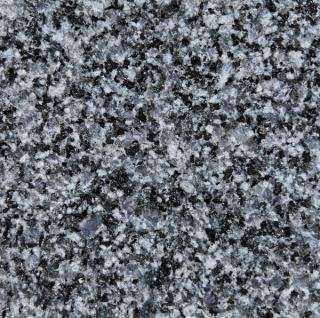
For example, light grey slabs can be combined with medium or dark grey granite cobblestones. The large slabs keep the main space bright and open, while the darker small-format stones define borders and visual boundaries.
Where the architecture itself is relatively minimalist, stronger contrast can also be introduced. A light-colored building, for example, may be paired with dark cobblestones and neutral grey slabs to reinforce entrances and circulation routes.
However, the number of colors should remain controlled.
If the slabs use one color, the cobblestones another, and the kerbstones a completely unrelated third color, the landscape can quickly lose visual coherence.
High-quality paving design usually relies on layering within a limited color palette, rather than simply introducing more materials and colors.
5. Surface Textures Also Need a Clear Hierarchy
Color is not the only consideration. Surface finish can significantly influence how cobblestones and slabs work together.
Large-format paving slabs provide broad, continuous surfaces, making flamed, bush-hammered, or textured finishes visually clear across larger areas.
Because cobblestones are smaller, natural, textured, or antique finishes can introduce more detailed material character.
A particularly distinctive combination can be created by pairing antique-finish granite cobblestones with relatively clean and restrained large-format slabs.
In this relationship:
The slabs provide architectural order, while the antique cobblestones introduce texture, natural character, and a sense of age.
However, contrast should still be controlled. If color, surface roughness, texture direction, and format all create strong contrasts at the same time, the design can become visually overloaded.
It is usually more effective to emphasize one or two key differences rather than making every characteristic compete for attention.
6. Use Material Changes to Express Different Spatial Functions
Another important advantage of combining cobblestones with large-format slabs is that changes in paving can help users understand how different areas are intended to function.
In residential landscapes, large granite slabs can define main pedestrian routes and building entrances, while cobblestones can be used for driveways, courtyard edges, or transitional zones.
At boutique hotels, slabs may emphasize the main entrance and important public areas, while cobblestones can be introduced in drop-off zones, courtyards, pathways, and around buildings.
For estates and traditional architectural environments, cobblestones may cover larger areas, while large-format slabs highlight important entrances or newly introduced contemporary spaces.
In this way, material changes do more than create visual interest. They also support wayfinding and functional zoning.
7. Cobblestones, Paving Slabs, and Kerbstones Can Form a Complete Material System
When a project includes granite cobblestones, large-format paving slabs, and granite kerbstones, the three elements should ideally be considered as one integrated material system rather than selected independently.
They can share the same or closely related base colors while using different dimensions and surface finishes to distinguish their functions.
Large slabs establish the primary surfaces. Cobblestones provide detail, transitions, and flexible paving patterns. Kerbstones define the boundaries between roads, planting areas, and paved spaces.
When the three product types maintain a clear relationship in color, stone character, and finishing language, the overall landscape can remain visually unified even though their dimensions are very different.
This approach is particularly valuable for large residential developments, hotels, commercial landscapes, and mixed architectural projects, where design continuity must extend beyond a single paved area to the entire outdoor environment surrounding the buildings.
8. Successful Combination Design Uses Different Scales to Serve the Same Space
The real value of combining granite cobblestones with large-format paving slabs does not come from using more materials. It comes from using different scales to solve different design challenges.
Large-format granite slabs provide clean, continuous surfaces and a strong sense of architectural order. Small-format granite cobblestones contribute detail, flexibility for curves and transitions, and the distinctive paving rhythm associated with natural stone.
When color, dimensions, surface finishes, and paving proportions are carefully coordinated, the two materials no longer appear as separate products. Instead, they become part of one coherent landscape paving system.
Successful combination design should not make the viewer notice two different stone formats first. Instead, different scales, textures, and colors should work naturally together to support the architecture, circulation, and spatial hierarchy, creating a landscape that feels coherent, refined, and well structured.