
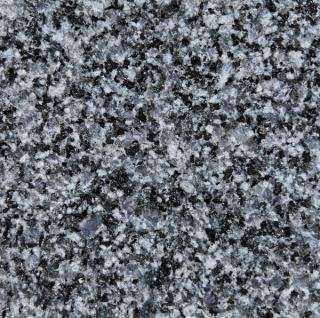


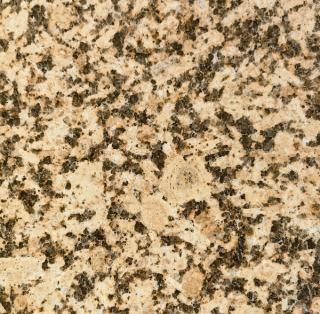
When selecting granite paving slabs for an outdoor landscape project, attention often goes first to stone colour, surface finish and slab size. Thickness, however, can easily be treated as nothing more than a product specification.
In practice, thickness is closely related to the load-bearing performance of the paving, the installation method, the base structure and its long-term stability.
The requirements for the same natural granite paving slab can be very different when it is used in a private courtyard, terrace, pedestrian walkway or vehicle-access area. Even with the same slab thickness, different slab dimensions, base conditions and installation methods can lead to very different performance.
For this reason, there is no single “standard thickness” suitable for every outdoor granite paving project.
A suitable choice should consider the application area, expected loads, slab dimensions, base structure, installation method and local engineering requirements together.
1. Why Is the Thickness of Outdoor Granite Paving Slabs Important?
Natural granite has high compressive strength and excellent outdoor durability, but this does not mean that granite slabs of every thickness are suitable for every application.
Once installed, paving slabs are subjected to more than simple vertical pressure.
Pedestrian traffic, movement of outdoor furniture, vehicle wheel loads, local changes in the base and long-term temperature cycles can all affect the paving system in different ways.
This becomes particularly important with large-format granite paving slabs. As slab length and width increase, the area that needs continuous support also increases. If the base is uneven, parts of the slab are unsupported, or voids exist within the bedding layer, even high-quality granite may face a greater risk of cracking, movement or uneven levels.
Therefore, when determining thickness, the question should not simply be:
“Is this granite strong enough?”
A better question is:
“Is this slab size and thickness suitable for this base structure and these service conditions?”
2. How Thick Should Granite Paving Be for Courtyards?
Private courtyards are generally dominated by pedestrian use and relatively light loads. With a stable base and an appropriate installation system, extremely thick granite slabs may not be necessary.
For many outdoor courtyard applications, granite paving slabs around 20–30 mm thick are commonly considered.
However, this should only be treated as a general reference range.
Smaller slabs installed over a level, stable and continuously supported mortar or concrete base may perform differently from much larger slabs of the same thickness.
If large-format paving is specified, or if the courtyard contains heavy planters, outdoor kitchens, substantial furniture or other concentrated loads, both slab thickness and the supporting structure should be reassessed.
Thickness should therefore never be selected simply because an area is described as “pedestrian use.”
As slab dimensions increase, the importance of level and continuous support generally increases as well.
3. Terraces Require Both Thickness and Installation Method to Be Considered
Terraces may appear similar to courtyards, but their structural conditions can be very different.
Some granite terraces are installed over concrete bases, others use mortar bedding systems, while certain projects may use raised support systems.
These different installation methods should not automatically use the same slab thickness.
When a granite slab receives continuous and stable support underneath, bending stresses can generally be controlled more effectively.
With raised or pedestal-supported installations, however, the slab is supported at specific points rather than continuously across its underside. In these situations, slab thickness must be considered together with slab dimensions, stone mechanical properties, support spacing and the engineering design of the entire system.
For terrace projects:
Do not select the granite thickness first and decide how to install it later. The slab thickness, dimensions and installation system should be designed together.
This is particularly important for large-format natural granite paving.
4. Does Pedestrian Paving Mean Thinner Is Always More Economical?
Garden paths, hotel landscape walkways and pedestrian areas in public spaces generally carry lower loads than vehicle-access areas.
For this reason, with an appropriate base and installation system, granite paving around 20–30 mm thick may be used in some pedestrian applications.
However, “pedestrian use” does not mean thickness can be reduced without limit.
Public walkways may experience high pedestrian volumes, maintenance equipment, small service vehicles and years of exposure to outdoor conditions. Garden paths may also be affected by soil settlement, tree roots and changing drainage conditions.
Reducing stone thickness simply to lower material costs, without improving the base and installation quality accordingly, may increase long-term maintenance requirements.
For engineering projects, the real comparison should therefore not be limited to the cost of granite per square metre.
The long-term stability of the complete paving system matters more.
5. Why Do Vehicle-Access Areas Require More Careful Thickness Selection?
Once granite paving is used for private driveways, hotel drop-off areas, commercial entrances or other vehicle-access zones, the logic behind thickness selection changes significantly.
Vehicles create concentrated wheel loads. Starting, braking and turning can also introduce more complex forces into the paving system.
Vehicle-access areas therefore generally require thicker and more structurally appropriate granite paving than ordinary pedestrian areas.
In some projects, 30–50 mm or thicker granite slabs may be considered. However, this range should never be interpreted as a universal specification for all driveways.
A private residential driveway used by passenger cars is very different from an area with frequent commercial vehicle traffic.
Similarly, a courtyard that only occasionally receives a vehicle is not comparable to a hotel drop-off area where vehicles repeatedly turn, stop and accelerate.
Where heavy vehicles, fire-access routes, municipal roads or high-frequency commercial traffic are involved, the required thickness should be determined according to design loads, stone performance, slab dimensions and the complete pavement structure rather than experience alone.
6. Why Do Large-Format Granite Slabs Need Special Attention?
Large-format granite paving slabs are increasingly used in modern residences, hotels and commercial landscapes.
Larger slabs reduce the number of joints, create cleaner visual surfaces and can strengthen the architectural continuity of an outdoor space.
However, increasing slab dimensions can also change the requirements for thickness, stone strength and base support.
Consider two granite slabs of the same thickness:
one is relatively small;
the other is considerably longer and wider.
Their behaviour after installation will not necessarily be the same.
If the supporting base is locally uneven, mortar coverage is incomplete or support points are incorrectly positioned, larger slabs may be more vulnerable to bending stresses.
It is therefore unsafe to assume:
“A 30 mm thickness worked for a 600 × 300 mm slab, so the same thickness must also work for a 900 × 600 mm or larger slab.”
When slab dimensions change significantly, the paving system should be reassessed as a whole.
7. Is Thicker Granite Always Better?
Not necessarily.
Increasing slab thickness can improve the structural capacity of the stone itself, but it also increases material consumption, unit weight, transportation loads and installation requirements.
For pedestrian courtyards or terraces with stable, continuously supported bases, specifying significantly greater thickness without an engineering need may not provide proportional additional value.
Conversely, simply increasing the thickness of granite cannot solve every problem in vehicle-access or difficult ground conditions.
If the base is poorly compacted, drainage is inadequate, voids exist in the bedding layer or the underside of the slab lacks proper support, even thicker granite paving may still experience performance problems.
Therefore:
Thickness is not an independent safety factor. It is one component of the complete paving structure.
8. The Base Structure Can Be Just as Important as the Granite Thickness
The long-term stability of outdoor paving depends greatly on what is beneath the stone.
A properly designed paving system may need to consider base bearing capacity, compaction, bedding or mortar layers, drainage gradients, joint design and the support condition beneath each slab.
When the base is stable and the stone is evenly supported, loads can be transferred more effectively into the underlying structure.
If the base settles locally, even paving that was perfectly level at installation may gradually develop uneven surfaces, movement or cracking.
This is why professional outdoor stone selection should never focus only on the stone itself.
Good granite must work together with the correct base structure and installation method.
9. Does the Surface Finish Affect Thickness Selection?
Flamed, bush-hammered, natural-textured and other outdoor slip-resistant finishes primarily change the surface texture, visual character and underfoot feel of granite.
In general, the final slab thickness should not be determined simply by the name of the surface finish.
However, surface processing may involve removing material, thermal treatment or mechanical working. The specific granite, processing method and dimensional tolerances should therefore be considered when determining the final finished thickness.
For procurement purposes, it is particularly important to distinguish between:
the initial sawn slab thickness, thickness changes during processing, and the final finished product thickness.
For demanding large-scale projects, acceptance should focus on whether the delivered paving meets the agreed finished dimensions and tolerances, rather than simply on the thickness of the slab before surface processing.
10. How Should Landscape Architects, Contractors and Buyers Determine the Final Thickness?
Instead of simply asking a supplier, “What is the normal thickness for granite paving?”, it is better to define the project conditions first.
Several key questions should be answered:
Where will the paving be installed?
Is it a courtyard, terrace, walkway, public square or driveway?
Who or what will use the area?
Will it carry pedestrians only, passenger cars, service vehicles or heavier traffic?
How large are the slabs?
As slab dimensions increase, bending behaviour and support conditions become increasingly important.
How will the slabs be installed?
Will they be laid on a stable mortar bed, a concrete base, a raised system or another paving structure?
What are the local environmental conditions?
Will the paving be exposed to freeze-thaw cycles, heavy rainfall or other demanding outdoor conditions?
Does the project have specific engineering requirements?
Public, municipal and commercial projects often require material specifications to comply with local design standards and engineering requirements.
Only when these conditions are understood does thickness selection become meaningful.
11. Do Not Simply Buy a “Thick Enough” Granite Slab — Design a Stable Paving System
Selecting the thickness of outdoor granite paving is not simply a matter of choosing a product specification.
Courtyards and pedestrian walkways generally experience lighter loads. Terraces must be considered together with their installation systems. Private driveways introduce concentrated vehicle loads, while commercial and heavy-traffic areas require more rigorous engineering assessment.
At the same time, as slab dimensions increase, the importance of stone performance, base flatness and continuous support generally increases.
For this reason, figures such as 20 mm, 30 mm or 50 mm should be understood as reference points for different application conditions, not universal design specifications.
For landscape architects, contractors and project buyers, a more reliable approach is to consider:
application area, design load, slab dimensions, granite performance, base structure, installation method and local engineering standards
as one complete system.
The long-term performance of an outdoor granite paving project is never determined by a single thickness figure.
It depends on whether every part of the system—from the natural stone itself to the supporting base—is appropriate for the project.