
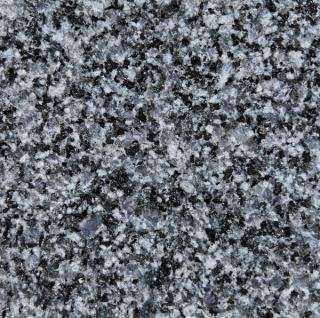

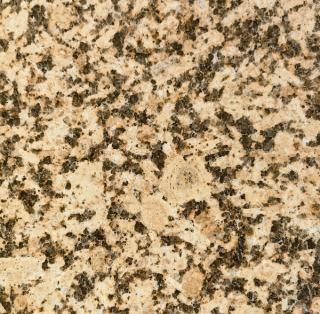

Large-format granite paving slabs are increasingly used in high-end residences, hotel entrances, commercial plazas, courtyards, and public landscape projects.
Compared with smaller stone units, large-format slabs reduce the number of joints and create cleaner, more continuous paved surfaces. This makes them particularly suitable for modern architecture and premium landscape designs where visual continuity and a strong sense of scale are important.
However, as slab dimensions increase, installation becomes more demanding. One common issue is the development of hollow areas or voids beneath the slabs.
Some paving may appear perfectly level immediately after installation, with clean and consistent joints. After a period of use, however, certain areas may produce a hollow sound when tapped, develop slight movement, or show changes around edges and joints.
It is easy to assume that this happens simply because:
“The slabs are too large.”
In reality, large-format granite slabs do not automatically develop hollow spots.
The more important question is:
As slab dimensions increase, how can continuous, uniform, and stable support be maintained across the entire underside of the slab?
This is the key to understanding and controlling hollow spots and voids beneath large-format granite paving.
Why Are Larger Slabs More Sensitive to Support Conditions?
Small-format paving units cover relatively limited areas. If there are minor variations in the substrate, installers usually have more flexibility to make local adjustments.
Large-format granite slabs behave differently.
A single slab may extend across several small high and low points in the substrate. If the base is not sufficiently level, the slab may initially make contact only at the higher areas, while other sections remain inadequately supported.
From above, the slab may still reach the correct finished elevation.
But achieving the correct surface level is not the same as providing complete support underneath.
For large-format paving, the objective is not simply to have several points carrying the weight of the slab. The underside should have the most continuous and stable support possible.
As the slab area increases, the consequences of local unsupported areas generally become more significant.
Substrate Flatness Is the Foundation of the Installation System
Large-format granite paving places greater demands on substrate preparation than smaller paving units.
If the substrate has significant local height variations, more correction has to be made through the bedding layer during installation.
This can create areas where the bedding material is relatively thick and others where it is much thinner, making consistent support across the entire slab more difficult to achieve.
A sound installation should therefore follow a basic principle:
The substrate establishes overall flatness, while the bedding layer provides fine adjustment and stable support.
Large variations that should have been corrected during substrate preparation should not be left entirely to the final installation stage.
The more stable and level the substrate is, the easier it becomes to achieve uniform support beneath a large granite slab.
This is why quality control should not focus only on whether the finished stone surface looks level. The condition of the substrate before installation is equally important.
Why Should Localized Point Support Be Avoided?
On some projects, installers may use several concentrated bedding points beneath a slab to adjust its height quickly.
At first, this can appear efficient.
Once several points have been adjusted, the slab may immediately reach the required finished elevation.
However, for large-format natural stone, reaching the correct elevation and achieving stable support are two different things.
If only a few areas are actually carrying the slab, loads applied elsewhere must be transferred through the stone toward those support points.
Under repeated pedestrian, equipment, or vehicle loading, unsupported areas may experience very slight movement or vibration. At the same time, stresses can become increasingly concentrated around the existing support points.
The objective should therefore not simply be to support the slab at the correct height.
It should be to:
Create the most continuous and evenly distributed support possible beneath the slab.
This becomes particularly important at hotel entrances, commercial areas, vehicle-accessible landscapes, and other locations exposed to higher loads.
The Back of the Slab Also Affects Contact
When hollow areas are investigated, attention often focuses on the substrate and bedding material. The condition of the stone itself can be overlooked.
After cutting and processing, the back of a large granite slab may carry stone dust, debris, or other residues that can interfere with effective contact between the stone and the bedding system.
With smaller paving units, a localized contact problem may affect only a limited area.
With large-format slabs, the contact area is much greater, so inadequate contact across one section can have a more noticeable effect.
Before installation, therefore, quality control should not stop at checking slab dimensions, thickness, and surface finish.
The underside should also be in a suitable condition for installation.
It may seem like a minor detail, but it directly affects whether the slab and the supporting layer can function as a unified system.
Why Can Paving Look Fine Initially but Develop Hollow Areas Later?
This is one of the most easily misunderstood aspects of large-format granite paving.
Immediately after installation, the surface may appear perfectly level and the joints may look consistent.
However, if unsupported areas already exist beneath the slab, the stiffness of the granite may temporarily conceal the problem.
Over time, pedestrian traffic, equipment movement, or vehicle loads repeatedly transfer forces through the slab.
If temperature changes, minor substrate movement, or moisture are also present, areas with weaker support may gradually become more noticeable.
Eventually, the paving may begin to produce a different sound when tapped, show slight movement, or develop changes around the joints.
Therefore:
A level surface immediately after installation does not prove that the slab is fully supported underneath.
Stable large-format paving requires control of both the visible surface and the supporting structure hidden below it.
Why Do Edges, Corners, and Joints Need Particular Attention?
The edges and corners of large-format granite slabs are often sensitive areas.
During installation, contractors naturally pay close attention to the finished elevation at the four corners. But if support around those corners is incomplete, concentrated loads can still cause slight movement later.
In continuous paving, the corners of several slabs often meet around the same joint area.
If one slab begins to move slightly, it can affect adjacent joints and may eventually create small differences in level or joint width.
Installation should therefore control corner elevations without focusing only on the corners themselves.
Surface alignment and full underside support need to be considered together.
Outdoor Paving Must Also Consider Drainage and Long-Term Exposure
Exterior granite paving is continuously exposed to rain, temperature changes, and seasonal environmental conditions.
If the paving system does not drain properly, moisture may remain beneath the slabs or within the supporting layers for extended periods.
Water alone does not automatically cause hollow areas. However, persistent moisture, changes in the substrate, and repeated freeze-thaw cycles in colder climates can increase the risk of already weak areas deteriorating over time.
Support and drainage should therefore not be treated as completely separate issues.
Substrate falls, the bedding structure, and surface drainage should work together as one system.
Stable support determines how loads are transferred through the slab, while effective drainage helps the overall paving structure remain stable over the long term.
Different Applications Require Different Support Considerations
A granite slab of the same dimensions and thickness can experience very different conditions depending on where it is installed.
A private courtyard may primarily carry pedestrian traffic.
A hotel drop-off area, commercial entrance, or vehicle-accessible landscape may be exposed to heavier and more frequent dynamic loads.
As loading increases, the consequences of localized unsupported areas generally become more significant.
For this reason, the installation method for large-format granite paving should never be considered separately from the intended use of the space.
Slab thickness, substrate construction, bedding system, and installation method should all be considered in relation to the expected loading conditions.
Much of Paving Quality Is Hidden Beneath the Stone
Once large-format granite paving is complete, people see the natural stone color, texture, surface finish, joints, and overall architectural effect.
Many of the factors that determine whether the paving remains stable, however, are hidden underneath.
Substrate flatness, bedding consistency, contact beneath the slab, unsupported areas, and drainage conditions are almost impossible to see once construction is complete.
Yet these factors continue to influence the paving for years.
High-quality large-format granite paving is therefore not simply about creating an attractive finished surface.
The support system beneath that surface must be equally reliable.
Conclusion
Hollow spots or voids beneath large-format granite paving slabs should not simply be attributed to the size of the stone.
As slab dimensions increase, the installation becomes more sensitive to substrate flatness, bedding consistency, underside contact, and overall support conditions.
Effective control begins with a stable and properly prepared substrate. The installation process should then create the most continuous and uniform support possible beneath the slab while also considering expected loads, drainage, and long-term environmental conditions.
For high-end residences, hotels, commercial landscapes, and public spaces, successful large-format natural granite paving is not only about achieving a level surface and consistent joints on the day of installation.
More importantly, the slabs should remain properly supported over years of use without developing significant hollow areas, voids, movement, or localized stress.
Only when these hidden elements beneath the paving are properly controlled can the scale, natural character, and architectural effect of large-format granite slabs be maintained over the long term.