
In luxury residences, private estates, boutique hotels, commercial landscapes and public spaces, granite paving is rarely an isolated material.
It connects entrances, driveways, courtyards, gardens, steps and outdoor gathering areas, while strongly influencing the first visual impression people experience when entering a space.
For landscape designers, selecting granite therefore involves much more than choosing an attractive colour from a collection of samples.
Professional material selection requires consideration of architectural style, spatial scale, application area, natural stone characteristics, surface finish, dimensions, batch consistency, supply capability and the way the material will look after years of use.
Especially in high-end projects, the real question is usually not:
“Which granite looks the best?”
The more important question is:
“Which granite is most appropriate for this project, and will it still achieve the original design intention when installed across a large area?”
There is a significant difference between these two approaches.
Start with the Architecture, Not the Stone
Successful paving design begins with understanding the architecture.
A contemporary minimalist residence, a traditional European estate, a country house, a boutique hotel and a commercial building all require different relationships with their surrounding paving materials.
If the architecture uses large areas of glass, metal and clean geometric lines, the paving usually needs controlled colours and textures so that the ground becomes an extension of the architecture rather than competing with it.
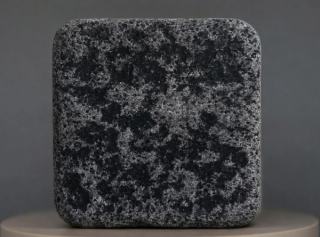
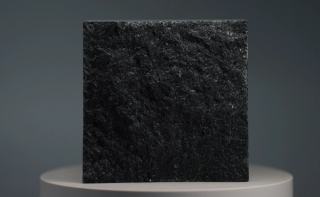
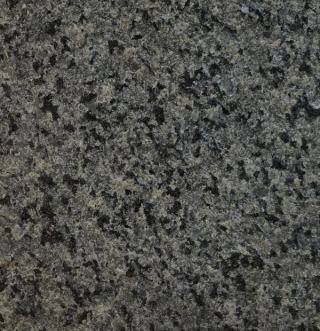
Grey, dark grey, charcoal and black granite, as well as varieties containing subtle natural crystals, can work particularly well with this architectural language.
If the project involves a traditional estate, country residence or historically influenced building, warmer and more naturally aged materials may be appropriate.
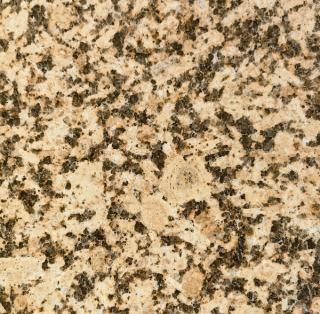
Warm yellow, beige-grey, naturally rust-toned and antique finish granite can create a softer relationship between the paving, traditional architecture, timber, planting and natural stone walls.
The first question when selecting paving should therefore not be:
“What colour do I like?”
It should be:
“What kind of ground surface does this architecture need?”
Once this question has been answered, the range of suitable materials becomes much easier to define.
Colour Is Only the Beginning of Material Selection
Colour is naturally one of the first characteristics people notice when comparing granite.
Light grey, beige-grey, dark grey, black, green, blue-grey, warm yellow and naturally mixed colours can all create completely different spatial atmospheres.
But high-end landscape design cannot be based only on the colour of a single sample.
A small stone sample and several hundred or even several thousand square metres of finished paving create very different visual impressions.
Light-coloured granite can increase the brightness of a large area and make courtyards and building entrances feel more open.
Dark granite can strengthen the visual weight and boundaries of architecture, making it particularly suitable for contemporary residences, luxury entrances and projects with strong architectural lines.
Warm-toned granite often establishes a more natural relationship with planting, brick, timber and traditional buildings.
Granites featuring natural colour contrasts, crystalline structures or distinctive mineral patterns can become recognizable design materials within a project.
The real question for a landscape designer is therefore not simply whether an individual stone looks attractive.
It is:
“When this colour is installed across the entire area, will it still work with the architecture and landscape?”
Do Not Eliminate Natural Variation — Control It
Natural granite is not an industrial ceramic product.
Even stone from the same quarry and the same granite variety can show subtle differences in colour, crystal distribution, grain and natural pattern from one block to another.
In high-end landscape design, these differences are not necessarily defects.
Appropriate natural variation can actually prevent large paved surfaces from developing the repetitive appearance often associated with industrial materials.
What matters is controlling the range of variation.
If a designer expects every piece of natural stone to be completely identical, some of the most valuable qualities of the material may be lost.
On the other hand, without proper material selection and grading, large paved areas can develop obvious colour patches, sudden tonal changes or an unbalanced overall appearance.
One of the most important capabilities behind high-quality granite supply is therefore the ability to preserve natural variation while controlling the overall colour range and quality.
For large projects, this can be even more important than the appearance of an individual sample.
The finished project will not be viewed as one stone.
It will be experienced as thousands, or sometimes tens of thousands, of individual stones forming one continuous landscape.
Surface Finish Determines the Character of the Stone
The same granite can look remarkably different depending on its surface treatment.
This is one of the most important aspects of stone selection, yet it is often underestimated.
Surface finishing affects more than texture. It can change the perceived colour, crystalline appearance, relationship with light and shadow, and the overall character of the space.
Surfaces with stronger natural relief can emphasize the raw qualities of natural stone. They can work particularly well in estates, courtyards, traditional landscapes and projects where an authentic material character is important.
Flamed, bush-hammered and other textured finishes can create different degrees of surface roughness, giving granite a more consistent appearance suited to architectural and landscape paving.
Antique finishing can further reduce the sharp, mechanical appearance of freshly processed stone. Softer edges and a more aged surface character make it particularly suitable for spaces seeking historical depth, traditional character or a more established appearance.
Therefore, when evaluating a granite variety, it is not enough to ask:
“What stone is this?”
The next question should be:
“Which surface finish will allow this stone to serve the design language of the project?”
Different Areas Do Not Always Need the Same Finish
A complete landscape project usually contains several functional zones.
Entrances, driveways, courtyards, pedestrian paths, steps, terraces and areas immediately surrounding buildings do not necessarily have the same requirements.
Areas with frequent vehicle traffic need careful consideration of abrasion resistance, slip resistance, stone thickness and structural performance.
Primary pedestrian areas require slip resistance but should also consider walking comfort.
Paving near the main building entrance often has a stronger visual role and needs to establish a relationship with façades, steps and entrance materials.
Garden paths can feel more natural, while main entrances may require a stronger sense of order and formality.
High-end landscape design therefore does not necessarily mean using one size, one colour and one finish throughout the entire project.
A more sophisticated approach is to establish a unified stone system and then introduce controlled variations according to the function of each area.
The same granite, for example, can be used with different dimensions, laying directions or surface treatments to distinguish vehicle and pedestrian zones.
Alternatively, two complementary granite varieties can create boundaries and visual guidance through carefully controlled tonal differences.
This maintains overall design consistency while responding to the functional requirements of individual spaces.
Stone Dimensions Are Also Part of the Design Language
The dimensions of granite paving are not merely production specifications.
Different sizes directly influence the proportion, rhythm and visual scale of a landscape.
Small-format granite cobblestones create more joints and a stronger paving texture. They are particularly suitable for curved driveways, courtyards, entrances and spaces where a more traditional paving language is desired.
Larger paving slabs reduce visual fragmentation and create a calmer, more contemporary ground plane. They can work particularly well around large architectural entrances, terraces and modern landscapes.
When different scales are combined carefully, they can also establish hierarchy within a project.
For example, larger granite paving slabs may be used around the main building, while cobblestones define driveways, borders or transition areas.
The materials can remain within the same colour family while different dimensions distinguish functional zones.
At this point, dimensions are no longer simply measurements.
They become part of the spatial design.
High-End Projects Need to Consider the Entire Paved Area
One common mistake when selecting natural stone is focusing too heavily on a single sample.
Samples are certainly important.
They allow designers to examine colour, crystals, grain, surface treatment and processing details.
But a sample cannot fully represent a large paved area.
For projects involving hundreds or thousands of square metres, the overall performance of the material across the entire installation becomes much more important.
Is the natural colour variation appropriate?
Can differences between production batches be controlled?
Is the surface treatment consistent?
Are the dimensions and thickness suitable for installation?
When large quantities of stone are combined, will the colour variation appear natural, or will obvious tonal divisions emerge?
These questions can only be properly evaluated when material selection is considered at project scale.
For important projects, designers and buyers should therefore look beyond the approval of a single sample and understand how raw materials are selected, how batches are graded and how finished products are controlled.
A high-end project does not simply need a beautiful stone. It needs a material system capable of delivering the intended design consistently.
Consider How the Stone Will Look in Ten Years, Not Just on Completion Day
One of the major differences between natural granite and many decorative surface materials is its long service life.
For this reason, designers should not evaluate stone only according to how it will look immediately after installation.
They should also consider how the material may develop after several years or even decades.
Sunlight, rain, winter conditions, vehicles, pedestrians and routine maintenance will continuously affect the paving surface.
Some materials may appear extremely uniform when newly installed but become increasingly tired as they age.
High-quality natural granite behaves differently.
When the stone itself is stable, the processing is appropriate and the installation is properly executed, it can gradually become more integrated with the architecture and planting around it.
Natural surfaces, antique finishes and granite varieties with distinctive mineral structures can be particularly effective in this respect. Subtle changes over time do not necessarily weaken the design. They can actually help the landscape feel more established.
This is one reason natural stone is particularly suitable for luxury residences, estates, hotels and public landscape projects designed for long-term quality.
The designer is not only selecting how the project will look on the day it is completed.
They are also selecting what the space may become ten years later.
Rare Does Not Automatically Mean Suitable
Distinctive natural stone can have strong appeal in high-end projects.
Unusual colours, visible crystals, natural contrasts and unique mineral structures can give a landscape a much stronger identity.
But rarity alone does not determine whether a material is appropriate.
The more expressive the stone, the more carefully it needs to be used.
If the architecture already features complex façades, strong colours or multiple decorative elements, adding highly active paving may create unnecessary visual competition.
In contrast, when the architectural language is clean and the surrounding materials are restrained, granite with natural crystals or distinctive patterns can become an important design feature.
High-end material selection is therefore not about continuously adding more expensive, rare or visually dramatic materials.
Mature design means understanding when the stone should become a focal point and when it should quietly support the architecture.
Move from Selecting Products to Building a Material System
For complex high-end landscape projects, the most effective approach is usually not to select individual products in isolation.
It is to establish a complete material relationship.
The process can begin by defining the overall colour direction.
A primary paving material can then be selected.
According to the requirements of driveways, courtyards, pedestrian paths, steps and boundaries, appropriate dimensions and surface finishes can then be developed.
Finally, kerbstones, steps, paving slabs and other custom stone elements can connect the natural stone language throughout the landscape.
The main advantage of this approach is that the project avoids a common problem: every individual area may look attractive on its own, yet the overall landscape lacks visual connection.
Instead, the architecture, ground surfaces and landscape begin to speak the same material language.
This is an important distinction between ordinary paving projects and high-end landscape design.
Ordinary projects often begin with products.
High-end landscapes should begin with space.
The Right Granite Allows the Design Intention to Become Reality
For landscape designers, selecting granite paving has never been simply a matter of choosing a colour.
It means balancing architecture, spatial proportion, natural variation, surface texture, functional requirements, installation methods and the way the material may change over decades.
Colour creates the first impression.
Natural pattern gives the space identity.
Surface finish changes the character of the material.
Dimensions establish rhythm and scale.
Natural variation gives the paving life.
And consistent material selection, processing and batch control determine whether the effect shown in the design can actually be achieved on site.
The most important standard for high-end granite paving is therefore not simply to choose the “most expensive,” “rarest” or “most distinctive” stone.
It is to find the right balance between architecture, landscape, function and the natural characteristics of the material.
When the colour, texture, dimensions and finish of the granite work naturally with the surrounding space, people entering the project may not immediately recognize which specific granite has been selected.
But they will feel that the entire environment belongs together.
That may be the real measure of successful material selection in high-end landscape design.