
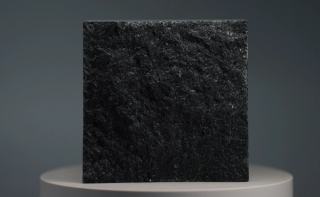
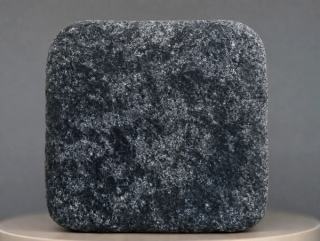
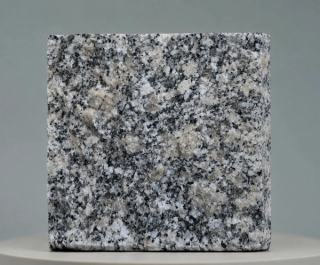
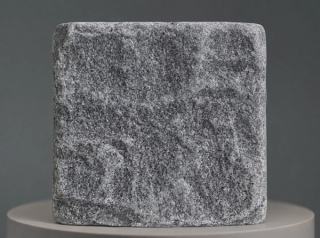
Natural granite cobblestones offer excellent wear resistance, weather resistance and a distinctive natural texture. They are widely suited to pedestrian streets, commercial plazas, cultural building entrances, hotel forecourts and other public landscape spaces.
However, once cobblestones are used in high-traffic pedestrian areas, their suitability cannot be judged only by stone strength or slip resistance.
Public spaces are used every day by many different people. Pedestrians, older people, children, people pushing strollers, travellers with wheeled luggage and wheelchair users all experience paving surfaces differently. Surface variation, level differences between adjacent stones, joint width and the continuity of accessible routes can all affect walking comfort.
For this reason, granite cobblestones in public pedestrian spaces should not simply be made as rough as possible. The objective is to achieve an appropriate balance between slip resistance, surface stability, durability and the natural character of the stone.
Slip Resistance Does Not Mean the Rougher the Better
Outdoor public spaces are exposed to rain, dust and, in some climates, snow and ice. The paving surface therefore needs appropriate slip resistance.
Natural split surfaces and other textured granite finishes can provide good friction. However, excessive surface relief can also reduce walking comfort.
The effect may be relatively minor for ordinary pedestrians, but it becomes more noticeable for high heels, small luggage wheels, strollers and wheelchairs.
For this reason, “rougher” should not automatically be understood as “safer” when selecting granite cobblestones for pedestrian areas.
What needs to be controlled is an effective slip-resistant texture without excessive local surface variation. The stone can retain its natural character, but the main walking surface should remain relatively stable so that feet and wheels can move continuously across it.
Surface Variation Should Be Controlled Across the Whole Paved Area
The visible individuality of each stone is one of the characteristics that distinguishes cobblestones from conventional sawn paving slabs.
Moderate surface variation creates depth and reinforces the natural character of the paving. However, in large public pedestrian areas, excessive variation from stone to stone can accumulate and create a noticeably uneven walking surface.
Surface relief therefore needs to be controlled appropriately when cobblestones are intended for public pedestrian use.
This does not mean processing them into completely flat paving slabs. The objective is to retain natural texture while keeping the primary walking surface more consistent.
In high-traffic areas, suitable secondary surface processing can soften excessive high points while maintaining sufficient slip-resistant texture.
For these applications, controlled natural variation is generally more important than an intentionally very rugged appearance.
Joints Are Also Part of Walking Comfort
The comfort of cobblestone paving is not determined by the stone surface alone.
Joints are equally important.
If joints are too wide, small luggage wheels, strollers and wheelchairs can experience greater vibration. If jointing material settles or is lost over time, the joints may gradually develop into recessed grooves.
Stone dimensions, dimensional variation, joint width and the jointing system should therefore be considered together.
Cobblestones with reasonably consistent dimensions make it easier to maintain controlled joints across large paved areas. During installation, joints should also be properly filled using a system suitable for the paving construction and expected outdoor conditions.
Natural cobblestone paving does not require every joint to be perfectly identical.
The important point is to avoid uncontrolled changes in joint width or deep local joints that repeatedly interrupt an otherwise continuous walking surface.
Level Differences Between Adjacent Stones Can Matter More Than Uniform Surface Texture
When considering pedestrian paving, considerable attention is often given to whether the stone surface is rough enough, while differences in level between adjacent cobblestones receive less attention.
In practice, consistent fine surface texture is generally easier to walk across than sudden changes in level at the edge between two stones.
These differences are not always caused by the stone itself.
Variations in stone thickness, base stability, bedding control and installation quality can all affect the finished surface.
Public cobblestone paving therefore requires coordination between material control and installation.
The stone supplier should maintain reasonable consistency in dimensions, thickness and surface condition, while the installer needs to control the base, bedding layer and finished levels to reduce raised edges and abrupt changes.
This is why the same granite cobblestone can provide very different walking experiences in different projects.
The final result depends on the complete paving system, not only on the individual stone.
Accessible Design Does Not Necessarily Mean Eliminating Cobblestones
When accessibility is required in a public space, this does not mean that cobblestones must be removed from the entire project.
A more effective approach is to divide the paving according to different circulation requirements.
For example, natural granite cobblestones can be used across the main plaza, while smoother granite paving with more controlled joints can be introduced at principal entrances, accessible routes and areas frequently used by wheelchairs.
Both paving types can use the same or complementary granite colours, maintaining visual continuity while using different formats and finishes to define their functions.
If small-format granite paving is also required on the accessible route, surface variation, joint width and level differences between adjacent units need tighter control, and the design should follow the applicable accessibility standards for the project location.
Accessibility should therefore be considered during material selection and paving layout rather than added after the paving design has already been completed.
Different Pedestrian Zones Can Use Different Control Standards
Not every part of a large public space experiences the same level of pedestrian traffic.
Main entrances, primary pedestrian routes, accessible paths and transport connections may receive continuous heavy use. Landscape edges, courtyards and lower-traffic areas may have different requirements for surface smoothness.
There is therefore no need for every part of a project to use exactly the same cobblestone finish.
A cultural building plaza, for example, can use natural granite cobblestones to establish the overall landscape character, while the main entrance and high-traffic routes use tighter controls on surface variation and joints. Areas along the landscape edges can retain a more pronounced natural stone texture.
Cobblestones can also be combined with large-format granite slabs.
Cobblestones provide scale, texture and landscape character, while larger slabs can define primary pedestrian routes, entrances and accessible connections.
Rather than creating a conflict between materials, this approach allows different granite formats to perform different functions.
Do Not Approve a Public-Space Project Based on One Stone Sample
Sample approval for public pedestrian projects should also be approached differently from small landscape installations.
Looking at only one stone tends to focus attention on colour and individual surface texture, but it does not show how the paving will perform across a larger area.
The actual pedestrian experience is determined by the combined surface created by many stones.
For larger projects, it is therefore more useful to review a multi-piece sample or a small mock-up area to assess overall colour variation, surface relief, joint relationships and finished evenness.
This provides a better basis for determining whether the natural variation is within an appropriate range and whether the selected finish is suitable for high-frequency pedestrian use.
Good Public Paving Should Be Both Slip-Resistant and Comfortable to Walk On
Using granite cobblestones in public pedestrian spaces involves more than simply selecting a slip-resistant finish.
The surface needs sufficient friction without excessive relief. Joints should retain the character of cobblestone paving without becoming too wide or deep. Abrupt level differences between adjacent stones should be minimised, while accessible routes need to be incorporated into the overall paving system from the design stage.
Different finishes, stone formats and combinations of cobblestones with granite slabs can also be used according to pedestrian intensity.
A mature public paving design does not choose between slip resistance, comfort, durability and natural stone character.
Instead, it coordinates material selection, fabrication control, paving design and site installation so that these requirements can work together.
In this way, natural granite cobblestones can retain their distinctive landscape character while remaining suitable for long-term, high-frequency use in public pedestrian spaces.