
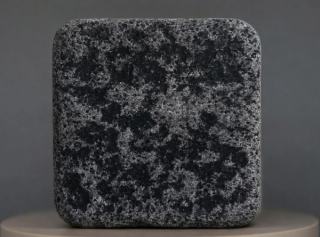
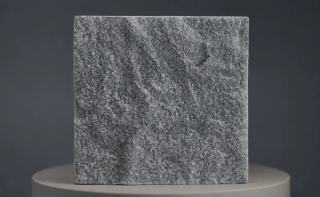
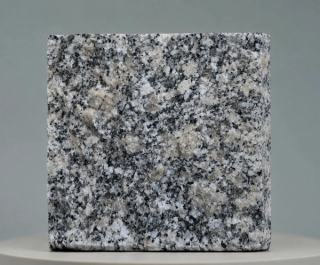
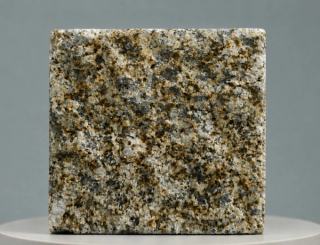
Once installed, granite cobblestones may look like relatively simple pieces of natural stone. However, transforming large granite blocks from the quarry into finished cobblestones suitable for courtyards, driveways, hotel entrances, commercial landscapes, and urban public spaces involves several stages of processing.
Block selection, cutting methods, splitting, surface finishing, and tumbling can all affect the final dimensions, edge condition, and surface texture of the stone. After processing, the cobblestones also need to be inspected and graded so that natural variation can be retained while the overall paving remains visually and technically consistent.
Understanding how granite cobblestones are made is therefore not simply about knowing how a large piece of stone is cut into smaller units.
More importantly, it is about understanding:
How does each processing method change the stone, and how does that ultimately affect the finished paving?
Granite Cobblestone Production Begins with Raw Block Selection
Natural granite is first extracted from the quarry in large blocks before being transported for further processing.
Unlike manufactured materials, granite is not completely uniform in color or texture. Even blocks from the same quarry may show natural variations in tone, mineral grain, crystal distribution, and local patterning.
For cobblestone production, these differences are particularly important.
A slight variation may be barely noticeable when looking at a single sample. But when thousands or even tens of thousands of cobblestones are installed across a residential development, hotel landscape, or public plaza, these individual variations combine to create the overall appearance of the paved surface.
For this reason, large-volume production should consider more than whether each individual block is suitable for processing. The visual compatibility between different blocks also matters.
For projects requiring a controlled overall color range, raw block selection is already the first stage of batch consistency management.
Large Granite Blocks Must First Be Reduced to Intermediate Sizes
A large granite block does not go directly from the quarry to finished cobblestones.
Once it enters the factory, it normally needs to be progressively divided into slabs, strips, or other intermediate formats according to the required finished dimensions, thickness, and subsequent processing method.
For example, if a project requires 100 × 100 × 50 mm granite cobblestones, production planning must consider more than the final dimensions. Sawing loss, splitting allowances, surface processing, and possible dimensional changes during tumbling also need to be taken into account.
If the stone requires additional texturing, sufficient material must also be allowed for subsequent processing.
The finished dimensions are therefore only the final result.
Dimensional control actually begins much earlier, when the raw granite block is first divided.
Machine Cutting Establishes the Basic Dimensions
After the granite has been reduced to suitable intermediate sizes, further cutting begins to establish the basic dimensions of the cobblestones.
Machine cutting provides relatively stable control over length, width, thickness, and certain edge conditions, making it particularly important for contemporary landscape projects.
Natural stone can reasonably vary in size, but excessive dimensional variation can create inconsistent joints, irregular paving lines, and difficulties controlling the finished surface.
This becomes particularly important around high-end residential developments, hotel entrances, commercial forecourts, and other areas where paving details are visually prominent.
Designers often want to retain the character of natural stone while maintaining a clear and controlled paving layout.
Machine cutting is therefore not intended to make granite behave like an identical manufactured paving unit.
Its role is to establish a relatively stable geometric foundation before further surface and edge treatments are applied.
Splitting Creates the Characteristic Natural Stone Texture
Unlike machine cutting, which produces relatively regular surfaces, splitting makes use of the natural structure of the granite.
When mechanical pressure causes the stone to split, the resulting face develops natural height variation, visible mineral grains, and irregular details.
The surface is not completely flat like a sawn finish, and every piece contains subtle differences.
Across a larger paved area, these variations reduce excessive repetition and help preserve the natural character of granite.
However, natural splitting does not mean that greater irregularity is always better.
If dimensional variation becomes excessive, or if the split surface is too uneven, installers may struggle to maintain appropriate joint widths and a controlled finished level.
The real objective of high-quality split granite cobblestones is therefore to find a balance:
Preserve the natural variation of the stone while keeping that variation within a range suitable for installation and long-term use.
Why Are Some Cobblestones Machine-Cut While Others Are Split?
Granite cobblestones can be produced using different processing methods depending on their intended appearance and application.
Traditional engineering products may place greater emphasis on the rugged character created by natural splitting, while contemporary landscape paving may combine machine cutting with additional surface treatments.
For example, machine cutting can be used to control the base, sides, and fundamental dimensions of the cobblestone, while the visible upper face receives a separate natural-texture treatment.
This approach provides a relatively stable geometric base for installation while allowing the exposed surface to retain the texture and mineral character expected from natural granite.
As a result, two cobblestones made from the same granite and supplied in the same nominal size can look and perform very differently if their processing methods are different.
When comparing products, color and dimensions alone are therefore not enough. It is also important to understand how the visible surface and edges have been produced.
Tumbling Mainly Changes the Edge Condition
Freshly machine-cut granite cobblestones normally have clearly defined edges and may show obvious signs of recent processing.
Where a softer and more natural appearance is required, the stones can undergo additional tumbling.
During this process, the cobblestones continuously move, collide, and rub against one another. Sharp edges gradually become softer, while subtle irregular wear develops around corners and edges.
The difference may seem relatively small when examining a single cobblestone.
Across an entire paved area, however, the visual effect becomes much more apparent.
Sharp, untreated edges tend to emphasize the individual geometric outline of each unit. Properly tumbled edges create softer transitions between stones and can give the overall paving a more natural appearance.
More Tumbling Does Not Necessarily Mean Better Results
The degree of tumbling needs to be controlled according to the granite type, cobblestone dimensions, and intended final appearance.
If tumbling is too light, obvious machine-cut edges may remain.
If it is excessive, too much material may be worn away from the corners, producing an overly rounded appearance and potentially affecting the intended dimensional relationship between individual stones.
Different granites also react differently.
Variations in mineral composition, crystal structure, and hardness mean that the same tumbling process may produce different results on different stone types.
The important factor is therefore not a fixed tumbling time.
What matters is whether the final edge condition matches the intended design and whether the degree of wear remains reasonably consistent across the production batch.
Tumbling and Antique Finishing Are Not the Same Thing
Tumbling is a processing method, while antique finishing describes a broader visual objective.
Tumbling can soften newly processed edges and introduce a degree of natural-looking wear.
However, producing convincing antique granite cobblestones is not simply a matter of extending the tumbling process.
The final result also depends on the granite color, surface texture, edge condition, and overall visual balance of the batch.
If the corners are simply made very rounded without considering the character of the surface as a whole, the result may look heavily worn rather than naturally aged.
In other words:
Tumbling modifies the physical condition of the edges, while antique finishing requires control of the overall visual character.
Why Can Surface Finishing Change the Appearance of the Same Granite?
The final appearance of natural granite is determined not only by its inherent color but also by the way its surface is processed.
A smooth surface, a naturally split face, and a more pronounced textured finish interact with light differently.
As the surface develops greater relief, mineral grains and crystals reflect light at different angles, creating changes in brightness, shadow, and visual depth.
The same dark grey, black-grey, or blue-grey granite can therefore appear noticeably different when processed with different surface finishes.
This is why selecting cobblestones should involve more than confirming the stone name and color.
Granite type, dimensions, surface finish, and edge condition together define the finished product.
Why Are Finished Cobblestones Graded After Processing?
After cutting, splitting, tumbling, and surface finishing have been completed, the cobblestones still need to be inspected and graded.
Natural granite cannot be expected to have exactly the same color, texture, and surface appearance from one piece to another in the way that manufactured ceramic products can.
This is especially true for naturally split, tumbled, or strongly crystalline granites, where a reasonable degree of variation is part of the material itself.
The purpose of grading is therefore not to remove every cobblestone that looks slightly different.
Instead, it is to distinguish between natural variation that is acceptable and variation that falls outside the intended range for the project.
Dimensions are one important part of this process.
Changes in length, width, and thickness directly affect installation. If dimensional variation within a batch becomes excessive, installers need to compensate continually through positioning and joint adjustment, which can make it more difficult to achieve a controlled paving layout.
Color Grading Is About Overall Balance, Not Perfect Uniformity
Color also needs to be reviewed during final grading.
Natural color variation in granite is normal, and reasonable changes in tone can give large paved areas greater depth and a more authentic natural appearance.
The main concern is not variation itself, but individual stones that fall noticeably outside the overall color range of the project.
For example, a paving scheme based primarily on dark grey and black-grey granite can naturally contain lighter and darker pieces, as well as subtle variations created by different mineral crystals.
However, isolated stones with a clearly different overall tone may create distracting patches once installed.
For this reason, final grading should not aim to make every stone identical.
The objective is to allow natural variation while keeping the entire production batch within a coordinated overall color range.
Edge and Surface Conditions Also Need to Be Checked
Dimensions and color are not the only aspects considered during grading.
The condition of tumbled edges and the overall character of the surface texture also need to remain reasonably coordinated.
If some cobblestones in the same batch have very soft, rounded edges while others retain noticeably sharp corners, visual differences may remain even when the granite type and color are identical.
The same principle applies to natural surface texture.
Individual pieces do not need to be exact copies of one another, but the overall processing character should remain consistent across the batch.
This is the real meaning of batch consistency in natural stone:
The objective is not to eliminate natural variation, but to ensure that the variations still belong to the same product character.
Packaging Is the Final Protection Stage
Once dimensions, overall color, surface texture, and edge condition have been checked, approved cobblestones can move into packaging and transportation.
Granite has a high density, so large quantities of cobblestones can become extremely heavy.
Export packaging therefore needs to take into account the product dimensions, package weight, forklift handling, and container transportation conditions.
Appropriate packaging is not only about making the stone easier to transport.
It also helps reduce unnecessary movement, impact, and edge damage during loading, unloading, and long-distance shipping.
In this sense, packaging is the final protective stage of the manufacturing process.
From Raw Granite to Finished Cobblestones: Controlling Natural Variation
Transforming granite from quarry blocks into finished cobblestones involves raw material selection, size reduction, machine cutting, splitting, surface processing, tumbling, and final grading.
Each stage serves a different purpose.
Machine cutting establishes the basic dimensions. Splitting creates natural texture. Tumbling modifies the edges. Surface finishing determines the final visual character. Grading helps keep the entire production batch within a coordinated range.
The goal is not to produce thousands of stones that look exactly the same.
Instead, it is to create a batch of cobblestones that retains the natural variation of granite while remaining suitable for controlled installation and a coherent overall paving result.
For this reason, the quality of granite cobblestones should not be judged only by how attractive a single sample looks.
What matters more is whether the complete process—from raw block selection to final grading—can allow thousands or tens of thousands of natural stone units to come together as a paving surface with controlled dimensions, natural texture, and a balanced overall appearance.