
Many of Europe’s most memorable courtyards, private estates, historic streets and traditional residences share a quality that is difficult to reproduce with modern standardized materials.
This character does not come entirely from the age of the architecture, nor is it created only by façades, sculptures or mature planting.
Very often, the atmosphere begins with the ground beneath our feet.
Natural stone that has been used for decades develops softer edges, subtle surface irregularities and variations from one piece to another. Rain, sunlight and years of everyday use gradually allow individual stones to become part of the surrounding environment.
This is where a genuine sense of history comes from.
For newly built private estates, luxury residences, boutique hotels and landscape projects, however, waiting decades or even centuries for newly installed paving to develop this character is obviously not practical.
This is where antique finish granite cobblestones take on a distinctive design role.
Their purpose is not simply to make new stone “look old.” A well-executed antique finish reduces the mechanical appearance associated with modern stone processing and allows natural granite to express a softer, more authentic character with a greater sense of time.
A Sense of History Does Not Simply Mean “Looking Old”
This is one of the most important principles in understanding antique finish granite cobblestones.
A sophisticated historic character should never make paving look damaged or worn out. Nor should it depend on exaggerated chips, irregularities or artificial signs of age.
When the aging effect is overdone, the finished paving can easily feel manufactured rather than authentic.
What makes many traditional European stone pavements so attractive is their natural imperfection.
Individual stones vary slightly, yet the overall surface remains harmonious. Edges have softened over time without losing the visual strength of the stone. Surfaces show subtle irregularities while still maintaining a stable and coherent paving structure.
Therefore, the real purpose of antique finishing is not simply to imitate “old stone.”
It is to recreate some of the natural characteristics that appear when time interacts with genuine stone.
This is also one of the key differences between premium antique granite cobblestones and ordinary artificially aged paving products.
A successful antique finish should make people notice the natural stone first, rather than the processing technique.
Softer Edges Are the First Step Toward Historical Character
Modern machine-cut stone usually has relatively straight lines and sharp edges.
This precision works extremely well in contemporary architecture where order, geometry and clean detailing are important. However, when the same sharp appearance is introduced into a classical estate, traditional courtyard or historically inspired landscape, it can sometimes feel too new and mechanical.
Old stone paving looks different.
After years of foot traffic, vehicle movement, rain and natural weathering, originally sharp edges gradually become softer.
The change may appear subtle when looking at a single stone, but across an entire paved area it can significantly influence the atmosphere.
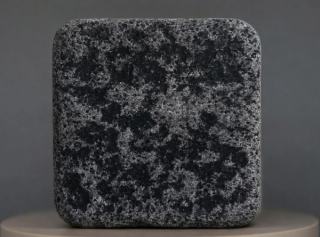
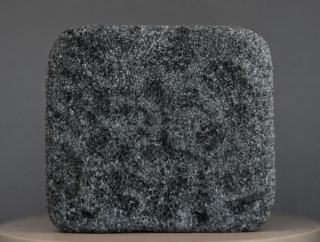
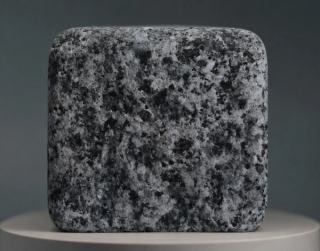
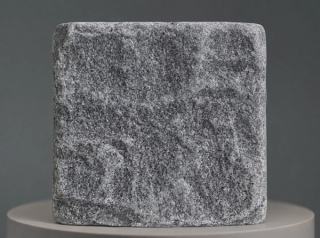
Antique finishing can soften the freshly processed edges of granite, reducing the strong machine-cut appearance.
Once installed, the boundaries between individual cobblestones feel less rigid, creating a more natural transition from one stone to another.
This becomes particularly noticeable across large private driveways, estate entrances and courtyards.
When hundreds or thousands of cobblestones come together, softer edges reduce the repetitive appearance often associated with industrial paving products and help create a surface that feels more naturally established within its surroundings.
Surface Texture Determines Whether Stone Has the “Touch of Time”
Historical character is not purely visual. It is also tactile.
Authentic natural stone paving rarely has the completely uniform surface associated with industrial products.
Subtle variations in relief, natural crystals, mineral grains and the way light falls across different angles all contribute to the authenticity of the material.
Surface treatment is therefore particularly important when producing antique finish granite cobblestones.
If the surface is too flat and uniform, the paving can still appear highly contemporary even when the edges have been softened.
When appropriate natural relief and mineral structures are preserved and combined with gently aged edges, the surface develops significantly greater visual depth.
During the day, sunlight falling across different heights and angles creates subtle variations from stone to stone.
In the evening, architectural lighting, garden lights and low-level landscape illumination can emphasize the relief and crystalline structures, producing stronger relationships between light and shadow.
These effects are not printed textures or artificially repeated patterns.
They come directly from the physical structure of natural granite.
This is one reason high-quality granite cobblestones can present different visual expressions depending on the time of day, weather conditions and surrounding lighting.
Natural Colour Variation Prevents Large Paved Areas from Looking Repetitive
Historic stone paving is rarely perfectly uniform in colour.
Far from being a defect, this variation is often one of the reasons old paving feels alive.
Natural granite consists of different minerals, and even within the same stone variety there can be subtle differences in shade, crystal distribution and texture from one piece to another.
For industrial products, absolute consistency may sometimes be considered desirable.
For premium landscapes seeking natural character and historical depth, excessive uniformity can have the opposite effect.
Successful antique granite paving therefore depends on controlling the overall colour relationship rather than forcing every individual stone to look identical.
Deep grey, charcoal and black-grey granite, for example, can use subtle differences in crystals and tonal depth to create a restrained and substantial landscape.
Warm yellow, beige and naturally rust coloured granite can bring a softer character to estates, country residences and traditional courtyards.
Granites featuring natural contrasting patterns, sparkling crystals or unusual mineral structures can add a stronger design identity while still retaining the timeless character associated with traditional cobblestone paving.
Premium natural paving does not require every stone to look identical. Each stone can be different while still belonging to the same landscape.
Historical Character Comes from the Laying Pattern as Well as the Stone
Even beautifully produced antique finish granite cobblestones will not automatically create a convincing historical landscape if the paving design itself is inappropriate.
Stone is only one part of the design language.
Dimensions, joint spacing, laying direction, borders and transitions between different areas all influence the final character of the space.
In traditionally inspired courtyards and estates, paving can be arranged with a stronger sense of rhythm, allowing the ground surface to flow naturally through the landscape.
On curved driveways, circular courtyards and entrance areas, changing the orientation of the cobblestones can follow the geometry of the road or architecture, allowing the paving itself to participate in the spatial composition.
Antique granite does not, however, need to be limited to traditional architecture.
In contemporary residences, a more controlled laying pattern, clean borders and restrained colours can create an interesting contrast between the natural character of the antique stone surface and the precise geometry of modern architecture.
This is one of the most interesting qualities of antique granite.
It is not a material reserved exclusively for historic buildings.
A traditional material language can also become part of contemporary design.
Why Private Estates and Luxury Residences Are Particularly Suited to Antique Granite Cobblestones
In a large private residence, the building rarely exists in isolation.
From the entrance gate onward, the driveway, gardens, courtyard, steps, main entrance and surrounding planting together form a complete arrival experience.
If every outdoor surface is finished with highly standardized industrial materials, the landscape can easily feel disconnected from the architecture.
Antique finish natural granite can help create continuity.
At an estate entrance, it can establish a substantial and refined first impression.
Along a private driveway, large areas of natural stone can use colour and texture to guide the eye toward the residence.
Closer to the main entrance, changes in laying direction, dimensions or border treatments can create a natural transition from vehicle areas to pedestrian spaces.
When the same material language continues into courtyards, garden paths or terrace surroundings, the entire residential landscape begins to develop a more coherent identity.
In this context, cobblestones are no longer simply a ground covering.
They become part of the way the residential landscape is organized.
Why Boutique Hotels and Resort Landscapes Benefit from a Sense of Time
Historical character can also be valuable in boutique hotels, estate hotels and resort developments.
These environments need to do more than simply perform well. They need to create an experience.
When guests arrive at a boutique hotel, country retreat or luxury resort residence, the ability of the landscape to establish a distinctive atmosphere immediately can influence the perception of the entire project.
Compared with conventional standardized paving, the natural colour variation, softened edges and authentic textures of granite are more capable of creating memorable entrance spaces.
This becomes particularly effective when the architecture already incorporates natural stone façades, timber, metal, mature planting or traditional architectural elements.
Antique granite cobblestones can act as a material connection between them.
They do not need to compete with the architecture like a highly decorative feature.
Instead, the continuity of the paving can quietly establish the character of the environment.
The objective is not necessarily to reproduce one particular historical period.
It is to use natural materials to give a new project a greater sense of depth and permanence.
The Real Challenge of Premium Antique Cobblestones Is Control
Creating an aged appearance is not particularly difficult.
Creating the right degree of aging is much harder.
If the edges remain too precise, the stone may lack historical character. If they are processed too aggressively, the granite can lose the strength and substance expected from natural stone.
If every surface looks identical, the paving can feel industrial. If variation becomes excessive, the overall installation may appear visually chaotic.
If the colour is too uniform, the natural vitality of the granite is lost. If colour variation is uncontrolled, large paved areas can become inconsistent.
For this reason, producing premium antique finish granite cobblestones is not simply about adding another processing stage.
It requires coordinated control of raw material selection, colour, natural pattern, dimensions, edges and surface character.
This becomes even more important on large projects.
The question is no longer whether one individual cobblestone looks attractive.
The more important question is:
When thousands of individual stones are installed together, will the entire paved area still look balanced and coherent?
This is the point at which an attractive individual stone becomes a true architectural material.
Historical Appearance and Modern Engineering Quality Are Not Opposites
Antique finishing emphasizes natural character and a sense of age, but this does not mean that dimensions, quality or technical performance should also become “old-fashioned.”
Quite the opposite.
Modern high-end landscape projects need the visual character of traditional natural stone together with the reliability expected from contemporary construction.
Antique finish granite cobblestones therefore need to find the right balance between natural appearance and controlled processing.
Edges can be softened while overall dimensions remain reasonably consistent.
Surfaces can retain natural relief while still considering pedestrian comfort, slip resistance and vehicle use.
Colours can vary naturally while large-volume installations still maintain a coherent overall appearance.
The finished paving may communicate history, while material selection, production, quality control, packaging and project supply continue to follow modern professional standards.
The best antique stone allows people to see the passage of time without seeing poor workmanship.
A Genuine Sense of History Gives New Landscapes Room to Grow
The real value of antique finish granite cobblestones is not to make a newly completed project pretend that it has existed for hundreds of years.
Their deeper purpose is to give new architecture a more natural material foundation from the beginning.
Natural granite itself will continue to experience sunlight, rain, seasonal changes and everyday use.
Plants will mature. Buildings will develop traces of life. Stone surfaces will gradually acquire characteristics unique to their particular environment.
Antique finishing is therefore not the end of the process.
It simply moves the stone away from an overly new, industrial appearance and gives it a more natural starting point.
Five years later, ten years later or several decades into the future, high-quality natural granite paving should not appear outdated simply because time has passed.
Instead, it can become increasingly integrated with the architecture and landscape around it.
This is one of the greatest qualities of authentic natural materials.
Making Time Part of Landscape Design
High-end landscape design does not require every material to become the visual focus.
Some materials reveal their value more gradually through the way they contribute to the entire environment.
Antique finish natural granite cobblestones are a good example.
Softened edges, authentic mineral structures, natural colour variations and carefully controlled surface textures work together to reduce the mechanical appearance of modern processing and give newly installed paving a more mature and natural character.
From European private estates, luxury villa entrances and courtyards to boutique hotels, resorts and historically inspired landscapes, antique granite cobblestones can become a material language connecting architecture, planting and time.
A truly successful antique paving surface should not make people immediately think:
“This stone has been artificially aged.”
Instead, it should create a much more natural impression:
These stones feel as though they have always belonged here.
When newly processed natural stone can become part of the architecture and landscape from the beginning, while continuing to evolve with its surroundings for decades to come, historical character is no longer simply an imitation of the past.
It becomes part of the future.