
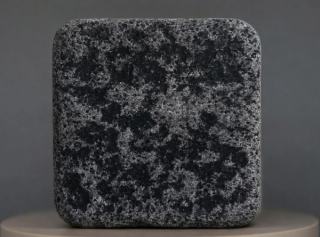
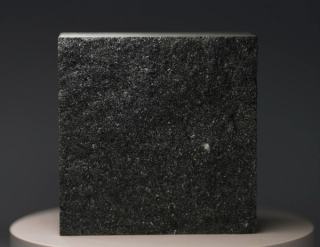
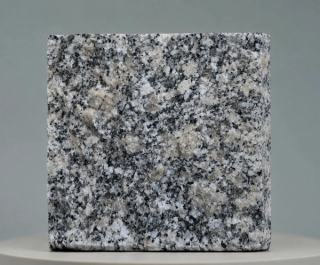
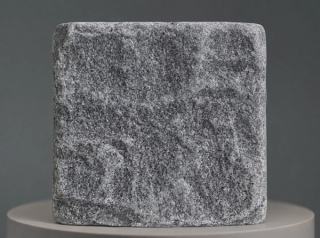
In high-end residential developments, boutique hotels, private estates, commercial landscapes, and public spaces, the selection of granite cobblestones often begins with a physical sample.
Designers and buyers use samples to examine the stone’s colour, mineral crystals, natural texture, surface finish, edge condition, and dimensions. This is an essential first step. However, for high-quality natural granite cobblestones, a single sample can only show the characteristics of one piece. It cannot fully represent how hundreds or thousands of square metres of paving will look once installed.
What ultimately determines the quality of a project is not whether one cobblestone looks particularly attractive, but whether the colour, texture, dimensions, and surface appearance remain visually balanced when a large quantity of natural stone is brought together.
A Single Sample Is Only the Beginning of Material Selection
Natural granite is different from a homogeneous industrial material.
Even within the same type of granite, reasonable variations may occur between different blocks in colour depth, mineral particles, crystal distribution, and natural veining. Subtle differences can also appear between different sections of the same block.
A sample therefore represents only one small part of the natural range of the material.
It can help determine whether the general colour suits the design direction, whether the surface finish is appropriate, and whether the mineral particles and crystals create the desired appearance. But it cannot fully predict how a large quantity of cobblestones will perform visually when installed together.
This is particularly important for granite with distinctive crystals, natural patterns, or noticeable colour variation. Making a final decision from a single sample can create a gap between the expected appearance and the completed paving.
High Quality Does Not Mean Every Stone Must Look Identical
The objective of high-quality natural stone paving is not to make every cobblestone look exactly the same.
If colour, crystals, and natural patterns are controlled too mechanically, granite can lose the depth and character that make natural stone attractive in the first place.
What really needs to be controlled is the acceptable range of variation and how that variation is distributed across the entire paved area.
Take grey granite cobblestones as an example. Once installed over a large area, they may naturally include lighter and darker grey tones together with subtle variations in mineral particles. When these differences are distributed evenly, the paving can develop a rich yet restrained natural character.
If batch management is poor, however, darker stones may become concentrated in one area while lighter stones appear in another, creating visible patches.
High-quality granite cobblestones are therefore not about eliminating natural colour variation. They are about managing that variation so that the completed paving remains visually coherent.
Small Differences in Surface Finishing Become More Visible Over Large Areas
Minor differences in surface finishing may be difficult to notice when examining an individual cobblestone.
Once thousands of pieces are installed together, differences in surface texture, processing intensity, and edge appearance can become much more noticeable.
This is particularly relevant for darker granite or stone with prominent crystals. Surface finishing directly influences colour depth and the way light interacts with the stone. If the finishing intensity varies significantly between production batches, certain areas may appear lighter, darker, rougher, or smoother than others.
For this reason, evaluating high-quality cobblestones requires more than confirming which surface finish has been specified.
The more important question is:
Does the overall batch maintain a reasonably consistent surface character while preserving the natural variation of granite?
A single sample cannot fully answer this question.
Dimensions and Thickness Should Also Be Evaluated as Part of the Overall Paving
Granite cobblestones are repetitive paving elements, so dimensional consistency becomes increasingly important as the installation area grows.
A small dimensional variation in one stone may hardly be noticeable. But in regular courses, curved layouts, or fan-shaped paving patterns, excessive variation can accumulate and affect joint widths, paving lines, and the overall visual order.
The same applies to thickness.
High-quality cobblestones do not necessarily require every piece to be mechanically identical. Instead, appropriate tolerances should be established according to the type of granite, production method, surface finish, and project requirements.
For designers and contractors, the objective is to retain the authentic characteristics of natural stone while providing sufficient dimensional consistency for controlled and efficient installation.
It is a balance between natural character and engineering control.
The Most Attractive Piece Is Not Always the Best Project Sample
Another issue that can easily be overlooked in high-quality natural stone projects is whether the sample is genuinely representative.
A supplier could select one piece with exceptionally uniform colour, prominent crystals, or particularly attractive natural texture from a much larger batch. That individual stone may look excellent, but it may not accurately represent the material that will be supplied for the entire project.
The real question should not be:
How beautiful can the best piece look?
It should be:
What range of colour, texture, and surface appearance can realistically be expected from the full production quantity?
If the sample does not represent this range, differences between the approved sample and the bulk order can create unexpected results even when the supplied stone itself is technically acceptable.
For high-quality projects, a representative sample is therefore often more valuable than simply selecting the most visually impressive piece.
Move from a Single Sample to a Multi-Piece Evaluation
A project can still begin with a single sample.
At the initial stage, it is useful for confirming the granite type, general colour, dimensions, and surface finish. Once the basic direction has been established, especially for larger projects, the next step should be to examine multiple pieces together.
For granite with noticeable colour, crystal, or texture variation, a small mock-up or trial paving area can provide a much more realistic understanding of the final appearance.
The way the material is evaluated should also change at this stage.
Instead of examining each cobblestone individually at close range, step back and look at the group as a whole. Consider whether the dominant colour remains stable, whether natural variations are distributed evenly, and whether the surface finish and edge character work together.
This is much closer to the way the material will ultimately be experienced in the finished landscape.
Natural Light Gives a More Realistic Impression Than a Sample Table
The appearance of granite changes under different lighting conditions.
The same stone may look different under indoor lighting, cloudy skies, or direct sunlight. Its colour can also become noticeably deeper when wet.
This is particularly relevant for high-quality granite with distinctive mineral crystals, darker tones, or unusual natural patterns. Looking at a sample indoors from a very short distance cannot fully demonstrate how the material will appear in the actual landscape.
For projects with higher visual requirements, it is therefore useful, whenever possible, to evaluate samples under natural outdoor light and from a viewing distance similar to that of the finished project.
This usually provides a more realistic impression than viewing a single piece on a sample table.
Large-Area Performance Reflects a Supplier’s Overall Quality Control
Producing a few attractive granite cobblestones is relatively straightforward.
The greater challenge is maintaining a natural, stable, and coordinated appearance when a project requires hundreds or thousands of square metres.
This depends on much more than the final finishing process.
Raw material selection, block management, cutting, dimensional control, surface finishing, colour sorting, batch coordination, and packaging can all influence the final paving appearance.
For this reason, selecting a supplier for a high-quality granite cobblestone project should involve more than comparing a few attractive samples.
It is also important to consider whether the supplier can maintain stable production at scale and manage colour ranges, dimensions, surface appearance, and different production batches consistently.
The Real Question Is How the Stone Will Look Once Installed
A single cobblestone can help a designer understand a material, but a project ultimately depends on the appearance of the complete paved surface.
The value of high-quality natural granite cobblestones does not come from making every piece identical. It comes from maintaining the natural variations in colour, crystals, and texture while ensuring that the overall installation remains balanced and coherent.
Moving from a single sample to multiple pieces, then to a project mock-up and finally to large-area paving, is a process of getting progressively closer to the real finished result.
For designers, buyers, and contractors, the final question should therefore not simply be:
“Does this individual stone look beautiful?”
It should be:
“When this granite is installed across the entire entrance, courtyard, driveway, or plaza, will it still deliver the landscape design intent we originally wanted?”
That is the more meaningful standard for evaluating high-quality granite cobblestones.