
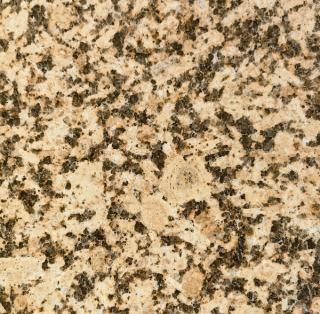


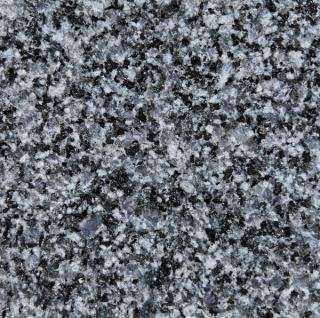
Large-format natural granite paving slabs are increasingly used at commercial building entrances, hotel forecourts, public buildings, urban plazas, and contemporary landscape spaces.
Compared with smaller paving units, large-format slabs reduce the number of visible joints, creating a cleaner and more continuous ground plane. They also work particularly well with the large-scale façades and proportions of contemporary architecture.
However, larger slabs do not mean that paving can simply continue across an unlimited area without interruption.
In fact, large-format granite paving can be more sensitive to substrate stability, structural movement, and temperature changes. If movement joints and paving divisions are not properly considered, cracking, joint compression, edge damage, or even localised lifting may occur over time, even when the granite itself meets the required standards for strength, thickness, and dimensional accuracy.
For this reason, movement joints and paving divisions should not be treated merely as installation details. They need to be considered as part of the complete paving system from the design and detailing stages.
Why Are Larger Slabs More Sensitive to Substrate Movement?
A small paving unit covers a relatively limited area of the substrate. When minor movement occurs beneath it, the effect on an individual unit is usually relatively localised.
Large-format slabs behave differently.
As the length and width of a slab increase, each piece covers a much larger area of the substrate. Minor settlement, shrinkage, or displacement occurring at different points beneath the slab may therefore act on the same piece of stone.
Natural granite has high compressive strength, but high compressive strength does not mean that the material can tolerate every form of bending or tensile stress.
If the substrate provides uneven support, or if different parts of a slab are subjected to movement in different directions, stresses can become concentrated within the stone. With longer and larger slabs, these effects can become more significant.
This is why large-format paving should not be considered only in terms of whether the granite is thick enough. The stability of the entire supporting system and the way movement is accommodated between different areas are equally important.
How Do Temperature Changes Affect Outdoor Granite Paving?
Outdoor paving experiences temperature changes every day.
Under direct sunlight, the surface temperature of granite can rise considerably. At night, during wet weather, or in winter conditions, the temperature falls again.
At the same time, granite, mortar, concrete substrates, and surrounding construction materials all expand and contract to some degree as temperatures change.
Individually, these movements may be very small.
However, when a plaza or commercial forecourt contains hundreds or even thousands of square metres of continuous paving, small movements accumulated across a large area can become significant.
If the paving extends continuously from a building entrance to the opposite side of a plaza or roadway without suitable locations for movement to be accommodated, stresses may gradually concentrate in weaker areas.
Slab corners, narrow sections, interfaces with buildings, and locations where the substrate construction changes can be particularly vulnerable.
Large outdoor granite paving areas therefore cannot simply be treated as surfaces that should be covered continuously. The paving system needs appropriate locations where movement can be accommodated.
What Is the Real Purpose of Movement Joints?
Many contemporary architecture and landscape projects aim for clean, visually continuous ground surfaces. As a result, designers often try to minimise visible joints.
There is nothing inherently wrong with this design objective.
However, reducing visible joints does not mean eliminating the movement capacity required by the paving system.
The fundamental purpose of a movement joint is to provide a controlled location where movement and stress can be accommodated.
When temperature changes, substrate shrinkage, or minor structural movement occurs, the paving system can respond at predetermined locations rather than allowing stress to concentrate unpredictably within an individual granite slab or joint.
Without appropriate movement accommodation, the paving itself may effectively become a rigid layer resisting these changes.
Over time, the result may be cracking, compressed joints, damaged slab edges, or localised lifting.
Movement joints should therefore not be viewed as unnecessary interruptions to the design. They are an important part of maintaining the long-term stability of large paved areas.
Why Do Large Paved Areas Also Need Proper Division?
Movement joints primarily help accommodate movement, while the division of large paved areas also helps organise the paving into more manageable sections.
Consider a large commercial plaza where granite slabs run continuously from the building façade to the opposite edge of the space.
This creates one very large, interconnected paved surface.
If movement occurs within a particular part of the substrate, stresses may be transferred through the continuous paving into surrounding areas.
A well-planned division strategy can separate a large surface into relatively independent paving zones, making the overall system easier to control.
It can also improve setting-out, slab layout, installation coordination, and future localised maintenance.
From an architectural and landscape perspective, these divisions do not necessarily need to appear as intrusive technical lines.
They can be coordinated with building grids, entrance boundaries, landscape strips, drainage channels, steps, tree pits, and changes in paving direction.
When technical divisions are integrated into the spatial design, they can actually reinforce the visual order of a plaza or building entrance.
Why Should Granite Slabs Not Simply Bridge Existing Structural Joints?
This is an important consideration in large-format granite paving.
If a concrete substrate or building structure already contains a structural movement joint, that location has been designed to allow a degree of relative movement between the areas on either side.
If the granite paving ignores this joint and a single rigid slab is installed directly across it, the stone effectively reconnects two areas that were intended to move independently.
When movement occurs below, the resulting stress can be transferred directly into the granite.
The structural joint does not disappear simply because it has been covered with stone. Instead, the movement may eventually reveal itself through cracking in the granite above.
For this reason, stone layout should not be developed solely according to the desired surface appearance.
Existing structural and substrate movement boundaries also need to be understood and coordinated during the paving detailing stage rather than being discovered during installation.
Why Should Slab Layout and Paving Divisions Be Designed Together?
Large-format granite paving usually follows a clear architectural layout.
Architects and landscape designers may want slab joints to align with façades, column grids, entrance axes, steps, or landscape structures.
If the stone layout is completed first and movement joints or structural divisions are considered only later, engineering requirements can easily conflict with the visual design.
For example, a large slab may have been designed to span a location where a structural joint needs to remain. The slab then has to be cut on site, or the original joint layout has to be changed.
Such late adjustments can disrupt the intended paving proportions and alignment.
A better approach is to consider the building grid, slab dimensions, structural joints, drainage locations, and major paving divisions together during the detailed layout stage.
This makes it possible, wherever practical, to coordinate technical joints with the visual joints already present in the paving design.
For high-quality natural stone projects, good detailing is not simply about drawing the dimensions of every slab. It is about coordinating architectural intent, site conditions, and factory fabrication.
Why Are Interfaces Between Different Materials Important?
Large-format granite paving rarely exists in isolation.
At building entrances, it may meet curtain walls, metal edging, concrete structures, or steps. In landscape areas, it may connect with kerbstones, drainage channels, tree pits, or other paving materials.
Different materials do not necessarily respond to temperature and structural movement in the same way. Their thermal behaviour, stiffness, and installation systems can all differ.
When adjacent materials move by different amounts, rigid connections between them can create concentrated stress at the interface.
Material transition zones therefore require particular attention during paving design.
From a landscape perspective, these locations are often natural spatial boundaries anyway. Material transition bands, drainage lines, or changes in paving direction can be used to integrate movement requirements into the overall design rather than treating them as isolated technical details.
How Far Apart Should Movement Joints Be?
This is one of the most common questions in large-format granite paving projects.
However, it is difficult to provide a single spacing that is appropriate for every project.
Indoor and outdoor conditions differ. Solar exposure varies. Dark and light granites can experience different surface temperature conditions. Substrate construction, paving area, slab dimensions, and installation systems also vary from project to project.
Building codes, construction practices, and engineering standards may also differ between countries and projects.
For these reasons, the specific spacing, width, and construction of movement joints should be determined by the project design and engineering team according to the structural system, substrate, local climate, and applicable standards.
A stone supplier can provide material-related input based on slab dimensions, fabrication methods, and paving layouts, but a universal fixed dimension should not replace project-specific engineering decisions.
This distinction is particularly important for large public buildings, hotels, commercial plazas, and major landscape projects.
Why Should This Information Be Included in Stone Shop Drawings?
For custom large-format granite projects, a factory needs more information than simply slab length, width, thickness, and quantity.
When a project includes numerous slab sizes, special shapes, drainage details, steps, building entrances, and complex boundaries, every fabricated piece has a direct relationship with its installation location.
If structural joints, major movement joints, and paving divisions have already been established, these should be reflected wherever relevant in the detailed stone layout and fabrication drawings.
This allows the factory to identify where natural slab joints should occur, where slabs should not bridge structural boundaries, and where fabrication dimensions may need to be adjusted around special details.
If these issues are discovered only after the granite has already been fabricated, slabs may need to be cut again on site, the original numbering and layout may be disrupted, or replacement pieces may even be required.
Detailed stone drawings are therefore not simply production documents. They are an important connection between architectural design, site installation, and stone fabrication.
Good Large-Format Paving Is Not About Eliminating Joints
Contemporary architecture often favours large-scale, continuous, and visually clean ground surfaces. However, high-quality large-format granite paving is not achieved simply by trying to make every joint disappear.
Slab joints can align with architectural axes. Paving divisions can follow spatial boundaries. Movement joints can be coordinated with drainage channels, material transition bands, or landscape features.
This approach allows the paving system to accommodate long-term movement while preserving the visual continuity associated with large-format natural stone.
Movement joints and paving divisions should therefore not be treated as additional problems to solve after the paving design has been completed.
From the early stages of a project, slab dimensions, substrate construction, temperature changes, architectural boundaries, and stone layout should be considered as parts of the same system.
The success of large-format granite paving depends on more than accurate fabrication and a flat finished surface.
What matters just as much is whether the entire paving system can remain stable, coordinated, and visually consistent after years of use, seasonal temperature changes, and minor structural movement.