
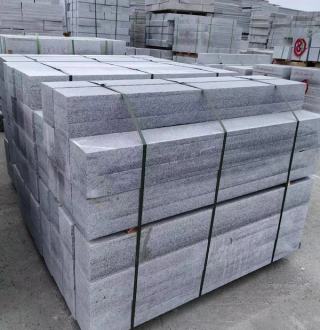
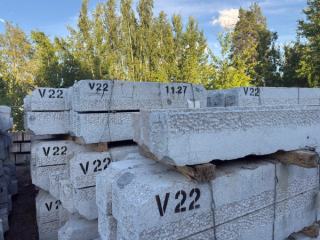
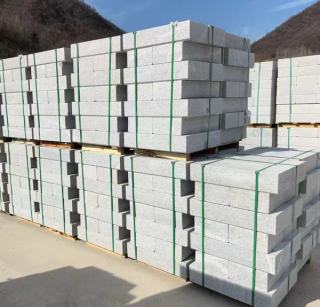
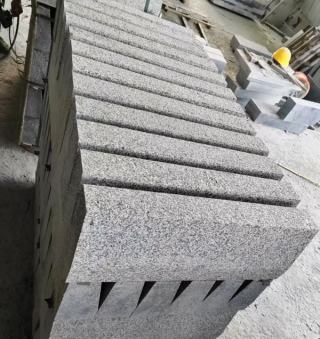
In large residential landscapes, boutique hotels, commercial districts, municipal roads and public spaces, granite kerbstones are usually installed as continuous linear elements.
When only a few kerbstones are viewed together, slight differences in colour may not be particularly noticeable. However, once tens or even hundreds of metres are installed continuously, a section that appears distinctly darker or lighter can make tonal differences much more visible along the entire boundary.
For this reason, colour control in large projects should not be understood as making every piece of natural granite exactly the same.
The more important question is:
How can the natural colour variation of granite be preserved while maintaining a coordinated, continuous and visually stable appearance across the entire project?
This is a challenge that needs to be considered throughout material selection, production and installation.
Why Does Natural Granite Have Colour Variation?
Granite is a naturally formed material.
Its colour comes from the combination of different minerals, crystal structures and geological processes. Even granite extracted from the same quarry can show differences in overall tone, mineral distribution, colour depth and local texture between individual blocks.
Therefore, colour consistency in natural granite cannot be evaluated in exactly the same way as an industrially manufactured material.
For high-quality granite kerbstones, reasonable colour control does not mean that every unit must be identical. Instead, the objective is to keep natural variations within a coordinated overall tonal range.
Individual stones can retain natural differences, but these differences should not create obvious visual jumps once the material is installed over a large area.
Kerbstones are particularly sensitive to this issue.
Unlike paving elements distributed across a broad surface, kerbstones often create continuous lines along roads, driveways, planting areas and paved boundaries. The eye naturally follows these lines, making local colour changes easier to notice.
Why Can Approved Samples Look Consistent While the Bulk Order Shows Colour Differences?
During material approval, designers and buyers normally evaluate only a limited number of samples.
These samples are useful for confirming the granite type, general colour, surface finish and overall quality, but they cannot fully represent all the natural stone required for a large project.
Once bulk production begins, hundreds or thousands of metres of kerbstones may require material from multiple granite blocks.
If these blocks have different overall tones and the variations are not properly managed during production, those differences will appear in the finished products.
The real problem is often not one unusually coloured kerbstone.
For example, a batch of light-grey kerbstones and another batch of slightly darker grey kerbstones may both fall within the acceptable natural range when inspected separately. But if the lighter pieces are installed continuously for dozens of metres and are suddenly followed by an entire section of darker pieces, the completed project may show a clear colour break.
Large projects therefore require more than asking:
“Is this individual stone acceptable?”
They also require asking:
“What will hundreds of these stones look like when installed together?”
These are two very different approaches to quality control.
Colour Control Should Begin with Granite Blocks
When a large granite kerbstone project requires relatively consistent overall colour, management should begin at the raw material stage rather than after all products have already been processed.
The same granite type may be produced from multiple blocks, but the overall tonal differences between those blocks should not be excessive.
If some blocks are noticeably darker while others are much lighter, processing them together without selection can create visible colour zones later in the project.
Basic screening of the main colour, mineral appearance and overall tone before production can significantly reduce this risk.
This becomes increasingly important as project size grows.
The earlier colour control begins in the production process, the greater the opportunity to make adjustments. Once all kerbstones have been processed, packed and delivered to site, resolving significant tonal differences becomes much more difficult and costly.
Surface Finishing Also Influences Final Colour
The final appearance of granite is not determined by the raw material alone.
Surface finishing changes the way light interacts with the stone and can therefore affect its perceived colour depth and overall tone.
Even when granite comes from similar raw material, noticeable differences in finishing intensity can make some finished pieces appear darker or lighter than others.
For this reason, colour control in large kerbstone projects should not focus only on the granite type.
The surface finishing standard also needs to remain stable.
This becomes particularly important when kerbstones are used together with granite paving slabs, cobblestones, steps or other natural stone components.
In these situations, designers should evaluate how the finished materials relate to one another after installation rather than comparing only the colour of unfinished stone.
The Main Risk Is Not Natural Variation, but Colour Concentration
A reasonable amount of colour variation in natural stone is not necessarily a problem.
What can seriously affect the finished appearance is the concentration of similar colours within one section.
Imagine a grey granite project containing naturally occurring light-grey, medium-grey and slightly darker-grey tones.
If these variations are distributed evenly throughout the project, the eye will usually perceive the installation as a coordinated grey surface.
However, if all the lighter material is concentrated at the beginning of a road and the darker material is concentrated further along, a visible boundary can appear even though every individual stone remains within an acceptable natural range.
Colour management in large projects therefore cannot be limited to inspecting individual pieces.
The distribution of different tones throughout the complete order is equally important.
This is one of the major differences between managing natural stone for a large landscape project and supplying a small-volume order.
Production and Packing Should Consider the Final Installation
As order volumes increase, relying entirely on individual workers to judge colour by eye can make consistency more difficult to maintain.
A more effective approach is to establish basic tonal classification during production and identify pieces that clearly fall outside the main colour range of the project.
The purpose is not to make natural granite look like a perfectly uniform manufactured product.
It is to prevent significantly different tones from becoming concentrated within the same section of the finished project.
Packing also needs to be considered.
If different production batches are packed separately and site installers simply use one pallet after another, small tonal differences between packages can become visible colour sections after installation.
For this reason, colour management in a large project is not simply a final inspection procedure.
It should be considered throughout raw material selection, production, inspection and packing.
Why Is Mixing Material During Installation Important?
For granite kerbstones with acceptable natural colour variation, installation methods can also influence the final appearance.
Where project conditions allow, several packages can be opened before installation so that the overall tones can be compared. Installers can then alternate material from different packages rather than completing one package at a time.
This helps distribute natural light and dark variations more evenly over longer distances.
For projects with particularly high visual requirements, important areas can also be partially dry-laid or pre-arranged before final installation.
This is especially useful around main entrances, hotel arrival areas, major landscape axes and long straight roads where continuous colour changes are particularly visible.
Mixing material during installation is not intended to hide the natural variation of granite.
Its purpose is to answer a different question:
How can natural variation be distributed more naturally throughout the entire project?
Long Straight Kerbstone Lines Are More Sensitive to Colour Differences
Not every application has the same requirement for colour consistency.
Along small garden boundaries, courtyard areas or locations partially concealed by planting, the visible length of kerbstones may be relatively short. Minor colour variations are therefore less likely to have a strong visual impact.
The situation is different at large residential entrances, hotel driveways, commercial streets, municipal roads and public spaces.
Here, kerbstones can form continuous visible lines extending for tens or hundreds of metres.
The longer the uninterrupted line, the easier it becomes for the eye to identify changes in overall tone.
As a result, the same degree of natural colour variation can have very different visual effects depending on where the kerbstones are installed.
For long-distance and highly visible areas, higher colour-control requirements should therefore be established during procurement and production rather than after installation.
Designers Should Define Acceptable Variation Instead of Requiring Zero Colour Difference
For natural granite, “no colour variation” is generally not a realistic objective.
If project specifications simply state that “the colour must be consistent,” designers, buyers, suppliers and contractors may interpret the requirement differently.
A more practical approach is to recognise from the beginning that natural granite can contain reasonable mineral and tonal variations while requiring the overall colour range to remain coordinated and free from obvious blocks or sections that disrupt the continuous landscape.
This approach better reflects the characteristics of natural stone and can also reduce disputes caused by different expectations later in the project.
High-quality natural stone does not mean stone without variation.
The real objective is to control the degree and distribution of that variation.
Phased Projects Need to Consider Differences Between Production Batches
Large landscape projects are often completed in several stages.
The first batch of kerbstones may be installed at the main entrance, followed by roads and courtyards, with additional material required several months later.
In these situations, colour stability between different production batches becomes increasingly important.
Natural stone cannot guarantee that granite blocks extracted at different times will be completely identical. Project planning should therefore estimate the required quantity for key areas as accurately as possible and consider an appropriate amount of spare material.
For main entrances, long roads and other areas with strong visual continuity, preparing sufficient material during the same production stage can reduce the risk of obvious differences when additional material is required later.
This is not simply a production issue.
It is also part of supply management for large natural stone projects.
High-Quality Colour Control Is Ultimately About Managing Natural Variation
One of the qualities that makes natural granite valuable is precisely that it is not an industrial material reproduced with absolute uniformity.
Subtle differences in mineral grains, overall tone and local texture are part of its natural character.
Therefore, high-quality colour control for granite kerbstones should not aim to make every piece completely identical.
A more appropriate objective is:
Allow individual stones to retain natural variation while keeping the complete project visually coordinated.
Achieving this requires a combination of suitable block selection, stable surface finishing, colour assessment during production, appropriate packing and thoughtful mixing during installation.
For a large landscape project, professional supply capability is not demonstrated only by the ability to manufacture kerbstones to the required dimensions.
It also requires understanding:
What will hundreds of metres of this natural stone look like once the entire kerbstone line has been installed?
Conclusion
Colour variation in granite kerbstones does not automatically indicate a quality problem.
The important questions are whether the variation falls within a reasonable natural range and whether those differences are distributed appropriately throughout the project.
For large residential landscapes, boutique hotels, commercial districts, municipal roads and public spaces, colour management should extend from granite block selection and surface finishing to batch control, packing and on-site installation.
A few samples may determine the first impression of a material.
But the true quality of a large project is determined by the overall appearance after tens or hundreds of metres have been installed.
For this reason, high-quality granite kerbstones should not pursue the absolute colour uniformity of an industrial material. The real goal is to respect the natural characteristics of granite while managing its variations within a coordinated, stable and visually appropriate range for the entire landscape project.