
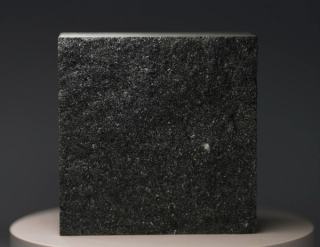
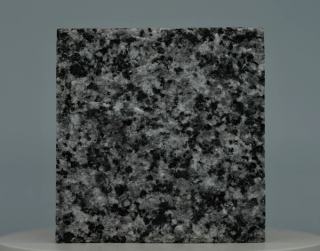
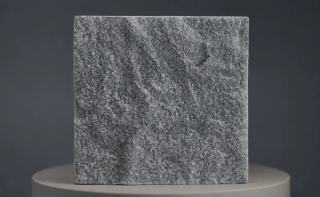
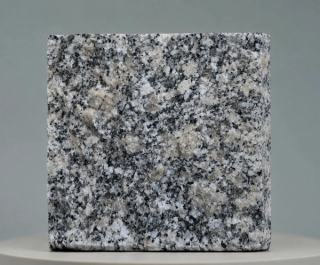
Natural granite cobblestones are widely used in courtyards, walkways, plazas, hotel entrances, historic districts, and many other outdoor landscape spaces. After years of exposure, however, some paved areas may gradually develop green, dark green, or even black-green growth. These deposits are often concentrated in joints, along paving edges, near trees, in shaded areas beside buildings, and in locations that remain damp for long periods.
When this happens, people may initially suspect that the granite absorbs too much water or that there is a problem with the stone itself. In reality, the development of moss and algae cannot usually be attributed to granite alone. It is generally related to a combination of environmental moisture, sunlight exposure, drainage conditions, paving joints, surrounding vegetation, surface contamination, and routine maintenance.
The more useful question is therefore not simply, “Why has this stone turned green?” but rather, “Why does this particular area remain suitable for moss and algae growth over a long period?” Understanding this relationship makes it easier to identify the actual cause.
Why Can Moss and Algae Grow on Granite Surfaces?
Granite itself does not produce moss or algae. Outdoor environments naturally contain microorganisms, spores, dust, plant debris, and other organic matter. When these materials settle on paving surfaces and sufficient moisture remains available for long periods, conditions may gradually become suitable for biological growth.
For this reason, one of the most important factors is not whether granite gets wet, but how long moisture remains on and around the paving.
For example, the same type of granite cobblestone may be installed in two different locations. One area may receive plenty of sunlight and have efficient drainage, allowing it to dry relatively quickly after rainfall. Another area may remain shaded beside a building or beneath trees and stay damp much longer. Even when the stone, dimensions, and surface finish are identical, the appearance of these two areas can become noticeably different after several years.
When investigating moss or algae, the surrounding environment should therefore be examined before assuming that the stone itself is the problem.
Why Is Long-Term Moisture One of the Main Factors?
Outdoor paving is naturally exposed to rainfall and cleaning water, so occasional wetting does not automatically cause moss growth. What matters more is how quickly the paving can return to a relatively dry condition.
When rainwater drains away efficiently and the stone surface can dry through sunlight, airflow, and natural evaporation, persistent biological growth is less likely to develop. In contrast, areas that repeatedly become wet before they have fully dried can remain in a continuously damp condition.
Typical examples include areas near building downpipes, landscape irrigation systems, tree pits, local depressions in the paving, fountains, and other water features. These locations may receive significantly more moisture than surrounding areas.
The key issue is therefore not simply whether water is present, but whether it can leave the paving efficiently and whether the surface has enough time to dry.
Why Are Shaded Areas More Susceptible?
Sunlight has a direct influence on how quickly outdoor paving dries. After the same rainfall event, an open and well-ventilated area may dry relatively quickly, while paving beneath trees, beside buildings, or inside narrow courtyards may remain damp for much longer.
North-facing sides of buildings, areas beside high walls, spaces beneath large tree canopies, narrow courtyards, and passages with little direct sunlight are typical examples. Even without visible standing water, slower evaporation can keep these areas damp for extended periods.
This explains why different sections of the same project can age differently. Granite cobblestones from the same production batch and with the same finish may remain relatively clean in sunny areas while gradually developing green deposits in shaded areas.
Such differences usually indicate that the local environment is playing a greater role than variations in the stone itself.
Why Does Drainage Directly Affect Moss and Algae Growth?
Paving drainage involves much more than simply installing a drain. It also depends on surface gradients, the direction of water flow, local level differences, joint conditions, drainage within the base, and the way paving connects with buildings, planting areas, and drainage systems.
If the paving gradient is insufficient or small depressions exist, some locations may remain damp after rainfall even when the overall project includes drainage facilities.
Granite cobblestone paving consists of many individual units. If local levels are not properly controlled during installation, or slight settlement develops after years of use, shallow depressions can form. These areas may not contain obvious pools of water, but they can still take much longer to dry than the surrounding paving.
If moss repeatedly appears in the same low points, along building edges, or close to drainage facilities, the local drainage path should be examined rather than treating the problem only as surface contamination.
Why Do Cobblestone Joints Often Turn Green First?
Compared with large-format granite paving slabs, cobblestone paving contains many more joints. Over time, dust, soil, fine sand, leaf fragments, and other organic materials can gradually accumulate within these joints.
If the joints also retain moisture, they may remain damp longer than exposed stone surfaces. For this reason, some projects first show green growth along the joints rather than across the entire face of the cobblestones. The growth may then gradually spread toward the edges of the stones.
When moss is concentrated along the joints, cleaning only the stone surface may not address the underlying condition. It is also important to check whether soil, plant debris, and other moisture-retaining materials have accumulated between the stones.
Why Are Areas Near Trees and Planting More Susceptible?
Granite cobblestones are frequently installed alongside lawns, tree pits, flower beds, shrubs, and mature trees. These landscape areas often have higher moisture levels than open paved spaces. At the same time, leaves, pollen, soil, bark fragments, and other plant debris continually fall onto the paving.
If these materials are not regularly removed, they can accumulate in joints and surface depressions. When organic matter, moisture, and shade occur together, conditions become more favorable for moss and algae.
This is particularly noticeable during seasons with heavy leaf fall. Wet leaves left on the paving for long periods may not only cause staining but also keep the stone beneath them damp for longer.
Courtyards, estates, hotel gardens, park walkways, and other heavily landscaped environments therefore generally require more regular removal of leaves, soil, and organic debris.
Does the Surface Finish Affect Moss Development?
Different granite finishes create different levels of surface texture, which can influence how easily water, dust, and organic material remain on the stone.
Split, natural-textured, and other relatively rough finishes provide the visual character and slip resistance required for many outdoor applications. However, their irregular surface texture can also create small depressions where fine contaminants may collect. Smoother finishes are generally easier to sweep and wash.
This does not mean that smooth granite should always be selected simply to reduce moss. Outdoor paving must also consider slip resistance, landscape appearance, pedestrian or vehicle traffic, and the overall architectural design.
A more appropriate approach is to select the surface finish according to the application and then manage long-term contamination through proper drainage and routine maintenance.
Why Can Moss Return After Cleaning?
If existing green growth is removed without changing the surrounding environmental conditions, moss and algae may gradually return.
For example, the area may still remain shaded, a low point may continue to collect water, irrigation may continue spraying the paving every day, or leaves and soil may continue accumulating in the joints. In these situations, cleaning removes the visible growth but does not eliminate the conditions that allowed it to develop.
When moss repeatedly returns, one useful question is whether the cleaned area still takes longer to dry than the surrounding paving.
If it does, drainage, irrigation, shade, and the accumulation of organic material should be examined rather than relying only on repeated cleaning.
Why Is Routine Cleaning Better Than Occasional Aggressive Cleaning?
Moss and algae usually develop gradually. At an early stage, only small areas of the joints or paving surface may show green deposits. Regular removal of leaves, soil, and organic matter, together with keeping drainage routes clear, can make these early conditions easier to manage.
If the paving receives little maintenance for a long period and biological growth becomes widespread, later cleaning can become considerably more difficult.
Cleaning granite should also not be approached on the assumption that higher water pressure or stronger chemicals are always better. Excessive pressure washing may affect some jointing materials, while unsuitable chemicals may affect the stone, joint materials, nearby vegetation, or surrounding drainage environment.
A more controlled approach is to remove loose surface debris first, identify the type of contamination, select a cleaning method suitable for natural stone, and test it on a small inconspicuous area before treating the entire surface.
How Can Design and Maintenance Reduce Moss Development?
Although moss and algae usually become visible only after a project has been in use for some time, many of the conditions that influence their development are established during design and installation.
Outdoor granite cobblestone paving should have appropriate gradients so that rainwater can move toward the intended drainage points rather than remaining in local depressions. Connections between cobblestones, tree pits, planting beds, building edges, and drainage channels should also be carefully considered to reduce areas where water can remain trapped.
Landscape irrigation systems should be planned so that sprinklers do not continuously direct water onto the paving. In locations beneath large trees or in permanently shaded areas, designers and property managers should also anticipate that more frequent cleaning may be required.
These measures cannot guarantee that outdoor paving will never develop biological growth, but they can reduce the conditions that encourage persistent moss and algae.
Why Should Moss Problems Be Evaluated as Part of the Whole Paving Environment?
Natural granite offers excellent strength, wear resistance, and long-term durability for outdoor paving, but every material exposed to the outdoor environment is affected by water, dust, vegetation, weather, and daily use. The presence of moss or algae on granite cobblestones does not automatically indicate a defect in the stone.
A more useful assessment begins with the source of moisture and the drying time, followed by sunlight and shade conditions, surface gradients, drainage paths, joints, surrounding vegetation, and routine cleaning practices.
When paving drains efficiently, dries relatively quickly, and is regularly cleared of soil, leaves, and organic debris, extensive persistent biological growth is less likely to develop. In contrast, a location that remains damp and shaded, drains slowly, and continuously accumulates plant debris can gradually develop moss or algae even when high-quality natural granite is used.
The long-term condition of granite cobblestone paving therefore depends on more than the stone itself. Material selection, surface finish, paving design, drainage, surrounding environmental conditions, and ongoing maintenance all contribute to how the paving performs and looks after years of outdoor use.