
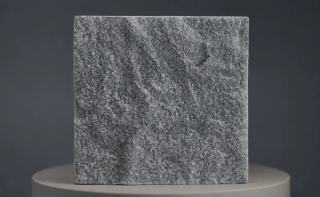
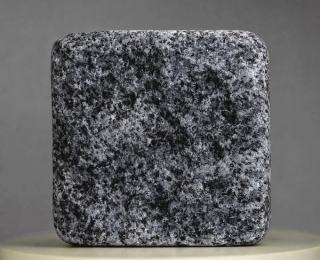
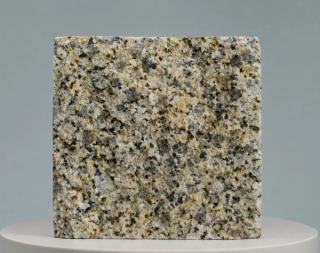
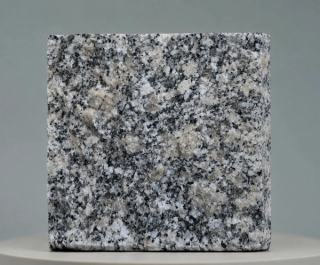
Natural granite cobblestones offer excellent wear resistance, compressive strength and long-term outdoor durability. They are therefore widely used in courtyards, driveways, plazas, pedestrian areas and commercial landscape projects.
In some projects, however, individual cobblestones may gradually become loose, sink, become uneven or rock under foot or vehicle traffic.
When this happens, the stone itself is often blamed first. In reality, most cases of loose or sunken granite cobblestone paving are related not to the granite itself, but to the base structure, bedding layer, jointing, drainage and long-term loading conditions.
Understanding the underlying cause is therefore more important than simply replacing a loose stone.
1. An Unstable Base Is One of the Most Common Causes of Settlement
Cobblestones form only the uppermost layer of the paving system.
Long-term stability depends largely on the structure beneath them. If the base is insufficiently compacted, incorrectly designed or unable to provide consistent bearing capacity across the paved area, differential settlement may gradually occur.
The problem is particularly noticeable in driveways, parking areas and entrances exposed to vehicle loads.
When part of the base settles, the cobblestones above it settle as well, creating depressions, uneven levels and sometimes areas where water collects.
For this reason, cobblestone paving should not be designed solely around stone colour, size and finish. The base structure and required load-bearing capacity must also reflect the intended use of the area.
2. An Uneven Bedding Layer Can Cause Individual Stones to Rock
Even when the main base is stable, an inconsistent bedding layer underneath the cobblestones can still lead to movement.
Local voids beneath a stone, excessive variation in bedding thickness or insufficient adjustment between the underside of the stone and the bedding material can create uneven support.
The movement may initially be barely noticeable under pedestrian traffic, but repeated vehicle loading and long-term use can gradually cause the stone to shift.
Cobblestone paving therefore requires more than simply achieving a level surface. Each stone should receive stable and reasonably uniform support underneath.
3. Loss of Jointing Material Reduces Overall Pavement Stability
Cobblestones do not remain stable solely because of their own weight.
Proper joints and jointing materials allow neighbouring stones to restrain one another and help the entire paved surface behave as a more integrated system.
If the jointing material is unsuitable or gradually washed away by rain, cleaning or long-term use, the lateral restraint between stones is reduced.
Initially, only a few stones may move slightly. Over time, however, the affected area can expand.
Jointing in outdoor cobblestone paving is therefore not merely an aesthetic detail; it is an important part of the overall paving structure.
4. Inadequate Edge Restraint Can Allow the Paving to Spread
Cobblestones can support and restrain one another within the paved area, but the outer perimeter still requires a stable boundary.
If there are no reliable kerbstones, edging elements or other restraint systems, stones at the perimeter may gradually move outward under turning vehicles, braking forces and repeated lateral loads.
Once the edge starts moving, internal joints may widen and sections of the paving may become loose or unstable.
This is why edge restraint is particularly important for driveways, roads and other heavily used cobblestone areas.
5. Poor Drainage Can Gradually Destabilise an Otherwise Sound Base
Water is one of the most important factors affecting outdoor paving systems.
If surface falls, drainage direction or subsurface drainage are poorly designed, rainwater may repeatedly enter and remain within the paving structure.
Where drainage is inadequate, base materials may soften, migrate or wash out locally, changing the originally uniform support conditions.
In regions exposed to freeze-thaw cycles, moisture trapped within the base can further affect pavement stability through repeated freezing and thawing.
Therefore, when investigating settlement, it is important to look beyond the visible surface and check where water collects, how it drains and whether the base has been exposed to prolonged moisture.
6. Actual Loads May Exceed the Original Design
The same granite cobblestone can be used in both pedestrian courtyards and vehicle driveways, but the structural requirements are very different.
If an area originally designed for light pedestrian use later carries cars, delivery vehicles or heavier traffic on a regular basis, the base and paving structure may gradually deform.
Cobblestone dimensions, thickness, bedding system and base design should therefore be selected according to the actual intended use.
Vehicular areas should not simply be constructed in the same way as ordinary garden paths.
7. Natural Dimensional Variation Must Be Managed During Installation
Natural granite cobblestones, particularly those with split, hand-finished or naturally textured surfaces, inherently contain a reasonable degree of dimensional and surface variation.
This natural variation is also one of the reasons cobblestone paving has such a rich and distinctive visual character.
However, it means that installation cannot be approached in exactly the same way as highly standardised manufactured paving units.
During laying, the installer should adjust each stone according to its actual height, underside and relationship with neighbouring stones so that the finished pavement achieves an appropriate level of overall flatness and stability.
Natural stone may have reasonable individual variations, but good installation should coordinate those variations within the paving system as a whole.
What Should Be Done If Cobblestones Are Already Loose or Sunken?
Simply replacing jointing material around a rocking stone may not solve the real problem.
The first step is to determine the underlying cause.
If jointing material has only been locally lost, the joints may need to be renewed. If there is a void beneath an individual stone, the bedding layer should be corrected. If a larger area has settled, the base should be investigated.
Where drainage failure or edge movement is involved, repairing only a few stones at the surface will often provide only temporary improvement.
A better approach is therefore to identify the structural cause first and then determine the appropriate scope of repair, rather than treating only the visible symptom.
How Can Future Problems Be Reduced?
A stable granite cobblestone pavement requires several factors to work together:
a properly designed and compacted base, a stable and even bedding layer, a suitable jointing system, reliable edge restraint, effective drainage and a pavement structure designed for the actual expected loads.
Together, these factors determine the long-term performance of the paving.
High-quality natural granite offers excellent wear resistance, compressive strength and weather durability, but the stone itself remains only one component of the entire pavement system.
Conclusion
Loose, sunken or rocking granite cobblestones should not automatically be considered a stone-quality problem.
In most cases, the issue results from the combined influence of the stone, base, bedding layer, joints, edge restraint, drainage and loading conditions.
For high-end residences, hotel landscapes, commercial areas and public landscape projects, considering these factors during design and construction is far more effective than repeatedly repairing problems later.
Good granite cobblestone paving is not simply about selecting a durable natural stone. It is about creating a stable, well-designed paving system that can perform reliably over the long term.