
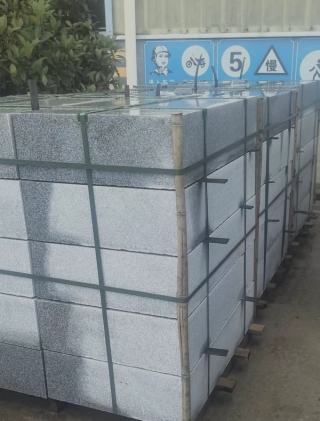
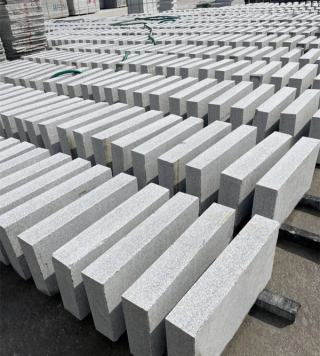
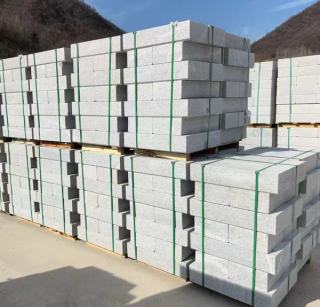
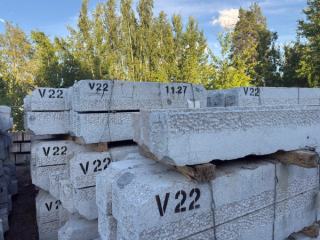
Large urban roads, business parks, logistics hubs, residential developments and public-realm projects rarely require only a small quantity of granite kerbstones. Orders often extend to hundreds or thousands of linear metres and may require several containers to be shipped over multiple stages.
For stone importers, wholesalers, contractors and project procurement teams, bulk granite kerbstone purchasing is very different from small-volume sourcing. Once an order moves into project-scale quantities, full-container supply and multi-container delivery, the purchasing process must go beyond colour, dimensions and surface finish.
Buyers also need to consider how much material can be loaded into each container, how different kerbstone types should be grouped, how production batches will be managed, how packages will be identified, how shipments should be sequenced and whether the supplier can support future replenishment for long-term projects.
In other words, bulk granite kerbstone procurement is not simply about buying stone. It is about managing a complete project-supply process that connects production, packing, container loading, shipping, phased delivery and site installation.
1. Bulk procurement should not be based on total linear metres alone
Granite kerbstones are usually measured in linear metres during the design and estimating stages. A project may require 3,000, 5,000 or even more linear metres of kerbing.
That figure is useful for early budgeting, but it is not enough for factory production or container planning.
Different cross-sections create different stone volumes and weights. For example, a 1000 × 150 × 300 mm kerbstone and a 1000 × 200 × 300 mm kerbstone are both one metre long, but their unit weight, container capacity and total shipping requirement are not the same.
If the project also includes shorter pieces, curved kerbs, corner units, transition kerbs or other custom profiles, container planning becomes more complex.
For this reason, bulk granite kerbstone orders should be broken down into clear product sizes, piece quantities, estimated volume, estimated weight and expected container requirements.
Converting the overall project quantity into production and logistics data makes it much easier to understand how many containers will be required, how shipments should be phased and which materials should be allocated to each construction area.
2. Standardising dimensions improves bulk production and container efficiency
In most large kerbstone projects, standard straight kerbs make up the majority of the order.
When most straight sections can be produced in a limited number of standard sizes, the factory can organise production more efficiently. Packing is simpler, container loading is easier to plan and material identification on site becomes clearer.
For example, a project where more than 80% of the kerbstones use one standard straight format, with custom pieces limited to entrances, corners, curves and special transitions, is generally easier to manage than a project containing many slightly different lengths and cross-sections.
Too many near-identical sizes can lead to frequent production changes and more complicated packing and site sorting.
For large-scale granite kerbstone supply, the aim is not to reduce design flexibility. It is to standardise the main straight runs where possible, while reserving custom fabrication for locations where it is genuinely required.
This approach supports more efficient bulk production, full-container supply and site coordination.
3. Full-container granite kerbstone supply must be calculated from the actual specification
One of the most common questions in bulk purchasing is: how many metres of granite kerbstones can fit into a 20-foot container?
There is no single answer.
Container capacity depends on the kerbstone cross-section, unit length, stone density, packing method, pallet or timber-frame weight, the proportion of special pieces and the amount of protection required during transport.
As a result, the same 1,000 linear metres of kerbstones may require a very different number of containers depending on the actual specification.
A more reliable approach is to confirm the principal sizes first and then calculate the estimated unit weight and packing structure before planning the full-container load.
For multi-container granite kerbstone supply, it is also useful to decide which containers will mainly carry standard straight units, which will include curved or corner pieces and which materials should be shipped together because they belong to the same construction zone.
The objective is not simply to maximise the quantity in each container. The real goal is to balance loading efficiency, transport safety and practical site management.
4. Single-size container loads and mixed loads require different management
For wholesale granite kerbstone orders, a full container of one standard size is usually the simplest arrangement.
The same product can be produced continuously, packed in a consistent way and unloaded on site with minimal sorting.
Large projects, however, rarely use only one kerbstone type. In addition to standard straight units, they may include shorter pieces, curved kerbs, corner units, transition pieces and other custom elements.
These products may need to be mixed within the same container.
The main challenge with mixed loads is not whether the products physically fit into the container. The more important question is whether the materials can still be identified quickly when they arrive on site.
If several similar products are mixed together without a clear packing schedule, product code or container list, the contractor may need to re-sort the entire delivery.
For this reason, bulk and wholesale granite kerbstone supply should use a consistent identification system linking product codes, package numbers, container numbers, drawing references and installation zones.
A clear identification system connects factory production directly with unloading, storage and installation.
5. Multi-container supply should follow the construction programme
Once a project reaches five, ten or more containers, shipment sequence becomes increasingly important.
Large developments are usually built in stages. The main entrance and primary road may be constructed first, followed by secondary roads, landscape zones and special junctions.
If containers are shipped only according to factory completion order, the site may receive large quantities of stone that cannot yet be installed.
This can increase storage requirements, repeated handling and the risk of damage.
For long-term granite kerbstone projects, procurement teams should therefore provide at least a basic construction sequence where possible.
The supplier can then coordinate production, packing, container loading and shipment order with the actual construction programme.
Materials required for the first construction zone can be produced and shipped first, while components for later stages can follow in subsequent containers.
This type of phased project supply is especially useful for urban roads, logistics parks, business parks, residential developments and other large projects with extended construction programmes.
6. Bulk supply is really about consistent delivery across the whole order
Small orders can often be completed within one short production cycle. A large bulk granite kerbstone order may continue for several weeks or longer.
For the buyer, this means that the quality of the first shipment is only part of the assessment.
The supplier also needs to maintain a consistent system throughout the entire order.
Different container loads should continue to use the same product coding system. Production should follow the same approved specifications. Packing methods should remain consistent, and special pieces should be reproduced from the same confirmed drawings and references.
If additional quantities are required later, the supplier should also be able to trace the original project data and reproduce the required items efficiently.
For importers, wholesalers and contractors, this continuity is a key part of large-project supply.
A supplier that can deliver one good container is useful. A supplier that can maintain stable multi-container supply over a long project period is much more valuable.
7. Main specifications should be confirmed before bulk production begins
Design adjustments are common in large construction projects.
However, once granite kerbstones have entered large-scale production, frequent changes to dimensions, profiles and special pieces can make the entire supply process more difficult to manage.
Each new specification may require new drawings, production instructions, packaging codes and container planning.
If several specification versions are active at the same time, the risk of confusion increases for procurement teams, factory staff and site contractors.
For this reason, the main kerbstone schedule should ideally be confirmed before bulk production begins.
Standard straight units, principal curved pieces, corner units and commonly used special profiles should be agreed as early as possible.
Any later changes can then be managed through a separate supplementary schedule rather than repeatedly revising the original order.
This creates a much clearer system for engineering bulk supply and long-term project delivery.
8. Spare units should be considered as part of the main order
Large projects normally require a certain quantity of spare material for transport losses, site cutting, installation adjustments, future maintenance or local replacement.
If all spare pieces are ordered only after the project is completed, they will usually come from a later production batch.
Standard straight kerbstones may be relatively easy to reproduce, but curved units, transition pieces, corner units and custom profiles can be more difficult to replace at a later stage.
For this reason, full-container and wholesale granite kerbstone orders should consider reasonable spare quantities during the main procurement stage.
Special pieces are particularly worth considering because a small reserve can be much more practical than arranging a separate production run later.
For long-term projects, this can also make future maintenance easier.
9. Packing identification is part of large-project supply
Packing identification may seem less important for a small order, but it becomes essential when a project includes thousands of metres of kerbstones, several specifications and multiple containers.
Each package should ideally identify the product size, quantity, project reference, installation area and drawing reference.
For phased projects, packages can also identify the relevant construction stage or road section.
This allows the procurement team, warehouse staff and site contractor to understand where each package belongs without reopening and re-measuring every item.
For full-container granite kerbstone supply, good packing identification is not simply a logistics detail. It is part of the overall project-management system.
Clear labelling also makes stock checks, additional orders and future replacement much easier.
10. Wholesale granite kerbstone purchasing should not be based on unit price alone
A common mistake in bulk purchasing is to compare only the price per linear metre.
For international wholesale granite kerbstone procurement, the true cost also includes packing, container utilisation, ocean freight, unloading and multi-container handling.
The same kerbstone can create different shipping costs depending on the size mix and packing arrangement.
For this reason, buyers should compare not only the unit price but also the estimated number of containers, expected quantity per container, packing method, proportion of mixed loads, shipment schedule and percentage of special pieces.
A quotation with a slightly lower unit price may not necessarily provide the lowest overall project cost if container utilisation is poor or the specification mix creates unnecessary logistics complexity.
For bulk procurement, the more useful comparison is total supply efficiency rather than product price alone.
11. Long-term projects require reliable repeat supply
Many large road, business-park and residential developments are not completed in one phase.
The first stage may include the primary road network, while later phases add commercial areas, secondary roads or new landscape zones.
In these situations, long-term granite kerbstone supply becomes increasingly important.
If the supplier keeps the original project specifications, drawings, product codes and packing information, future repeat orders can continue from the same technical reference.
This is particularly useful for custom cross-sections, curved pieces and special profiles.
Several years later, a project extension or maintenance order can be much easier to manage if the original production information is still available.
For a long-term project, the buyer is therefore not simply choosing a factory for one shipment. The buyer is choosing a granite kerbstone supplier capable of supporting repeat orders, extensions and future project requirements.
12. What should a bulk and wholesale granite kerbstone supplier be able to provide?
A good sample does not by itself prove that a supplier can manage a large engineering order.
For full-container and bulk procurement, buyers should also consider whether the granite kerbstone supplier or manufacturer can manage continuous large-volume production, multiple specifications, full-container and multi-container shipping, standard and custom pieces within the same project, clearly identified packing, phased delivery and repeat orders.
For stone wholesalers, importers, contractors and large project procurement teams, these capabilities are often more important than obtaining the lowest price on a single shipment.
The real test is whether the supplier can maintain a clear and consistent system from the first production batch to the final container, and whether the same project can be supported again when additional material is required.
Conclusion
When granite kerbstone requirements grow from a few hundred metres to several thousand metres, procurement changes significantly.
The buyer must consider not only the stone itself, but also how the total project quantity will be converted into production pieces, whether the main specifications are suitable for bulk manufacturing, how full-container loads will be calculated, how different container shipments will be organised, how packages will be identified and how future repeat supply will be managed.
Bulk granite kerbstone procurement is therefore a complete project-supply process.
For stone wholesalers, importers, contractors and large-scale project buyers, a reliable supplier should be able to support bulk production, project-scale quantities, full-container export, multi-container delivery and long-term project supply.
That is the level of supply capability required for major granite kerbstone projects.