
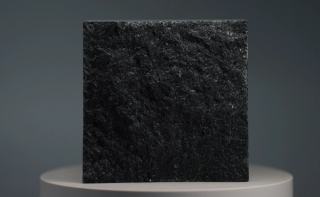


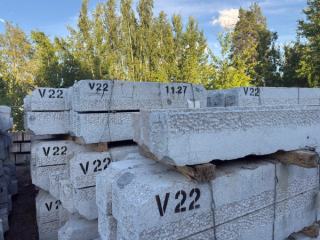
In landscape projects, commercial developments, municipal infrastructure, hotels and high-end residential projects, natural granite often needs to be custom fabricated according to specific design requirements.
For buyers, requesting a quotation may seem straightforward: tell the supplier what color of granite is required, provide an approximate quantity, and wait for a price. In actual project procurement, however, information such as “approximately 1,000 square meters of grey granite paving” is usually not enough to obtain a quotation that accurately reflects the project requirements.
The price of natural granite depends not only on the stone type, but also on the product category, dimensions, thickness, surface finish, special fabrication, quantity and delivery terms.
A clear project inquiry should therefore allow the supplier to understand from the beginning exactly what products are required and how they need to be fabricated and delivered.
Why Can the Same Granite Receive Different Quotations?
Granite products for construction and landscape projects cannot simply be priced on the basis of “cost per square meter.”
For example, standard 600 × 400 × 30 mm grey granite paving slabs have different material utilization and fabrication requirements from large-format slabs, slabs with special thicknesses or pieces requiring custom cutting.
The same applies to granite cobblestones. Although 100 × 100 × 50 mm and 100 × 100 × 100 mm cobblestones have the same surface dimensions, their material consumption, weight and processing requirements are significantly different.
Granite kerbstones follow the same principle. Standard straight kerbstones, curved kerbstones, corner pieces and ramp transition units do not have exactly the same production requirements.
The more complete the inquiry information is, the easier it becomes for the supplier to understand the actual product requirements and provide a quotation that is closer to the final procurement conditions.
First Define Which Granite Products Are Required
The first step in a project inquiry is to clearly identify the product types.
Common natural granite products for landscape and construction projects include paving slabs, cobblestones, kerbstones, steps and various custom-fabricated pieces.
If a project requires several product categories, they should be listed separately rather than being grouped together simply as “granite stone.”
For example, one landscape project may require large-format paving slabs, cobblestones for vehicular areas and kerbstones for road boundaries. Each product category should have its own dimensions and quantities.
This allows the supplier to quickly identify the different product types and review the specific fabrication requirements for each one.
The Granite Type or Color Should Be as Clear as Possible
If the project specification already identifies a particular granite, the buyer can provide the stone name, reference number or information from an approved sample.
If the exact stone has not yet been selected, the buyer can provide a general color direction, such as light grey, dark grey, black or yellow, together with architectural renderings, material reference images or other visual information.
Natural granites with similar colors can still vary considerably in grain structure, crystal appearance, texture and overall tone.
The closer the reference information is to the actual design intent, the easier it is for the supplier to evaluate suitable materials and recommend an appropriate granite.
Why Must Product Specifications Include Thickness?
Dimensions are among the most important pieces of information in a granite project inquiry and should generally be expressed as:
Length × Width × Thickness
For example:
600 × 400 × 30 mm
rather than simply:
600 × 400 mm.
Thickness affects not only material consumption but also product weight, fabrication and transportation.
If a project includes several dimensions, each size should be listed separately. A plaza, for example, may use 600 × 400 × 30 mm, 600 × 300 × 30 mm and 400 × 400 × 30 mm paving slabs, with different quantities required for each size.
This enables the supplier to understand the actual product composition of the project.
What Information Should Be Provided for Granite Cobblestones?
For granite cobblestones, dimensions, thickness and surface finish are particularly important in addition to the stone color.
For example, 100 × 100 × 50 mm and 100 × 100 × 100 mm cobblestones have the same top dimensions but differ significantly in material consumption and weight.
The inquiry should therefore specify the dimensions, surface finish and corresponding quantity. If several colors or different cobblestone sizes are combined in the paving design, they should also be listed separately.
For projects that are still at the design or budgeting stage, it can also be helpful to indicate the intended application, such as pedestrian areas, courtyards, plazas or vehicular areas. This gives the supplier additional context for understanding the product requirements.
Why Should Standard and Special Kerbstones Be Separated?
Granite kerbstones should normally be specified by length, width and height, for example:
1000 × 150 × 300 mm
Standard straight sections can usually be quoted based on their dimensions and quantities.
However, if the project includes curved roads, corners, vehicle entrances or ramps, the inquiry should indicate whether curved kerbstones, corner pieces, transition units or other special components are required.
If relevant detail drawings are already available, they should ideally be included with the inquiry.
This helps prevent a situation where the supplier initially prices all kerbstones as standard straight units, while the actual project contains a significant number of specially fabricated pieces that require later recalculation.
Why Must the Surface Finish Be Specified?
The same granite can be processed with different surface finishes to achieve very different appearances and functional characteristics.
Common finishes for granite projects include flamed, bush-hammered, sawn, natural split and tumbled surfaces, as well as other customized finishes.
Different finishes involve different production processes, so an inquiry should not provide only the stone color and dimensions.
For example, a 600 × 400 × 30 mm grey granite paving slab with a flamed finish has different production requirements from the same stone and size with another surface treatment.
If different areas of the project use different finishes on the same granite, they should be listed separately to avoid misunderstandings during quotation.
Special Fabrication Requirements Should Be Identified Early
In addition to the main surface finish, some projects require visible edge finishing, step edges, curves, corners or custom-shaped cutting.
The final production drawings may not be necessary for the first quotation, but if special fabrication is already known to be required, this should be communicated to the supplier from the beginning.
For complex custom projects, relevant design drawings or detail drawings can be provided so the supplier can identify which products are standard pieces and which require special fabrication.
This makes the preliminary quotation more representative of the products that will eventually be ordered.
Quantities Should Correspond to Each Specification
“1,000 square meters of granite” may indicate the overall project scale, but it is still insufficient if the project contains multiple product sizes.
A more effective approach is to provide a corresponding quantity for each individual specification.
Paving slabs can be calculated in square meters and pieces. Cobblestones may be measured in square meters, pieces or weight depending on the project. Kerbstones are commonly measured in linear meters and, where possible, can also be accompanied by piece quantities.
If the project is still at the budgeting stage and final quantities have not yet been confirmed, estimated quantities can be provided and clearly identified as preliminary.
The supplier can then prepare a budget quotation based on the available information and revise it later according to the final procurement list.
Why Are Project Drawings Important for Complex Projects?
For standard products, a clear list of product types, dimensions, finishes and quantities may be sufficient for an initial quotation.
For large landscape projects, commercial building entrances, public plazas or complex road projects, however, text and spreadsheets alone may not fully communicate the design requirements.
Site plans, paving layout drawings, detail drawings and kerbstone layout drawings can help the supplier understand how different stone products relate to each other and identify special dimensions, curved elements and other custom-fabricated areas.
Drawings do not replace the procurement list. Instead, they provide additional context.
For complex custom granite projects, combining project drawings with a detailed product list can significantly improve the efficiency and accuracy of quotation and technical communication.
Why Should the Destination and Delivery Terms Be Provided?
For exported natural stone projects, an inquiry should define not only the products but also the scope of delivery included in the quotation.
The buyer should indicate the destination country and port, as well as the stage of transportation to which the supplier is expected to quote.
For example, the supplier may be asked to quote up to the port of shipment in China, or to include ocean freight to the destination port in the project country.
The same quantity of granite shipped to different countries and ports can involve very different transportation distances, shipping routes and related costs.
Providing the destination country, destination port and required delivery terms at the inquiry stage makes the quotation scope clearer and helps the buyer compare overall project costs more effectively.
Project Timing Should Also Be Communicated Early
If the project already has an estimated procurement or delivery schedule, this information should ideally be included in the inquiry.
Natural granite production involves several stages, including raw material preparation, cutting, surface processing, quality control, packing and transportation. For large-volume or highly customized projects, production planning needs to be coordinated with the overall project schedule.
The buyer does not necessarily need to provide an exact delivery date during the first inquiry. An estimated order month, planned shipment period or approximate date when the materials will be required on site can already provide useful information.
This allows the supplier to assess whether the production schedule can be coordinated with the project timeline.
What Should an Effective Granite Project Inquiry Include?
For most projects, an effective inquiry should clearly communicate:
Granite type or color, product category, length × width × thickness, surface finish, special fabrication requirements, quantity for each specification, project drawings, destination country or port, delivery terms and estimated project schedule.
For simple standard products, the inquiry does not need to be overly complicated.
However, for large projects involving custom paving slabs, cobblestones, kerbstones and multiple special-fabricated components, clearer information allows the supplier to understand the project much more accurately.
Complete Inquiry Information Reduces Repeated Clarification
Natural granite is an engineering material whose production requirements depend heavily on dimensions and fabrication details.
Providing complete information during the inquiry stage does not make procurement more complicated. Instead, it reduces repeated questions about dimensions, thicknesses, finishes, quantities and delivery conditions later in the process.
It also makes it easier for the buyer to determine whether quotations from different suppliers are based on the same product requirements and delivery scope.
From project drawings, granite selection, dimensions and surface finishes to quantities, special fabrication, destination and project schedule, these details together form a practical and useful granite project inquiry.
When these basic requirements are communicated clearly from the beginning, quotation, technical confirmation and subsequent production coordination can all become more efficient.