
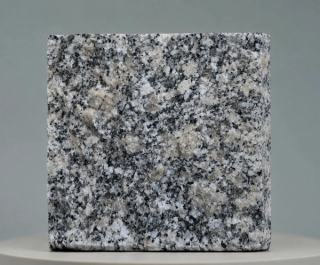
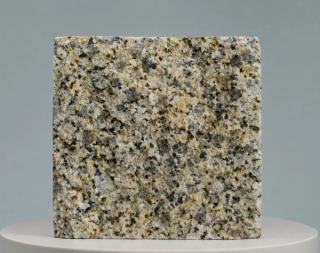
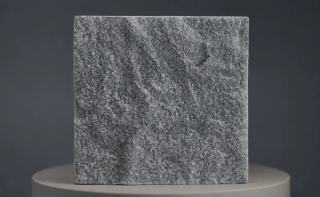
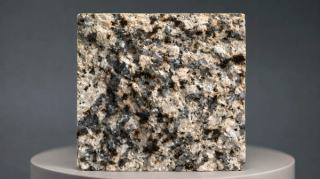
Natural granite cobblestones are widely used across Europe for urban streets, historic districts, residential courtyards, hotel entrances, public squares and landscape roads. For architects, contractors and buyers, one of the most practical questions before confirming granite colour, surface finish and paving pattern is: what size of cobblestone should be selected?
Sizes such as 50×50 mm, 80×80 mm and 100×100 mm may appear to differ only in length and width. In an actual paving project, however, the size affects paving patterns, the number of joints, adaptability to curves, installation efficiency and the overall visual scale of the space.
At the same time, the plan dimensions and thickness of granite cobblestones should be treated as two different aspects of specification. Length and width mainly determine the paving module and layout, while thickness should be considered together with the base structure, installation method, intended use and design loads.
For this reason, selecting an appropriate granite cobblestone size is not simply a matter of choosing a dimension from a product catalogue. The entire paving system should be considered.
Why Is There No Single Standard Size for Granite Cobblestones in Europe?
Natural granite cobblestones are different from standardised industrial paving products. Size preferences can vary according to country, local paving traditions, architectural styles and project requirements.
Historic districts may place greater emphasis on traditional proportions, natural edges and irregular joint characteristics. Contemporary commercial spaces may require cleaner and more continuous paving grids. Residential courtyards and landscape paths often focus on finer visual proportions, while vehicular areas require additional consideration of pavement structure and engineering loads.
Therefore, 50×50 mm, 80×80 mm and 100×100 mm should be understood as common size ranges used in different projects rather than fixed dimensions required for every European application.
The important question is which size best suits the space, paving pattern, stone processing method and intended use.
50×50 mm: Suitable for Detailed Patterns and Complex Curves
Granite cobblestones around 50×50 mm are relatively small units.
One of their main characteristics is that more individual stones are used per square metre, creating a denser joint pattern while providing greater geometric flexibility.
When paving needs to follow curves, circles, fan patterns, radial layouts or complicated boundaries, smaller cobblestones can gradually change direction through slight adjustments between individual units. This can reduce the amount of cutting required on site.
For this reason, smaller cobblestones can work particularly well for garden paths, landscape features, circular areas, tree surrounds, curved routes and decorative paving.
However, smaller dimensions also mean more individual stones need to be installed per square metre, which can increase the amount of setting, alignment and joint work.
The main advantage of a 50×50 mm format is therefore its flexibility and fine visual scale, rather than simply being a smaller product.
80×80 mm: Balancing Layout Flexibility and Installation Efficiency
Cobblestones around 80×80 mm sit between smaller units and larger engineering formats.
They retain good flexibility for curves and paving patterns while requiring fewer individual stones per square metre than a 50×50 mm format. This can provide a useful balance between visual scale, layout flexibility and installation efficiency.
Residential courtyards, hotel landscape routes, medium-sized public spaces and pedestrian areas can all be suitable applications depending on the design.
Where a project contains both regular paved surfaces and areas with turns, curved boundaries or local pattern changes, a medium-sized cobblestone can provide greater flexibility than a larger unit.
Visually, an 80×80 mm format can create a finer paving rhythm than 100×100 mm without producing the very dense joint pattern associated with much smaller stones.
Its value therefore lies in balancing several project requirements rather than simply occupying a middle position between two dimensions.
100×100 mm: A Common Module for Large Paving Projects
Around 100×100 mm is one of the typical engineering dimensions used for natural granite cobblestones.
Its relatively regular plan module is suitable for larger paved surfaces and can simplify quantity calculations, paving layouts and construction planning.
In public urban spaces, commercial streets, hotel entrances, residential roads, landscape driveways and other larger outdoor areas, 100×100 mm cobblestones can create a clear and consistent paving rhythm.
Compared with smaller 50×50 mm units, fewer stones are required per square metre, which can improve installation efficiency across regular areas.
However, larger units offer less flexibility when paving small-radius curves, circular features, fan patterns or radial layouts. In these conditions, the design may require adjustments to joint widths, combinations of different sizes or specially cut pieces.
For this reason, 100×100 mm should not be considered an “upgrade” from 50×50 mm. The two formats respond to different spatial and paving requirements.
Why Should Cobblestone Selection Consider More Than Length and Width?
Project enquiries often specify something such as “100×100 mm granite cobblestones”, but this information alone is incomplete for engineering procurement.
A 100×100×30 mm stone and a 100×100×80 mm stone may have the same visible plan dimensions after installation, but their weight, pavement structure and potential applications can be very different.
A complete cobblestone specification should therefore be understood as:
Length × Width × Thickness.
Length and width primarily determine the visible paving module, while thickness is more closely related to the engineering structure and intended use.
This is why simply requesting “100×100 mm granite cobblestones” is usually not sufficient for a complete project assessment.
How Should Granite Cobblestone Thickness Be Selected?
Cobblestone thickness should not be determined independently from the overall pavement system.
Pedestrian courtyards, public plazas, residential driveways, urban roads and areas exposed to heavier vehicles can have very different structural requirements.
However, it is also too simplistic to assume that pedestrian areas always require one fixed thickness while vehicular areas require another.
The long-term performance of granite cobblestone paving also depends on granite properties, plan dimensions, base bearing capacity, bedding structure, installation method, joints, edge restraint and actual design loads.
Stones of the same thickness installed over different pavement structures can perform very differently over time.
For vehicular roads, fire access routes and other areas with defined loading requirements, stone thickness and the complete pavement structure should therefore be determined according to the project design and applicable local engineering standards rather than relying on a single general rule.
Plan Dimensions and Thickness Follow Different Selection Logic
Understanding this distinction is important when specifying cobblestones.
When deciding between 50×50 mm, 80×80 mm and 100×100 mm, the first considerations are usually spatial scale, paving pattern, road width, curve radius, boundary conditions and the desired visual effect.
Thickness requires a different set of considerations, including intended use, design load, base construction and installation method.
Selecting a 100×100 mm plan dimension therefore does not automatically determine a particular thickness. Likewise, using 50×50 mm cobblestones does not necessarily mean the stone can only be used in lightly trafficked landscape areas.
A more appropriate approach is to establish the plan dimensions according to design and paving requirements, and then determine the thickness according to the engineering structure.
Why Does the Processing Method Affect Actual Dimensions?
The production method of natural granite cobblestones can also influence dimensional characteristics.
Sawn processing generally produces more regular edges and tighter dimensional control, while natural splitting retains more of the original characteristics of the stone.
For split granite cobblestones, a nominal dimension of 100×100 mm does not mean that every unit will be identical in the way an industrial ceramic tile might be.
Because natural granite splits along its mineral structure, reasonable variations may occur in the edges, surface relief and actual dimensions.
These variations also contribute to the natural joints and traditional appearance associated with genuine stone paving.
If a contemporary commercial project requires a highly regular paving grid, dimensional tolerances and edge processing become particularly important. In a historic district, estate or traditional landscape, controlled natural variation may instead be part of the desired design character.
The processing method should therefore be considered together with the nominal size.
Why Are Smaller Cobblestones Better Suited to Curved and Fan-Shaped Paving?
Regular dimensions such as 100×100 mm can easily form continuous grids across straight paving areas. The situation changes when the paving enters circular plazas, curved roads, fan patterns or radial layouts.
In these areas, the direction of each row may gradually change.
The larger the individual stone, the more noticeable each directional change becomes within a limited radius, making joint adjustment and boundary treatment more difficult.
Smaller cobblestones allow the direction to change progressively through a greater number of individual units, helping create smoother curves.
For this reason, selecting the appropriate size for complex geometry is part of the paving design itself.
Some larger projects may also combine several sizes. A 100×100 mm format, for example, may establish the main rhythm across regular areas, while smaller units are introduced around curves, boundaries and special features.
The purpose of a multi-size layout is not simply to mix different dimensions for decoration. Each format should perform a specific function within the overall paving design.
The Scale of the Space Also Influences Cobblestone Size
Cobblestone dimensions should also relate to the scale of the surrounding architecture and landscape.
In private courtyards, narrow walkways or detailed landscape features, excessively large stones can make the paving appear visually heavy.
By contrast, using very small cobblestones throughout a large urban plaza, broad roadway or hotel drop-off area can create an overly dense paving texture while increasing installation work.
The appropriate size should therefore relate to road width, building scale, total paved area and surrounding landscape elements.
Cobblestone specification is not only a material decision; it is also part of spatial design.
What Size Information Should Be Included in a Project Enquiry?
For an actual project, buyers should provide more information than simply “80×80 mm” or “100×100 mm”.
A more complete enquiry should normally include the granite type or colour, length, width, thickness, surface finish, edge treatment, quantity and basic application area.
If the project includes curves, special shapes, mixed sizes or unusual paving layouts, relevant drawings should also be provided.
For vehicular areas or other surfaces with defined engineering loads, the required stone specification and pavement structure should be confirmed according to the project design.
Providing complete information allows the supplier to assess whether the requested dimensions and processing methods are suitable for production and to plan dimensional control, grading, packing and quantities more accurately.
From Choosing a Size to Designing a Complete Paving System
There is no absolute hierarchy between 50×50 mm, 80×80 mm and 100×100 mm granite cobblestones.
Smaller units provide greater geometric flexibility for curves, complex boundaries and detailed patterns. Medium-sized formats can balance visual scale, paving flexibility and installation efficiency. Larger regular formats can establish a clear and consistent module across extensive engineering paving areas.
Once the plan dimensions have been selected, thickness should then be evaluated according to the base construction, installation method, intended use, design loads and applicable engineering standards.
Professional granite cobblestone specification should therefore go beyond the simple question of “50×50 or 100×100?”
Spatial scale, paving pattern, processing method, joint appearance, intended use and engineering structure should all be considered together.
When these factors are coordinated, cobblestone dimensions are no longer just numbers in a product catalogue. They become an integral part of the complete granite paving system.