
European architecture has developed through centuries of cultural, regional and architectural evolution.
From historic estates, country residences and old-town architecture to contemporary villas, boutique hotels and minimalist buildings, each period has created its own distinctive architectural language.
Yet beyond the buildings themselves, the ground surface has always played an essential role that is often underestimated. It connects architecture with the surrounding landscape and strongly influences the first impression people experience when entering a space.
Natural granite cobblestones are among the most characteristic paving materials found throughout European landscapes.
In the past, cobblestones were often associated primarily with historic streets, old towns, traditional courtyards and classical estates.
Today, however, their role is changing.
Natural granite cobblestones are no longer simply a paving material for traditional architecture. Through carefully selected colours, formats, surface finishes, laying patterns and combinations with contemporary materials, they are increasingly being incorporated into a much wider range of architectural projects.
From traditional estates to contemporary residences, a new relationship is emerging:
Preserving the historical character and authenticity of natural stone while adapting it to the cleaner, more restrained and individual design language of contemporary European architecture.
From Traditional Paving Material to Contemporary Landscape Design
Natural stone paving has a long history in Europe.
Across historic town streets, public squares, estate entrances and traditional residential areas, natural stone surfaces have developed a distinctive character after decades or even centuries of use.
This historical continuity gives cobblestones a sense of permanence and spatial memory that is difficult to reproduce with newly manufactured paving materials.
Contemporary designers, however, are not simply copying the past.
What is happening today is more interesting:
Traditional materials are being reinterpreted through contemporary design.
Historically, cobblestones were selected primarily according to practical requirements and locally available stone. Colour, dimensions and laying methods were largely determined by regional resources and construction traditions.
Today, high-end landscape projects offer designers much greater freedom.
Different granite varieties can be selected according to the architectural concept, while dimensions, surface finishes and laying patterns can be adjusted to redefine the visual character of this traditional material.
As a result, the same concept of natural granite cobblestone paving can create completely different atmospheres in different projects.
It can feel historic.
It can feel natural.
And it can also feel distinctly contemporary.
This flexibility is one of the reasons natural stone continues to find new relevance within European architecture and landscape design.
Traditional European Estates: Historical Character Remains Essential
Natural granite cobblestones continue to have an obvious advantage in traditional estates, country residences and projects influenced by classical European architecture.
These buildings often incorporate stone walls, brickwork, timber, pitched roofs, courtyards and mature vegetation.
If the surrounding ground is paved with materials that appear excessively uniform or industrial, a visual separation can easily emerge between the architecture and the landscape.
Properly selected and finished natural granite can soften this contrast.
Antique finishes, softened edges and controlled natural colour variations can reduce the mechanical appearance often associated with newly installed stone.
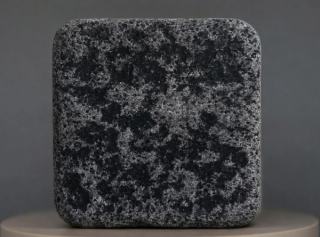
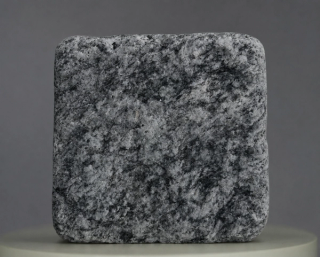
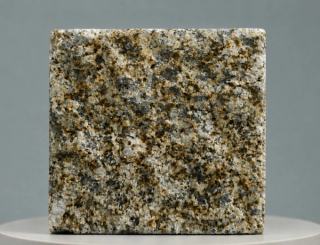
Grey, beige-grey, warm yellow, natural rust tones and mixed natural colours can all establish rich yet understated relationships with traditional architecture.
More importantly, these materials can continue to integrate with the project as buildings and vegetation mature.
Over time, the relationship between stone, architecture and landscape can become increasingly natural.
For this type of project, the objective is not necessarily to make the paving look completely new.
Instead, the goal is to allow newly installed paving to enter naturally into the existing architectural timeline.
Contemporary Residences: From Historic Material to Architectural Contrast
Contemporary European residential architecture has created a very different role for natural granite cobblestones.
Modern residences often feature clean architectural volumes, large areas of glass, metal elements, light-coloured façades and strong geometric lines.
According to conventional thinking, such architecture might appear better suited to large-format, perfectly uniform contemporary paving.
However, an increasingly relevant design approach introduces naturally textured stone alongside highly refined architecture.
The reason is straightforward.
When both the architecture and the ground surface are extremely smooth, uniform and industrial in appearance, the entire environment can lack material depth.
Natural granite cobblestones can provide exactly this contrast.
The architecture is precise.
The stone is naturally varied.
Glass surfaces are smooth.
The ground contains grains, crystals and subtle surface relief.
Architectural lines are highly controlled.
Natural stone retains small variations.
This contrast does not necessarily weaken the contemporary character of a project.
When colour, format and laying pattern are carefully controlled, it can actually make the architecture appear more refined.
For this reason, the role of cobblestones in contemporary residential projects is gradually shifting from a symbol of tradition to a contrast of authentic natural material.
Minimalist Architecture Requires More Restrained Natural Stone
Minimalist architecture often places even greater demands on material selection.
The fewer materials used within a space, the more visible the colour, texture and processing quality of each individual material become.
When natural granite cobblestones are introduced into minimalist projects, stronger variation is therefore not necessarily better.
Instead, greater control is required.
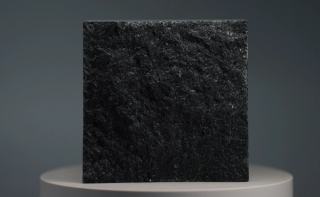
Dark grey, grey-black, blue-grey or light grey granite with relatively consistent overall tones can be combined with controlled dimensions and simple laying patterns to reduce excessive traditional character.
In this context, natural crystals, subtle colour variations and surface textures do not need to become dominant visual elements.
They can remain details that become apparent only at closer distance.
From afar, the paving appears calm and coherent.
From close range, the natural stone reveals a depth that industrial materials often cannot reproduce.
This relationship between overall visual restraint and close-up material detail is particularly suitable for premium minimalist landscapes.
Boutique Hotels Are Using Cobblestones to Create Spatial Memory
Hotel landscapes have different requirements from private residences.
They need to be visually attractive, but they also need to create memorable experiences.
Boutique hotels, destination hotels and hospitality projects created from restored historic buildings often aim to establish a distinctive atmosphere immediately upon arrival.
Ground materials can play an important role in shaping that experience.
Natural granite cobblestones can connect arrival areas, driveways, courtyards and gardens through a continuous material language based on colour, laying pattern and surface texture.
Historic hotel renovation projects can use antique-finish cobblestones to reinforce the architectural character of the original building.
Contemporary boutique hotels can instead select granite with more distinctive colours, richer crystalline structures or stronger natural patterns to create a recognisable material identity.
An important shift is taking place:
Cobblestones are no longer simply functional paving materials. They are becoming part of the spatial identity of hospitality projects.
Guests may never know the exact name of the granite.
But they may remember the stone driveway leading to the entrance, the natural paving of an intimate courtyard, or the changing texture of the granite under architectural lighting.
That memory becomes part of the overall experience of the place.
The Dialogue Between Old and New Architecture Creates New Opportunities for Natural Stone
One of the most distinctive directions in contemporary European architecture is the integration of historic buildings with modern interventions.
Historic structures may receive new glass extensions.
Traditional stone walls may sit beside contemporary metal structures.
Old estates may contain newly designed minimalist interiors and landscape elements.
This dialogue between old and new has become a sophisticated architectural language in its own right.
But if architecture can connect different periods through glass, stone and metal, the ground surface must also help bridge those periods.
Natural granite cobblestones have a particular advantage in this context.
They carry the historical associations of a traditional paving material while modern processing methods can give them a cleaner and more controlled appearance.
As a result, the material does not need to belong exclusively to either the historic or contemporary part of the project.
It can become a transition between the two.
For example, the area immediately surrounding a historic building may use a more natural, softly aged laying style, while the paving gradually changes in format, alignment or surface treatment as it approaches a contemporary extension.
The granite itself can remain consistent while its design language evolves.
This can create a much more natural transition than simply separating the two architectural zones with completely different materials.
Moving Beyond Standard Grey Towards Richer Natural Colours
Grey has always occupied an important position in traditional European granite paving.
The reasons are clear.
It is stable, timeless and easy to combine with a wide range of architectural materials.
Classic grey granite will continue to play an important role.
However, colour selection in high-end projects is becoming increasingly diverse.
Dark grey, black-grey, blue-grey, green-grey, warm yellow, beige-grey and natural rust tones, together with granites featuring natural colour contrasts and distinctive mineral crystals, can offer designers a broader material palette.
This does not mean that premium European landscapes are becoming increasingly colourful.
The more meaningful trend is not simply adding more colour.
It is about:
Finding more distinctive natural colour identities.
Standard grey granite can satisfy a wide range of conventional construction requirements.
But for private residences, boutique hotels, estate renovations and projects with a strong design concept, architects and landscape designers may want the ground surface to have a more individual material character.
This is one reason distinctive natural granite varieties are becoming increasingly relevant to high-end landscape design.
Surface Finishes Are Changing the Architectural Character of Cobblestones
The same granite can enter completely different architectural environments depending on its surface treatment.
Surfaces with stronger natural textures are particularly suitable for traditional, rural and nature-oriented landscapes.
Antique finishes can strengthen the sense of age and work well in estates, historic architecture, courtyards and hospitality renovation projects.
More controlled and visually restrained finishes can help natural granite integrate into contemporary residences and commercial architecture.
For this reason, the relationship between cobblestones and architectural style can no longer be discussed only in terms of granite variety and colour.
Surface treatment itself is becoming part of architectural design.
In the past, stone might have been selected first and the finish decided afterwards.
In more sophisticated projects, these decisions should be considered together.
The designer is not simply choosing:
“A particular granite.”
The real material decision is:
A particular granite + a particular surface finish + a particular format + a particular laying pattern.
Only when these elements work together does the true architectural character of the paving emerge.
Laying Patterns Are Moving from Functional Construction to Spatial Design
Another important development in granite cobblestone paving concerns laying patterns.
Traditional paving methods were often primarily focused on solving practical requirements for streets and ground surfaces.
Contemporary landscape design increasingly considers the way paving itself influences spatial order.
Linear layouts can reinforce the directional character of modern architecture.
Fan and curved patterns can soften large courtyards and driveways.
Different cobblestone formats can distinguish functional zones.
Light and dark natural granite can define boundaries.
Combining granite cobblestones with larger paving slabs can create a relationship between traditional and contemporary scales.
Cobblestones therefore no longer need to be treated as an isolated product.
They can function as one design component within a complete paving system.
This is particularly relevant in premium projects, where cobblestones, paving slabs, kerbstones, steps and custom-cut granite elements can be combined to establish a coherent natural stone language throughout the entire landscape.
Natural and Contemporary Are Not Opposites
Natural stone has traditionally been associated with historic architecture, while contemporary architecture has often been associated with industrial materials.
That boundary is becoming increasingly blurred.
Contemporary architecture is placing renewed emphasis on authentic materials.
Timber, natural stone, metal, glass and exposed concrete can all exist within the same project.
What matters is no longer which historical period a material appears to belong to.
What matters is whether the materials establish a meaningful relationship with one another.
Natural granite cobblestones have a particular ability to cross these architectural boundaries.
In traditional projects, they can reinforce historical character.
In rural landscapes, they can strengthen the relationship with nature.
In contemporary residences, they can provide material contrast.
In minimalist architecture, they can create a restrained but sophisticated ground surface.
In boutique hotels, they can contribute to spatial identity and guest experience.
The same fundamental material can therefore communicate very different architectural expressions depending on how it is designed and applied.
The Future Is Not Uniformity, but More Precise Architectural Matching
The future development of natural granite cobblestones in high-end European landscapes is unlikely to move towards one dominant style.
Instead, the market is likely to become increasingly segmented.
Traditional estates require more natural materials with a stronger sense of age.
Contemporary residences need natural stone with restrained colours and refined textures.
Boutique hotels need materials capable of creating identity and memorable spaces.
Historic renovation projects need paving systems that can connect past and present.
Minimalist architecture requires even more precise control over colour, dimensions and surface treatment.
The future opportunity, therefore, is not simply to provide more cobblestones.
It is to provide more accurate material choices for different architectural languages.
The direction is gradually shifting from:
“Selling a type of stone”
towards:
“Providing the right natural stone solution for a particular architectural style and landscape concept.”
This may become one of the most important directions for premium natural granite paving in the European market.
Conclusion: Making Natural Stone Part of the Architecture
Natural granite cobblestones have been part of European landscapes for centuries.
But tradition does not mean remaining in the past.
Materials with genuine longevity are often those capable of entering new architectural environments and developing new expressions as design evolves.
Today, granite cobblestones can belong to a historic estate or a contemporary villa.
They can appear in a rural courtyard or at the entrance to a minimalist residence.
They can serve a practical paving function or become part of the visual language of a premium landscape.
What determines the result is not simply the stone itself.
Colour, natural texture, surface finish, dimensions, laying pattern and the relationship between the paving and architecture all contribute to the final experience.
For the future of European landscape design, the most interesting direction for natural granite cobblestones is therefore not simply to reproduce traditional paving.
It is to respect the authenticity of natural stone while allowing a historic material to participate in new architectural languages.
When paving is no longer treated simply as the ground outside a building, but instead becomes part of a complete relationship between architecture, landscape and time, natural granite cobblestones truly become part of the architecture itself.