
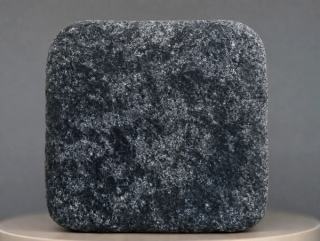
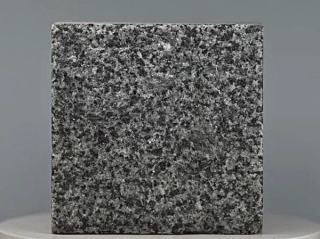
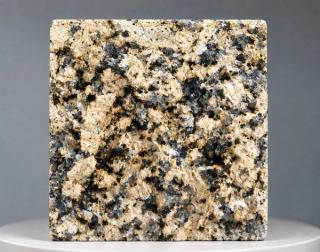
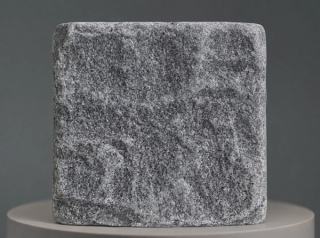
In landscape paving projects, designers and buyers often encounter the same question: why do pieces of the same natural granite vary in color, crystal distribution, and texture?
For industrial materials such as ceramic tiles and engineered stone, consistent color is often considered an important quality standard. Natural granite, however, is formed through geological processes over an extremely long period of time. Each piece may contain subtle differences in mineral composition, crystal distribution, and natural texture.
Therefore, the real question with natural granite is not whether color variation exists, but:
Is the variation a natural characteristic or a quality issue? And how can selection, processing, and paving design transform these natural differences into part of the landscape?
1. Why Can’t Every Piece of Natural Granite Have Exactly the Same Color?
Natural granite is composed of different minerals. Its colors, crystals, and textures are created by nature rather than printed or artificially mixed.
Even within the same quarry, stone extracted from different areas or geological layers may show variations in tone. Some pieces may be slightly darker or lighter, while others may have more visible crystals or finer mineral textures.
These differences can become more noticeable when granite is processed into small-format cobblestones and installed across a large paved area.
What may appear to be a minor variation in an individual stone can create rich visual depth when hundreds or thousands of pieces are viewed together.
This natural variation is one of the characteristics that distinguishes genuine natural stone from industrially reproduced materials.
2. Natural Color Variation Is Not the Same as a Quality Defect
A common mistake in stone procurement is to classify every difference in color as a quality problem.
In reality, reasonable natural variation and genuine quality defects should be clearly distinguished.
Variations in shade, crystal size, mineral particles, and natural texture within the normal range of a particular granite do not necessarily affect its performance.
However, if a batch contains significantly different base colors, large abnormal discolorations, excessive impurities, or visually inconsistent material caused by mixing stone from different quarries or geological layers, these issues should not simply be described as “natural variation.”
For premium landscape projects, the objective is not to eliminate the natural character of granite.
The real objective is to control disordered and unpredictable variation.
This is why careful raw material selection, stable quarry sourcing, and effective batch management are important for high-quality granite paving.
3. Why Can Natural Color Variation Become an Advantage in High-End Landscape Design?
The appeal of natural stone does not come from making every piece look identical.
If thousands of granite cobblestones had exactly the same color, crystals, and texture, a large paved surface could easily appear mechanical and visually flat.
Controlled natural variation creates subtle relationships between lighter and darker tones across the paving.
As sunlight, weather conditions, and viewing angles change, different mineral particles, crystals, and textures can reveal slightly different visual characteristics.
In courtyards, estates, hotel entrances, pathways, and architectural landscapes, this natural depth can help paving interact more softly with vegetation, façades, water features, and surrounding materials.
For this reason, in landscape designs that emphasize authentic natural materials, color variation does not always need to be eliminated.
It can become part of the design language itself.
4. How Should Designers Control the Overall Color of Granite Paving?
Using natural variation does not mean abandoning color control.
In fact, the larger and more demanding the paving project, the more important it becomes to establish a clear overall color direction during the design stage.
The first step is to determine the dominant color palette.
For example, buildings with light-colored façades can be paired with grey, dark grey, or naturally contrasting granite to create visual definition. Traditional estates and historically inspired architecture may benefit from warmer tones, mixed natural colors, or antique finishes that create greater material depth.
Designers should also avoid judging an entire project from only one or two samples.
A granite sample can show the basic color and surface character, but it cannot fully represent the natural variation that will appear across hundreds of square meters of paving.
For demanding projects, understanding the overall color range and batch consistency is therefore more important than evaluating a single “perfect” stone.
During installation, stones with slightly different shades can also be blended across the area rather than concentrated in individual sections. This helps create a more balanced and natural overall appearance.
5. Why Is Batch Management More Important for Large Projects?
For a small courtyard of several dozen square meters, natural color differences can often be adjusted relatively easily during installation.
When a paving project covers hundreds or thousands of square meters, batch management becomes much more important.
If materials used at different stages of the project come from different quarry layers or different sources, noticeable changes in the overall color may occur even when the stone is sold under the same commercial name.
For large projects, once the material has been approved, the required quantity should therefore be planned as early as possible. Allowances for cutting, installation loss, and future replacement material should also be considered.
Managing the acceptable color range of the main production batches becomes particularly important for projects completed in several construction phases.
Reliable natural stone supply is therefore not only about ensuring that each cobblestone meets dimensional requirements.
It is also about protecting the overall visual consistency of the completed landscape.
6. Antique Finishing Can Further Reveal the Natural Color Depth of Granite
Surface finishing also influences how the colors of natural granite are perceived.
With a well-controlled antique finish, the edges of granite cobblestones become softer and more naturally aged, while subtle surface relief helps reveal the different colors created by the stone’s minerals, crystals, and textures.
This can be particularly effective with granite varieties that already contain rich natural variation.
Rather than forcing every stone to appear perfectly uniform, carefully preserving some of these differences can prevent the finished paving from looking overly mechanical or industrial.
High-quality antique finishing, therefore, is not simply about making new stone look “old.”
It is about controlling the overall quality while allowing the inherent characteristics of natural granite to be expressed more fully.
7. Good Natural Stone Is Not About Being Identical — It Is About Controlled Variation
The character of natural granite comes from nature itself. Completely eliminating every difference is neither realistic nor necessarily desirable.
High-quality landscape paving should instead find the right balance between natural variation and overall visual harmony.
Colors may vary slightly. Crystal patterns may differ. Natural textures do not need to repeat perfectly.
But when all the stones are installed together, the overall color should remain coherent, and the variation should feel natural rather than abrupt, chaotic, or uncontrolled.
For designers, understanding these characteristics creates a richer material language. For contractors and buyers, stable quarry sourcing, careful selection, batch control, and proper blending during installation are essential for translating that design intent into the finished project.
The value of high-quality natural granite is not that every stone looks exactly the same, but that its natural variations are carefully controlled to create a paving surface that feels harmonious, consistent, and visually layered as a whole.