
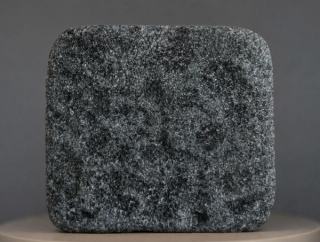
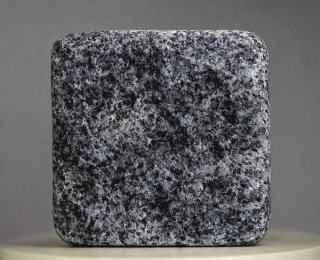
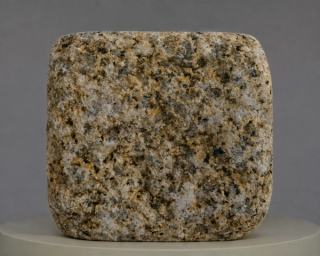
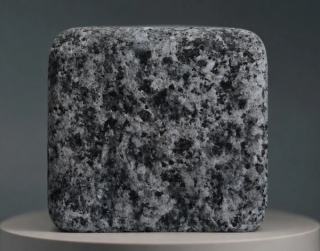
For importers, paving material distributors, landscape contractors and project procurement teams, bulk inspection of antique granite cobblestones can be more complicated than inspecting standard machine-finished stone products. The reason is simple: an antique finish is designed to retain a certain degree of edge variation, tonal movement, mineral character and naturally aged appearance.
If every stone is required to look exactly the same, the paving loses the natural character that makes antique granite setts attractive. On the other hand, if every difference is accepted as “natural variation,” genuine production or quality issues become difficult to identify.
The real question in bulk procurement is therefore not whether variation exists, but which variations are part of the intended antique appearance and which fall outside the acceptable project standard. This is the boundary that a practical bulk inspection system needs to define.
1. Do Not Rely on “Antique Finish” as the Only Inspection Standard
A purchase order that simply specifies “Antique Finish” or “Antique Tumbled Finish” may describe the general product category, but it is not detailed enough to serve as a complete acceptance standard for bulk production.
A more practical approach is to divide the antique appearance into several inspection points.
The first is overall colour range. Natural granite naturally varies in tone, grain, crystal distribution and mineral content, so bulk inspection should not require every cobblestone to be identical in colour. Instead, the full shipment should remain within the approved overall colour direction for the project.
The second is surface appearance. The finish should retain the natural grain, crystals and mineral character of the granite while achieving the intended aged effect. Excessive processing should not remove the material identity that made the stone desirable in the first place.
The third is edge and corner condition. Antique finishing normally softens the sharpness of freshly cut stone, but the degree of rounding still needs to be controlled. If one group appears heavily rounded while another remains close to a fresh-cut edge, the visual result will not be consistent.
The final point is overall visual continuity. Individual stones may vary naturally, but once dozens, hundreds or thousands of pieces are viewed together, they should still read as the same product and the same design language.
For this reason, bulk inspection should not be reduced to a simple question of whether the product “looks antique.” Colour range, surface condition, edge treatment and aging level should be reviewed separately.
2. Natural Variation Must Be Separated from Actual Quality Defects
This is one of the most important issues when inspecting antique granite cobblestones.
Natural granite is not a uniform manufactured material. Differences in tone, crystal distribution, grain and mineral pattern are normal, and after antique finishing there may also be slight variations in edge wear and surface character.
If these differences remain within a reasonable range and work together visually across the full paving area, they should be considered part of the natural product.
However, the term “antique” should not be used to justify every irregularity.
For example, naturally softened edges are part of the intended aged appearance. Large broken corners, severe damage or defects that affect laying stability should not simply be classified as antique character.
Likewise, natural tonal variation is normal, but if an entire group of stones clearly falls outside the approved colour direction and would create an obvious patch when laid, the issue should be reviewed.
The key inspection principle is therefore straightforward:
Natural variation is not the same as a defect, but an antique finish still needs clear quality limits.
3. The Aging Level Should Be Defined by the Project
There is no single visual level of “antique finish” that is suitable for every project.
A contemporary boutique hotel may require a restrained, lightly aged appearance. A private estate or traditional courtyard may accept more visible edge softening and tonal movement. A heritage-style commercial development may require a stronger material character.
For this reason, project buyers should not assume that the term “Antique Finish” means exactly the same thing to every supplier.
The more useful question is:
What level of aging does this particular project require?
Bulk inspection should then determine whether the delivered antique granite setts remain consistent with the previously approved visual direction.
Without that reference, inspection becomes highly subjective, especially when different people are involved in purchasing, production and final acceptance.
4. Approved Samples Should Define a Range, Not a Single Perfect Stone
Approved samples are useful references for bulk quality control, but they should not be treated as a requirement for every production piece to match one stone exactly.
Natural granite cannot produce thousands of pieces with identical tone, crystal pattern and texture, and antique finishing should not produce exactly the same edge wear on every cobblestone either.
A useful approved sample set should therefore help define a range that includes the accepted colour direction, aging level, edge condition, surface character and reasonable natural variation.
For granites with stronger natural variation, several representative samples are often more useful than a single “best-looking” piece.
This makes bulk inspection more realistic. The question becomes:
Does the shipment remain within the approved product range?
rather than:
Does every piece look exactly like one sample?
5. Edge and Corner Inspection Requires a Different Approach
Edge condition is one of the most distinctive inspection issues for antique granite cobblestones.
For standard newly cut stone, a chipped corner may be relatively easy to classify. With antique products, some degree of softened or worn edge is part of the intended appearance.
The inspection should therefore consider whether the stone still retains its basic shape, whether the edge condition affects laying or stability, whether the level of aging is reasonably consistent across the batch, and whether any damage is structural rather than purely visual.
The important distinction is between intentional aged character and damage that compromises the product.
This is far more useful than applying a simple rule such as “no chipped corners,” which does not reflect the actual nature of antique-finished granite.
6. Colour Inspection Should Focus on the Overall Range
Antique granite cobblestones often show more tonal depth than highly uniform paving products because different minerals, crystals and base colours become more visible after finishing.
For this reason, colour inspection should focus on the overall colour range rather than trying to match every stone individually.
The buyer should check whether the dominant colour direction remains consistent with the approved standard, whether a small number of stones fall obviously outside the overall range, whether material taken from different crates still belongs to the same visual family, and whether there are major tonal shifts between production groups.
If light and dark variation is naturally distributed and remains visually balanced when the stones are viewed together, it should generally be treated as part of the natural granite character.
If a group of material forms a clearly different colour block, further sorting or review may be required rather than simply calling it “natural variation.”
7. Bulk Inspection Should Include Multiple Crates
Inspecting a single crate or only the top layer of a pallet is not enough to represent a large order.
For bulk purchases of antique granite cobblestones, samples should be taken from different crates, different locations and, where relevant, different production stages.
Inspection should cover stone type and colour range, dimensions and thickness, level of aging, edge and corner condition, surface character and structural integrity.
It is also useful to place several randomly selected pieces together rather than inspecting every stone only as an isolated unit.
Antique granite setts are ultimately installed in large quantities. The important question is therefore whether material randomly selected from different crates still forms one consistent product when viewed as a group.
8. Inspection Results Do Not Have to Be Limited to “Accept” or “Reject”
Natural antique stone is often better managed with several levels of quality disposition rather than a simple pass-or-fail decision.
The first category is normal natural and antique variation. Reasonable tonal movement, mineral differences and minor edge variation can be accepted as part of the product.
The second category includes stones that fall slightly outside the main visual range but can be managed through additional sorting.
The third category is material with a finishing condition that clearly differs from the approved standard, such as insufficient aging or significantly different edge treatment. These pieces may require further processing or separate review.
The fourth category covers genuine defects such as severe breakage, damage that affects installation or other issues that cannot reasonably be corrected through sorting or reprocessing.
This type of classification is often more practical for natural stone procurement than treating every issue as either fully acceptable or completely rejectable.
9. Keep Basic Inspection Records Before Shipment
Because antique-finished products rely partly on visual judgement, basic pre-shipment inspection records are especially valuable.
Records may include the product name, dimensions, approved antique finish reference, inspected batch or crate numbers, overall colour condition, edge condition, surface appearance and any corrective action taken on non-conforming pieces. Representative photos or short inspection videos can also be useful.
The purpose is not to create unnecessary paperwork. It is to maintain a clear link between the approved product standard, the actual bulk production and the material released for shipment.
For importers and distributors who purchase the same antique granite products repeatedly, these records can also provide a useful reference for future orders.
10. The Real Goal Is to Define the Boundary of Acceptable Variation
In bulk procurement of antique granite cobblestones, natural variation itself is not the main risk. The greater risk is failing to define which variations are acceptable before production begins.
If a purchase order contains only the granite name, dimensions and the words “Antique Finish,” many decisions at final inspection will depend on individual interpretation.
A stronger procurement process defines the approved colour direction, aging level, edge condition and acceptable natural variation before mass production. Once production is complete, material from different crates can then be sampled and reviewed for colour, surface condition, edge treatment and structural integrity.
Any material outside the approved range can be sorted, reprocessed or removed depending on the nature of the issue.
This allows a naturally varied product such as antique granite cobblestones to remain visually authentic while still meeting a clearly defined bulk quality standard.
Conclusion: Natural Character Should Remain, but Inspection Standards Must Be Clear
The value of antique granite cobblestones does not come from making every stone identical. Natural tonal variation, mineral character, softened edges and controlled aging are exactly what give this type of paving its distinctive sense of time and material authenticity.
Natural variation, however, should not mean undefined quality.
For importers, distributors and project procurement teams, an effective bulk inspection system should respect the natural characteristics of granite while also defining how far those variations are allowed to go.
A practical procurement sequence is to confirm the required antique appearance, define acceptable natural variation, establish the defect boundary, carry out representative bulk sampling, deal with non-conforming material and complete final pre-shipment release.
When these standards are agreed before mass production, natural variation becomes far less likely to create a purchasing dispute. Instead, it becomes a controlled and accepted part of the final paving character.