

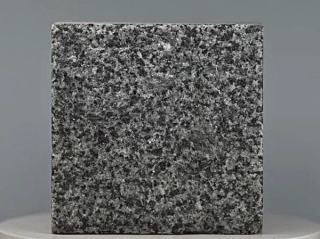
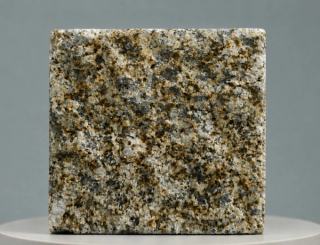
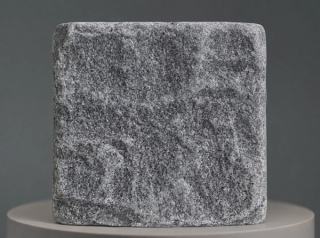
Granite cobblestones are widely used for private driveways, estate entrances, hotel drop-off areas, commercial developments and urban public spaces. Compared with pedestrian paving, vehicular areas have an additional requirement beyond colour, surface texture and overall landscape appearance: the pavement must withstand repeated vehicle loads over the long term.
For this reason, choosing granite cobblestones for vehicular areas should not simply follow the idea that “thicker is always better,” nor should a project automatically adopt a standard size without considering how the space will actually be used.
Vehicle type, traffic frequency, stone thickness, plan dimensions, base bearing capacity, laying method and edge restraint all influence the long-term stability of the finished pavement.
For landscape architects, contractors and project procurement teams, a more appropriate approach is to understand the actual traffic conditions first, and then determine the cobblestone dimensions and pavement structure accordingly.
Start with the Vehicles, Not the Stone Dimensions
A private residential driveway and a hotel drop-off area may both be designed for vehicles, but their loading conditions can be very different.
Private driveways are generally used by passenger cars and SUVs, with relatively low traffic frequency.
Hotel entrances, office forecourts and commercial spaces may experience repeated daily traffic from passenger cars, taxis, business vehicles, delivery vans and other service vehicles.
Where maintenance vehicles or heavier service vehicles are expected to enter public spaces, the requirements placed on the paving system increase further.
Before deciding whether a particular cobblestone size is suitable, the project team should first establish:
What types of vehicles will use the area? How frequently will they pass over it? Will heavier service vehicles need access?
Only after these conditions are understood can stone dimensions, thickness and the supporting pavement structure be assessed properly.
Strong Granite Does Not Automatically Mean a Stable Pavement
Natural granite has high compressive strength and excellent wear resistance, which is one reason it has been used for streets, squares and vehicular paving across Europe for generations.
However, an individual stone does not carry the entire vehicle load independently.
When a vehicle passes over the surface, the load is transferred through the granite cobblestones into the bedding and supporting base below. If the base provides insufficient or uneven support, individual stones can gradually move under repeated traffic.
The initial movement may be very small. Over time, however, joints can change, jointing material may be lost, and the restraint between adjacent stones can weaken. Eventually, this may become visible as movement, settlement or uneven levels.
Vehicular paving therefore needs to be considered as a complete system consisting of:
granite cobblestones + bedding layer + base + joints + edge restraint.
This is why identical granite cobblestones can perform very differently in two projects with different pavement structures.
Thickness Should Reflect Traffic Loads and Actual Use
Thickness is an important consideration for vehicular granite cobblestones, but there is no single thickness that is suitable for every driveway or traffic environment.
A low-frequency private residential driveway should not necessarily be assessed in the same way as a busy hotel drop-off area.
As vehicle weight and traffic frequency increase, the requirements for both the stone and the overall pavement system also increase.
This becomes particularly important in areas where vehicles frequently turn, brake or move slowly under heavier loads. In these locations, the paving is exposed not only to vertical loading but also to horizontal forces generated by tyres.
It is therefore misleading to assume:
Increasing the cobblestone thickness alone will automatically make the pavement stable.
Greater thickness can improve the stability and load capacity of the individual stone, but it cannot compensate for a poorly compacted base, uneven bedding support or inadequate edge restraint.
Plan Dimensions Also Affect Vehicular Performance
Cobblestone dimensions include not only thickness but also length and width.
Smaller square cobblestones create a denser joint pattern and provide considerable flexibility for curved driveways, turning areas and complex paving layouts.
Rectangular formats can establish stronger directional lines and a more structured appearance, making them particularly suitable for contemporary entrances, driveways and formal landscape spaces.
In vehicular areas, however, proportions should not be determined by appearance alone.
As the plan dimensions of an individual stone increase, uniform support beneath the stone becomes increasingly important. If part of the underside is insufficiently supported, vehicle loads may create uneven stress.
Larger stones are therefore not automatically better for traffic areas, just as smaller stones are not automatically more stable.
A suitable specification needs to consider vehicle loads, stone thickness, length-to-width proportions, laying direction and the supporting base structure together.
Turning and Braking Areas Require Additional Attention
A vehicle travelling slowly in a straight line does not affect a paved surface in exactly the same way as a vehicle turning.
At hotel drop-off areas, circular driveways, residential driveway corners and vehicle turning zones within commercial spaces, tyres can generate significant lateral forces against the paving.
Where joints are unstable, edge restraint is inadequate or the supporting structure is insufficient, these areas can experience stone movement earlier than straightforward traffic lanes.
For this reason, a project should not simply classify the entire surface as one uniform “vehicular paving area.”
During detailed design, it is useful to distinguish between:
straight-running zones, turning areas, parking areas, drop-off zones and locations where heavier vehicles may operate.
The actual loading conditions can vary considerably between these areas, and the specification should respond accordingly.
Surface Finish Should Consider Performance as Well as Appearance
The surface finish of granite cobblestones in vehicular areas also needs to respond to practical requirements.
Natural split, flamed and suitably textured finishes can provide good outdoor slip resistance while retaining the natural character of granite.
For tumbled or antique-finished cobblestones, the final surface texture should be considered together with the traffic environment and pedestrian requirements.
Slip resistance becomes particularly important on slopes, in consistently wet areas and in projects exposed to rain, snow or freezing winter conditions.
At the same time, vehicular paving often forms an important part of the architectural landscape.
Landscape architects therefore need to balance slip resistance, walking comfort, visual character and the architectural language of the project, rather than simply specifying the roughest possible finish.
The Base Is Critical to Long-Term Stability
When vehicular cobblestones become loose or settle, attention often turns immediately to the stone specification.
In many cases, however, the underlying problem is below the stone.
Insufficient base compaction, inconsistent bearing capacity or poor drainage can lead to differential settlement after repeated vehicle loading.
Once the supporting structure moves, the cobblestones above will move with it.
Granite cobblestones should therefore be understood as the natural stone surface layer of a complete vehicular pavement system, rather than as structural elements that independently carry the full traffic load.
For hotel entrances, commercial spaces and public projects in particular, the supporting structure should be designed according to expected traffic levels, ground conditions, drainage requirements and applicable local engineering standards.
A stone supplier can assist with cobblestone dimensions and processing requirements, but the final pavement structure should be confirmed by the project's design and engineering teams according to site conditions.
Jointing and Edge Restraint Should Not Be Overlooked
The joints between cobblestones affect more than appearance; they also contribute to the stability of the paved surface.
Stable jointing helps restrain adjacent stones. If jointing material is gradually lost, individual stones gain more room to move and can become increasingly vulnerable to displacement under repeated vehicle traffic.
Edge restraint is equally important.
Without stable kerbstones, edge stones or another effective restraint system around the driveway, repeated traffic can gradually push the paving outward.
A vehicular cobblestone design should therefore consider not only the main paved area, but also edge details, transitions between materials, corner treatment and long-term joint stability.
Together, these details contribute significantly to overall pavement performance.
Private Driveways and Commercial Traffic Areas Require Different Approaches
Private residential projects often place greater emphasis on the relationship between the driveway, architecture, courtyard and surrounding garden.
Once the requirements for normal passenger vehicle access have been satisfied, designers have greater freedom to consider overall colour balance, stone proportions, laying direction and landscape character.
Commercial and public projects require additional consideration of long-term traffic frequency.
A hotel entrance may receive hundreds of vehicle movements each day. An office development may need to accommodate both visitor and service vehicles, while commercial spaces may allow delivery vehicles to enter at certain times.
For this reason:
A pavement that can occasionally carry vehicles is not necessarily designed for long-term, high-frequency vehicular use.
Recognising this distinction makes it easier to select an appropriate granite cobblestone specification.
The Factory Should Understand the Application Before Mass Production
For custom granite cobblestone projects, the factory should ideally receive more than just colour, length, width, thickness and quantity.
Where the stone will be used in vehicular areas, basic application information is also valuable.
Is the project a private residential driveway or a hotel drop-off area? Will it mainly accommodate passenger cars, or are service vehicles expected? Will the paving follow straight lines, curves or a combination of patterns? Are there slopes or areas with frequent turning movements?
This information helps the factory understand the project requirements more accurately and can support better decisions regarding dimensions, manufacturing tolerances, surface finishes and batch production.
For large projects, these discussions are best completed before mass production begins rather than after the stone has already arrived on site.
From Selecting a Stone to Designing a Complete Pavement System
Professional specification of granite cobblestones for vehicular areas involves much more than selecting a length, width and thickness.
The process should begin with the actual vehicle use of the space. Stone dimensions and thickness can then be considered together with the base, laying method, jointing, edge restraint and drainage strategy.
Private residential driveways need to balance durability with landscape aesthetics. Hotels, commercial developments and public spaces must additionally consider frequent traffic, vehicle turning and the long-term effects of service vehicles.
The key question is therefore not:
“Which granite cobblestone size is best for every driveway?”
It is:
“Which combination of cobblestone dimensions and pavement structure is appropriate for the actual traffic conditions of this project?”
When stone specification, engineering structure and expected traffic loads are properly coordinated, natural granite cobblestones can retain their colour, texture and landscape character while delivering reliable long-term performance in vehicular environments.
For landscape architects, contractors and project procurement teams, this system-based approach is ultimately more important than comparing colour, price or individual stone dimensions alone.