
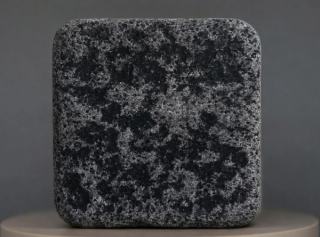
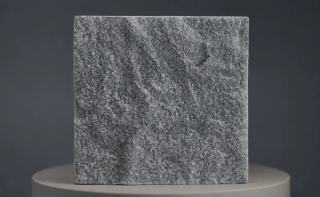

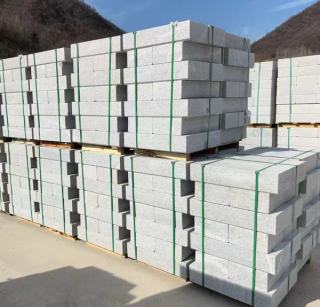
In landscape projects, commercial developments, municipal infrastructure, and high-end residential projects, natural granite is rarely supplied in just one size. A complete project may include paving slabs, cobblestones, kerbstones, steps, and a smaller quantity of curved, corner, or other custom-fabricated pieces.
For this reason, simply stating “2,000 m² of grey granite required” is usually not enough for an accurate quotation.
For a stone supplier, it is more important to understand which products are required, their dimensions and thicknesses, surface finishes, quantities, and whether those quantities are measured in square metres, linear metres, or pieces.
Organising this information into a clear procurement list helps create a more accurate connection between design, purchasing, and stone fabrication, while reducing repeated clarification during quotation and subsequent technical coordination.
Why Should a Procurement List Include More Than the Total Stone Area?
During the architectural and landscape design stages, stone quantities are often calculated by area. For example, a plaza may require approximately 3,000 m² of granite paving, a vehicular area may require 800 m² of granite cobblestones, and a road may require 600 linear metres of granite kerbstones.
These figures provide a useful overview of the project requirements, but they are not detailed enough for actual production.
For example, 3,000 m² of granite paving may include several sizes such as 600 × 400 mm, 600 × 300 mm, and 400 × 400 mm, together with border slabs, step pieces, and other special dimensions.
Even when the granite type, colour, and finish are identical, different sizes still need to be calculated separately.
Therefore, once a project moves from quantity estimation to procurement, the total quantity should be broken down into specific products, dimensions, thicknesses, finishes, and corresponding quantities.
How Should a Procurement List for Cut-to-Size Granite Slabs Be Prepared?
Cut-to-size granite paving slabs are usually measured primarily in square metres, but the procurement list should also separate the individual dimensions.
For example, a plaza using the same grey natural granite may include:
600 × 400 × 30 mm
600 × 300 × 30 mm
400 × 400 × 30 mm
If only the total area is provided, the supplier still cannot determine how much of each size needs to be produced.
A slab procurement list should therefore specify the granite type or colour, length, width, thickness, surface finish, and quantity for each size. For standard rectangular slabs, square metres can be used as the main unit, while the number of pieces can be included as an additional reference.
If the project includes step treads, curved slabs, drainage covers, or other custom-fabricated pieces, these should normally be listed separately rather than included within the standard paving area.
Why Must Thickness Be Clearly Specified?
Natural stone dimensions should be expressed in the complete format of length × width × thickness.
For example, 600 × 400 × 30 mm and 600 × 400 × 50 mm may have identical face dimensions, but they are different products from a manufacturing perspective.
This is particularly important for projects containing pedestrian areas, vehicular zones, steps, or other locations with different performance requirements, where different stone thicknesses may be specified.
Thickness also affects individual piece weight, total shipment weight, packaging, and transportation. Products with different thicknesses should therefore be listed separately rather than combined based only on length and width.
How Should Granite Cobblestones Be Calculated?
Granite cobblestones are often measured by paving area during the design stage, but their specific dimensions must also be confirmed during procurement.
For example, 100 × 100 × 50 mm and 100 × 100 × 100 mm cobblestones may cover a similar surface area, but their material volume, weight, and overall product requirements are very different.
A cobblestone procurement list should therefore specify the granite type, length × width × thickness, surface finish, and corresponding project quantity.
If a project uses 100 × 100 mm, 100 × 200 mm, or other modules, each size should be listed separately rather than combined into one total paving area.
Where different colours or paving zones are involved, quantities can also be separated by product or area so that the supplier can clearly understand the material composition of the project.
Should Cobblestones Be Measured in Square Metres, Tonnes, or Pieces?
Measurement practices vary between countries, projects, and suppliers.
Design drawings commonly use square metres because the primary concern during design is the paving area. During procurement, packaging, and transportation, however, square metres, pieces, and weight may all become relevant.
For this reason, a procurement list does not necessarily have to use only one unit.
For example:
100 × 100 × 50 mm | 500 m²
Based on the product dimensions, the supplier can then calculate the approximate number of pieces, total weight, and packaging requirements.
If the project already has an accurate piece count, both square metres and pieces can be provided for cross-checking. The important point is not to force every project into the same measurement system, but to ensure that each quantity clearly corresponds to a specific product size.
Why Should Granite Kerbstones Be Considered in Both Linear Metres and Pieces?
Granite kerbstones follow a different procurement logic from paving slabs and cobblestones.
In road and landscape design, kerbstone quantities are commonly measured in linear metres. For example, a road may require 800 linear metres of granite kerbstones.
However, the factory ultimately produces individual stone units rather than “800 metres of stone.”
If the standard kerbstone size is:
1000 × 150 × 300 mm
the total linear metres can be converted into the required number of pieces.
If the project also contains 500 mm long units, curved kerbstones, corner pieces, ramp transitions, or other special units, these should be calculated separately.
A kerbstone procurement list can therefore use linear metres to represent the overall project quantity while using piece counts to confirm the actual production quantity.
This creates a clearer relationship between the design quantity and factory production.
Why Should Special Fabricated Pieces Be Listed Separately?
In real projects, natural granite is rarely limited entirely to standard dimensions.
Building entrances, road curves, tree pits, steps, ramps, drainage details, and landscape boundaries may all require special dimensions or custom fabrication.
If these products are included only within the general square-metre or linear-metre quantity, it can be difficult for the supplier to understand the actual fabrication requirements during the quotation stage.
For example, 500 linear metres of standard straight kerbstones is very different from a 500-metre project containing numerous curved sections, corner units, and products with different radii.
Standard products and special pieces should therefore be separated whenever possible. If drawings for special pieces are already available, the relevant drawing references can also be included in the procurement list.
Why Should Surface Finish Be Included in the Procurement List?
The same natural granite does not necessarily mean the same finished product.
Flamed, bush-hammered, sawn, natural split, tumbled, and other surface finishes create different appearances and require different processing methods.
A procurement list should therefore record not only the stone colour, dimensions, and quantity, but also the required surface finish.
If the same granite is used with different finishes in different areas, those products should be listed separately even when their dimensions are identical.
This allows the supplier to prepare the quotation and production requirements according to the actual specification.
What Information Should a Clear Granite Procurement List Contain?
For most natural granite projects, the procurement list should clearly identify:
Granite type or colour, product type, length × width × thickness, surface finish, quantity, unit of measurement, and any special fabrication requirements.
For cut-to-size slabs, the main considerations are usually square metres, individual dimensions, and piece counts. For cobblestones, the paving area, dimensions, and thickness are particularly important. For kerbstones, linear metres, standard unit lengths, piece counts, and special units should be clearly identified.
The more complex the project, the more important it becomes to separate different specifications rather than providing only a single total quantity.
Drawings and Procurement Lists Should Correspond
A procurement list explains what needs to be purchased, in what dimensions, and in what quantities. Design drawings show where the stone will be installed, how it will be arranged, and how it connects with surrounding construction.
For a simple project, a well-prepared procurement list may be sufficient for an initial quotation.
For large paving areas, complex landscape details, or projects containing numerous custom sizes, however, relevant drawings should ideally be provided together with the procurement list so that individual products can be related to their actual locations.
This helps the supplier understand the project more efficiently and supports subsequent specification confirmation and production coordination.
From Project Quantities to a Practical Granite Procurement List
Procuring natural granite for a project involves more than sending the supplier a total square-metre figure.
Slabs, cobblestones, and kerbstones have different product forms and therefore require different approaches to measurement and production.
Slabs are usually measured primarily in square metres but should be broken down by individual dimensions. Cobblestones require clear information about paving area, dimensions, and thickness. Kerbstones need a clear relationship between linear metres and the actual number of units to be produced.
Curved pieces, corners, and other custom-fabricated products should also be separated from standard items.
Ultimately, a well-structured granite procurement list should allow designers, purchasing teams, and stone suppliers to reach a consistent understanding of the products, specifications, finishes, and quantities required.
For custom natural granite projects, converting general project quantities into clear and practical procurement information can make quotation, technical confirmation, and subsequent production coordination significantly more efficient.