

In high-standard landscape projects, taking natural granite from an initial design concept to final construction is not simply a matter of choosing a colour, selecting a stone and adding its name to a material schedule. For landscape designers, the more important task is to gradually translate early decisions about spatial character, colour, scale and material relationships into technical requirements that contractors can price, suppliers can manufacture, installers can execute and project teams can inspect.
This process is essentially a gradual translation from “design language” into “technical language”. Material boards, physical samples, mock-ups and tender specifications are not separate activities. Together, they form a continuous material-control process. If information is lost at any stage, the original design intent can gradually change during procurement, production or installation.
Stage One: Define the Material Role Before Selecting a Specific Granite
At the early design stage, the first question is usually not “Which granite should we use?” but rather “What role should the material play in each space?”
The main building entrance may require a stronger architectural scale and higher material quality. Primary pedestrian areas need visual consistency across large surfaces. Vehicular areas must consider abrasion resistance, slip resistance and traffic loads. Courtyards and garden paths place greater emphasis on the natural texture experienced at close range, while landscape boundaries may require granite kerbstones to create clear and continuous edges.
The concept stage should therefore establish the direction of colour, light and dark relationships, material scale, surface texture and the hierarchy between different areas.
Even within the broad category of grey natural granite, there can be cool grey, warm grey and blue-grey tones, as well as significant differences in crystal size and mineral grain. The same granite can also produce very different visual effects when flamed, bush-hammered, split or treated with other surface finishes.
At this stage, the designer is defining a material direction rather than prematurely fixing the final product to be purchased.
Stage Two: The Material Board Translates Design Intent into a Comparable Material System
Once the overall direction has been established, the material board begins to translate an abstract design concept into relationships between real materials.
The purpose of a material board is not simply to display several attractive stone samples. It allows natural granite to be evaluated alongside building façades, metals, timber, glass and other important landscape materials.
For example, a dark grey granite may appear refined when viewed on its own but become too heavy when combined with a dark building façade. A premium granite with highly visible crystals may have a distinctive character as an individual sample, but if the architecture already contains rich textures, adding another strongly textured paving material may weaken the visual hierarchy of the entrance space.
At this stage, the design team should gradually answer several questions: What is the main colour range? Should the primary paving remain visually restrained or show stronger natural variation? Do key areas need a more distinctive granite? Should different spaces use different stones, or can hierarchy be created through different sizes and finishes of the same granite?
After this stage, natural granite has moved from design inspiration into a material system that can be further tested.
Stage Three: Physical Samples Confirm the Real Colour and Natural Variation of the Stone
Once the material-board direction has been established, the project needs to move into physical sample evaluation.
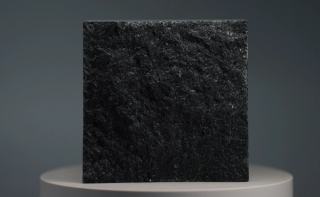
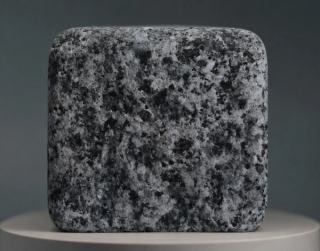
One of the fundamental differences between natural granite and industrially manufactured materials is the presence of natural crystals, mineral grains, colour variations and geological characteristics. A physical sample therefore should not simply answer the question, “Does this stone look good?” More importantly, it should help the designer understand whether the stone’s actual range of variation is appropriate for the project.
The designer should evaluate the base colour, mineral grains, crystal characteristics, surface finish and the normal colour variations between different samples.
If premium granite cobblestones or antique-finish granite cobblestones are being considered, the evaluation should also include edge conditions, surface relief and natural differences between individual pieces. For large-format custom granite slabs, greater attention should be paid to how colour and mineral variation may appear across larger paved areas.
The purpose of physical sampling is not to find one perfectly uniform piece of stone. It is to establish the range of natural variation that the project can accept.
Stage Four: After Small Samples, the Stone Must Be Evaluated at Actual Project Sizes
A small stone sample cannot fully represent the final paving appearance.
When granite moves from a 150 × 150 mm or 300 × 300 mm sample to actual project dimensions, the relationship between mineral grains, crystals, pattern and overall colour can change considerably.
This is particularly important for large-format granite slabs. Mineral variations that appear insignificant on a small sample may become much more visible on slabs measuring 600 mm, 800 mm or larger. Cobblestones work differently: individual pieces may show substantial variation, while dozens or hundreds of pieces together create a more unified overall paving texture.
For this reason, approval of a small sample should not automatically be treated as approval of the final installed appearance.
The designer should continue by reviewing actual length, width, thickness, surface finish and edge treatment, as well as how different stone formats work together within the design.
Stage Five: The Mock-Up Tests the Complete Paving Relationship
If physical samples answer the question, “Is the stone itself suitable?”, a mock-up answers the more important question, “Does the entire paving system work when these materials are installed together?”
An effective mock-up should reproduce actual project conditions as closely as possible, including real stone dimensions, surface finishes, joint widths, laying direction, transitions between materials and the treatment of kerbstones or other edges.
If a project combines large-format granite slabs, granite cobblestones and granite kerbstones, the mock-up should ideally demonstrate how these materials meet one another.
Many issues that cannot be identified from individual samples become obvious at this stage. Is the scale difference between slabs and cobblestones appropriate? Do two grey granites become too similar when placed next to each other? Does the actual joint width alter the intended paving rhythm? Is the natural relief of split-finish cobblestones suitable? Does the overall colour of antique-finish cobblestones achieve the intended effect when installed as a larger area?
A mock-up is therefore not simply a demonstration area prepared before construction. It is an important part of the continuing design decision process.
Stage Six: Translate “It Looks Right” into Executable Technical Language
Once the mock-up has been reviewed, the designer needs to translate visual judgments into technical requirements.
Expressions such as “make the grey more sophisticated”, “the surface should not be too rough” or “it should look similar to the sample” may be useful during internal design discussions, but they cannot provide reliable standards for procurement and production.
Technical documents need to progressively define the stone type or source, acceptable colour range, key visual characteristics, length and width, thickness, surface finish, edge treatment, dimensional tolerances and reference to approved samples.
For natural granite, another principle is especially important: technical specifications are not intended to eliminate natural variation. Their purpose is to define which natural variations are acceptable within the project.
Only when this translation is complete can design intent become technical information that a supplier can understand and execute.
Stage Seven: Approved Samples Establish the Control Range Between Design and Bulk Supply
As the project moves into technical design and tender preparation, earlier samples should gradually become formal approved samples.
A general sample helps the designer select a material. An approved sample serves a different purpose: it becomes a reference for procurement, production and quality assessment.
For natural granite, keeping only one particularly attractive stone as the approved standard may be inappropriate because it may not represent the normal variation of the material. In projects with stricter visual requirements, a group of samples can be used to establish an acceptable range—for example, a reference colour together with samples representing acceptable lighter, darker or naturally varied appearances.
This approach is particularly important for premium granite cobblestones and antique-finish granite cobblestones, where controlled natural variation is often part of the material’s value rather than a defect to be eliminated.
Approved samples therefore establish a quality boundary understood by the designer, contractor, supplier and project team.
Stage Eight: Tender Specifications Allow Suppliers to Quote Against Comparable Requirements
By the tender stage, natural granite can no longer be adequately described simply as “grey granite”, “dark grey granite cobblestones” or “flamed granite slabs”.
If the technical requirements are too vague, different suppliers may prepare quotations based on completely different stone grades, dimensional standards and processing methods. The prices may appear comparable, but the products behind those prices are not actually equivalent.
Specifications for granite slabs should therefore define, as far as practical, the stone direction, dimensions, thickness, surface finish, edge treatment, tolerances and sample requirements. Granite cobblestones should define dimensions, thickness, finish, requirements for visible faces and intended application areas. Granite kerbstones may require additional definitions for straight and curved units, chamfers, visible-face finishes and project-specific dimensions.
The clearer the technical specification, the more meaningful the comparison between supplier quotations becomes, and the lower the risk of material substitution, processing discrepancies and quality disputes later in the project.
Stage Nine: After the Specification Is Complete, Supplier Capability Still Needs to Be Evaluated
Completing the tender specification is not the end of the material-design process.
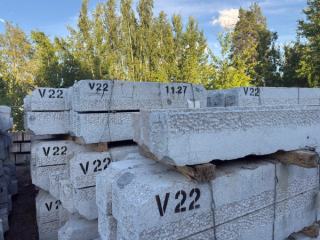
Natural granite still needs to pass through block selection, cutting, surface processing, dimensional control, sorting, packing and bulk delivery. The design documents define the target, but the supplier determines whether that target can be consistently translated into finished products.
This becomes particularly important for large paving areas and projects delivered in multiple batches. A supplier’s ability to maintain overall colour direction, surface-finish consistency and dimensional control can directly affect the final landscape appearance.
Supplier evaluation should therefore consider more than price. It should also assess the supplier’s understanding of the technical specification and approved samples, actual processing capability, batch-control procedures and ability to maintain material continuity when additional quantities are required later.
From Design Concept to Technical Specification: Protecting the Original Design Intent
Moving natural granite from design concept into a built landscape is not a single material-selection decision. It is a continuous process of testing, defining and controlling the material.
The design concept establishes the role of the material. The material board defines relationships between different materials. Physical samples confirm the real colour and natural variation of the stone. Actual product dimensions reveal the influence of scale. Mock-ups test complete paving relationships. Approved samples establish the quality-control range. Tender specifications then translate all of these design decisions into technical language that procurement teams, suppliers, contractors and inspectors can understand.
For landscape designers, mature natural granite specification does not end when an attractive stone is selected. The real objective is to ensure that the original material concept can move through material boards, physical samples, mock-ups, technical specifications, tendering, procurement and final construction without losing the spatial relationships and material quality originally intended.
From the material board to the physical sample, from the mock-up to the tender specification, the purpose of this process is ultimately not to protect one individual piece of granite. It is to protect the designer’s original intention for the space and ensure that natural granite becomes a controlled and coherent part of the finished landscape.