
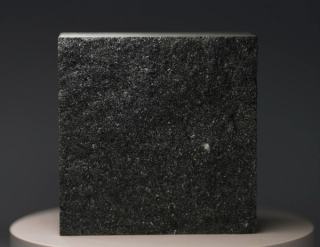
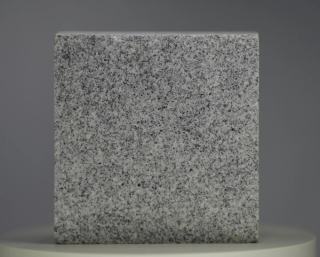
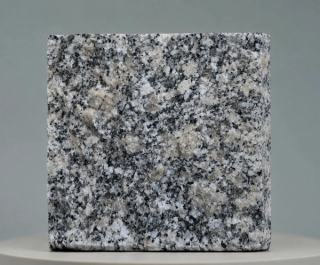
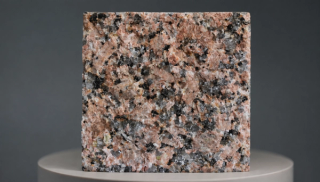
This installation guide is comprehensively benchmarked against the technical requirements of European general specifications EN 1341 and EN 1342 for outdoor paving. Specifically tailored for high-density, premium Granite Cobblestones, this guide is suitable for European courtyards, historic town restorations, commercial walkways, and light vehicular pavements. Standardizing the installation workflow maximizes the stone's core properties—such as frost resistance, wear resistance, and long-term stability—ensuring a low-maintenance, premium finish for decades.
1. Subgrade Preparation: Anti-Settling & Porous Drainage
The core of high-quality paving lies in a solid subgrade, uniquely engineered to withstand Europe's rainy and frequent freeze-thaw climates. Construction begins with subgrade clearing and compaction, completely removing soft soil layers and debris to ensure a tight, level foundation. Subsequently, a 15 to 20 cm graded crushed stone aggregate base layer is laid and mechanically compacted. This ensures smooth base drainage, eliminates standing water hazards, and radically prevents future surface settling, loosening, or cracking, aligning with general European subgrade construction standards.
2. Bedding Layer Slicing: Precise Drainage Slopes
For the bedding layer, high-quality dry quartz sand is highly recommended, with a thickness strictly controlled between 3 and 5 cm. The layer must be precisely leveled with a pre-designed standard drainage slope of 2‰ to 3‰. This ensures rapid evacuation of rain and snow, preventing water accumulation from freezing, expanding, and causing structural hollows—perfectly adapting to Europe's severe seasonal temperature swings.
3. Material Laying: Rigorous Dimensional Control
When laying premium Granite Setts, an expansion joint of 3 to 5 mm should be uniformly reserved between the stones. The entire paving process must be calibrated using string lines, controlling the level tolerance within the European industry-standard ±2 mm. Use a rubber mallet to gently tap and set the stone, strictly avoiding violent impacts that could fracture the natural stone texture. This ensures that the natural stone paving remains flat, visually seamless, and evenly distributed under load.
4. Joint Filling & Compaction: Monolithic interlocking
Once the Granite Cubes are positioned, high-strength specialized jointing sand (such as polymeric sand) is swept in to completely fill the gaps. After covering with a protective membrane, a plate compactor is used for final consolidation. This mechanical vibration locks the cobblestones tightly into a monolithic interlocking structure, substantially increasing the pavement's resistance to compression and lateral shifting under pedestrian and light vehicular loads.
5. Curing & Final Inspection
Upon completion, the paved area must be left undisturbed for a minimum of 48 hours for proper curing. Foot traffic and vehicular access are strictly prohibited during this window to allow the sand matrix to settle naturally. Final project acceptance can reference European stone paving practices, inspecting surface flatness, drainage efficiency, joint uniformity, and structural integrity. Standardized engineering practices unlock the full potential of premium granite cobblestones, delivering a long-lasting, weather-proof, and low-maintenance outdoor masterpiece.