
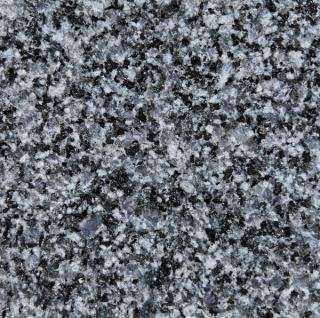
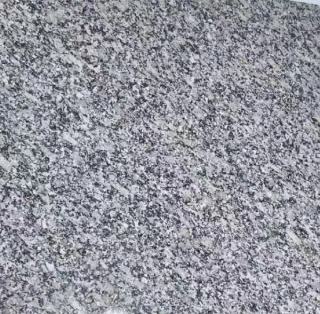
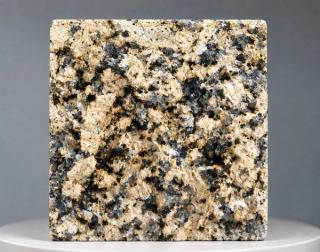

Natural granite is widely used for urban plazas, commercial building entrances, hotel forecourts, residential courtyards, pedestrian streets, and public landscape spaces.
One question frequently arises in these projects:
Does outdoor granite paving need to be sealed after installation?
Some projects assume that granite is naturally dense and has relatively low water absorption, so additional protection is unnecessary. Others apply a sealer to all stone surfaces in an effort to reduce oil stains, water marks, and other forms of contamination.
In reality, there is no single answer that applies to every project.
The decision should be based on several factors, including the granite’s water absorption characteristics, surface finish, application environment, likely sources of contamination, slip-resistance requirements, drainage conditions, and long-term maintenance strategy.
The real question is not simply:
“Does granite need to be sealed?”
Instead, it should be:
“Does this particular granite, in this particular environment, face risks that can reasonably be reduced through protective treatment?”
What Is Granite Sealing Actually Intended to Protect Against?
One of the main purposes of an outdoor stone sealer is to reduce the rate at which water, oils, and other contaminants penetrate the pores of the stone.
Natural granite is generally dense, but low water absorption does not mean zero absorption.
Microscopic pores, mineral boundaries, and natural microcracks may still exist within the stone. If water, oil, or colored liquids remain on the surface for extended periods, they may gradually penetrate the material.
On an ordinary landscape walkway, the main exposure may be rainwater, dust, and soil, so the contamination risk is relatively limited.
The situation can be very different at hotel drop-off areas, outdoor dining spaces, commercial entrances, or areas exposed to vehicles.
Typical contaminants in these locations may include:
cooking oils, coffee and beverages, vehicle fluids, tire marks, plant residues, and other colored contaminants.
Once these substances penetrate into the stone, cleaning can become considerably more difficult.
For this reason, the first question when considering a sealer should not be what type of stone it is, but rather what types of contamination the stone is likely to encounter in its actual application environment.
Stain Resistance and Water Resistance Are Not the Same Thing
A common misunderstanding in stone protection is to treat water resistance and stain resistance as the same requirement.
They are related, but they are not identical.
Water resistance primarily concerns the penetration of liquid water, while stain resistance may also involve oils, beverages, and other substances that can leave persistent marks.
For outdoor paving, the objective should not necessarily be to make the stone completely impermeable to water.
Outdoor paving is an open system.
Rainwater may enter not only through the stone surface but also through joints, edges, the bedding system, and other construction details.
Therefore:
A stone sealer cannot replace proper base construction, drainage falls, or joint detailing.
If water remains trapped within the paving system or the base stays continuously wet, treating only the upper surface of the granite will not solve the underlying problem.
Why Is Breathability Important for Outdoor Granite?
Moisture-vapor movement is an important consideration when selecting protection for outdoor natural stone.
Stone paving is not a completely sealed construction system. Moisture within the bedding or base may migrate upward through capillary action or vapor movement.
If a surface treatment creates an excessively dense continuous film, it may interfere with the release of moisture from within the paving system.
For this reason, outdoor stone protection should not simply follow the principle that “more sealing is always better.” The ability of the system to allow a certain degree of vapor transmission should also be considered.
This is why penetrating or impregnating sealers are often worth evaluating for exterior natural stone.
The basic concept is to allow the protective material to penetrate into the near-surface pores of the granite, reducing the rate at which liquid water or contaminants enter while avoiding a heavy continuous surface coating.
However, products marketed as penetrating sealers can still differ considerably in performance. Product technical data and testing on the actual project stone should therefore be reviewed before making a final decision.
Can a Sealer Change the Color of Granite?
Yes, it can.
Different sealing products can affect the appearance of natural stone in different ways.
Some produce very little visible change. Others may darken the granite and create an appearance similar to wet stone. Certain treatments may also alter surface sheen.
This becomes particularly important on large paved areas.
If the amount of sealer applied varies, if different stones absorb the product at different rates, or if some areas receive overlapping applications, visible differences in color may develop.
Light grey, white, and naturally color-varied granites generally require particular attention.
For this reason, a test area should be prepared using the actual granite specified for the project before full-scale application.
The test should not be evaluated immediately after application. The product should be allowed to react and dry fully before checking for changes in color, sheen, and surface texture.
Can Sealing Affect Slip Resistance?
This is a critical consideration for outdoor paving.
Exterior granite is often supplied with flamed, bush-hammered, natural split, or other textured finishes. One of the reasons for using these finishes is to provide suitable surface friction for outdoor pedestrian environments.
If a protective treatment forms a noticeable film or leaves excessive residue on the surface, it may alter the original friction characteristics of the granite.
This is particularly important at building entrances, ramps, pool surrounds, waterfront areas, and other locations that are frequently wet.
Improving stain resistance should not come at the expense of slip resistance.
Therefore:
The sealer must be evaluated together with the granite surface finish rather than selected independently.
For projects with specific slip-resistance requirements, it is advisable to verify the performance of the treated surface through an appropriate mock-up or testing before large-scale application.
Different Granite Finishes May Require Different Decisions
The surface finish affects how contaminants interact with granite.
Flamed, bush-hammered, natural split, and antique finishes have more pronounced surface textures.
These finishes are well suited to many outdoor applications, but their rougher texture may also trap dust, oils, and fine particles more easily.
However, a rough surface does not automatically mean that sealing is necessary—or unnecessary.
The more useful question is:
What type of contamination will be most difficult to manage on this surface in its actual environment?
If the main contaminants are ordinary dust and soil that can be removed through routine washing, full sealing may provide limited additional benefit.
If the surface is regularly exposed to oils, colored beverages, or other substances that can penetrate the stone, protective treatment may be more valuable.
Which Outdoor Areas Are More Likely to Benefit From Sealing?
The need for protection varies considerably between different areas of a project.
Hotel entrances and drop-off zones, outdoor dining areas, café terraces, commercial building entrances, vehicle stopping areas, and other locations frequently exposed to oils and beverages generally face higher contamination risks.
Once deep staining develops in these locations, cleaning and restoring the original appearance may become difficult. Appropriate protective treatment may therefore offer greater value.
In contrast, ordinary landscape walkways, large urban plazas, and low-contamination public spaces may not always require comprehensive sealing, particularly when the granite is dense, drainage is well designed, and natural changes in appearance over time are acceptable.
Large projects also do not necessarily require an “all or nothing” approach.
Entrances, dining areas, and vehicle zones can receive targeted protection, while ordinary pedestrian areas can be evaluated separately according to actual risk.
This zoning approach can be more practical than applying exactly the same treatment to every granite surface.
Sealer Cannot Solve Base Moisture or Efflorescence Problems
This distinction is especially important.
If granite paving suffers from persistent moisture in the bedding layer, incorrect drainage falls, poor joint drainage, or continuous upward moisture migration, applying a sealer to the stone surface will not eliminate the root cause.
Moisture may still enter the stone from its underside or edges.
Therefore:
Sealing is a surface risk-management measure, not a remedy for structural problems within the paving system.
The base, bedding materials, drainage falls, joints, and perimeter details must still be designed as part of a complete outdoor paving system.
If efflorescence, salt deposits, or persistent dampness have already appeared, the first step should be to identify where the moisture is entering, how it moves through the paving system, and how it can escape—not simply to assume that the stone should have been sealed.
Sealing Is Not a One-Time, Permanent Treatment
Outdoor paving is continuously exposed to rain, snow, UV radiation, temperature changes, pedestrian traffic, vehicles, and cleaning procedures.
As a result, the effectiveness of a protective treatment may gradually decrease over time.
The actual service life will vary according to the product, granite type, level of use, and climate.
Rather than assuming that a sealer must automatically be reapplied after a fixed number of years, it is often more practical to inspect actual site performance.
For example, check whether liquids are penetrating the stone faster than before, whether high-risk areas are becoming more difficult to clean, or whether certain areas show signs of reduced protection.
Reapplication can then be based on actual condition rather than an arbitrary schedule.
Why Is a Mock-Up Important Before Full Application?
For outdoor natural granite, a project-specific mock-up is one of the most useful steps before deciding on a sealing treatment.
The test should use the actual granite specified for the project and the same surface finish intended for installation.
Key points to evaluate include:
color change, sheen, liquid absorption, stain resistance, surface residue, and slip performance.
If the project is particularly concerned about coffee, cooking oil, vehicle fluids, or another specific contaminant, these can also be included in the mock-up testing.
For granite with noticeable natural color variation, testing should not be limited to a single uniform-looking sample. Several representative pieces should be evaluated.
This provides a much more realistic indication of project performance than relying solely on the sealer manufacturer’s product description.
How Should You Decide Whether Outdoor Granite Needs Sealing?
A practical decision-making sequence is:
application environment → primary contamination risks → granite absorption characteristics → surface finish → base and drainage conditions → slip-resistance requirements → protective product → project-specific mock-up → long-term maintenance.
If the granite is installed in a high-contamination environment where maintaining a clean appearance is particularly important, an appropriate protective treatment may provide meaningful benefits.
If contamination risk is low, the granite is dense, drainage is properly designed, and normal natural changes in the stone’s appearance are acceptable, comprehensive sealing may not be necessary simply because it is natural stone.
Conclusion
There is no universal answer to whether outdoor natural granite should be sealed.
The decision should balance stain resistance, water absorption, vapor transmission, potential color change, slip resistance, drainage conditions, and long-term maintenance.
Hotel entrances, outdoor dining areas, commercial spaces, and vehicle zones with higher contamination risks may benefit more from protective treatment. Ordinary pedestrian spaces and low-risk areas can be evaluated according to the actual granite and site conditions.
More importantly, a sealer cannot replace proper stone selection, base design, drainage falls, joint detailing, and installation quality.
For large outdoor paving projects, a more reliable approach is:
understand the stone and its environment first, select the appropriate protection strategy second, prepare a project-specific mock-up, and only then decide whether full-scale sealing is necessary.
This allows the protective treatment to serve a clear engineering and maintenance purpose rather than becoming an additional construction step without a defined need.