
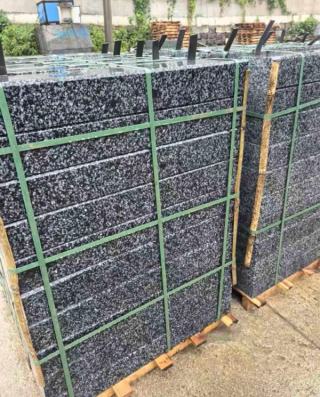
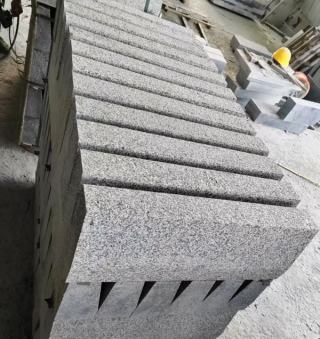
Premium Granite Kerbs for Luxury Architecture, Landmark Landscapes and Waterfront Developments
In contemporary landscape architecture, granite kerbs are no longer limited to separating roads, defining paving edges or protecting landscaped areas.
For architects, landscape designers, developers and project procurement teams across Europe, premium natural granite kerbs have become an essential architectural element that shapes spatial hierarchy, reinforces design language and enhances the overall quality of a project.
Whether used in luxury residential developments, boutique hotels, waterfront destinations, civic landscapes or commercial public spaces, Granite Kerbs and Granite Kerbstones do far more than establish physical boundaries. They help organise circulation, frame architectural lines and create a seamless transition between buildings, paving, planting and public spaces.
As European landscape design continues to move towards refined detailing, natural materials and distinctive visual identity, conventional grey and yellow engineering kerbs are no longer the preferred solution for many premium projects. Designers increasingly seek natural stone materials that offer stronger architectural character while maintaining long-term durability.
Against this background, Blue Mystic and Deep Sapphire have become two of the most distinctive Premium Granite Kerbs available for luxury landscape architecture.
Rather than serving high-volume municipal projects, these two blue granite varieties are specifically suited to projects where architectural quality, landscape identity and visual distinction are key priorities. They are widely specified for landmark buildings, luxury residential communities, boutique hotels, waterfront landscapes, premium commercial developments and private estates.
Unlike standard granite kerbs that primarily fulfil a structural function, Blue Mystic and Deep Sapphire are selected for their ability to become an integral part of architectural composition.
They define outdoor spaces while creating a visual dialogue between buildings, paving, water features and planting, resulting in landscapes that feel cohesive, refined and timeless.
Thanks to their naturally occurring blue-grey mineral tones, consistent crystalline structure and excellent fabrication capabilities, both materials can be manufactured into a wide range of products, including:
- Landscape Granite Kerbs
- Granite Landscape Edging
- Garden Granite Edging
- Cut-to-Size Granite Kerbs
These solutions allow designers to create unified landscape edge systems across projects of every scale—from civic plazas and waterfront promenades to boutique resorts and private gardens.
In addition, both Blue Mystic and Deep Sapphire support a complete range of premium surface finishes, including Flamed, Bush Hammered, Natural Split and Pineapple Textured finishes. Different finishes can be combined throughout a project to create subtle variations in texture, hierarchy and atmosphere while maintaining a consistent material palette.
From contemporary architecture to luxury residential landscapes, from commercial developments to waterfront public spaces, these two natural blue granites provide architects with a sophisticated edge solution that combines architectural aesthetics, engineering performance and long-term durability.
Why Are More European Designers Choosing Blue Granite Kerbs?
For decades, grey granite has been the dominant choice for kerbs throughout Europe.
Its neutral appearance, reliable performance and broad availability have made it the standard specification for municipal infrastructure, residential developments and public works.
However, today's premium landscape projects demand far more than functionality.
Architects increasingly view kerbs as part of the overall architectural language rather than simply engineering components.
In luxury residential developments, boutique hotels, civic plazas and commercial landscapes, granite kerbs now contribute to:
- Defining architectural lines
- Guiding pedestrian movement
- Organising outdoor spaces
- Creating visual continuity
- Enhancing project identity
- Connecting architecture with landscape design
As a result, natural blue granite has attracted growing attention from leading European landscape architects and architectural practices.
The true value of Blue Mystic and Deep Sapphire does not simply lie in their colour.
It lies in the way their natural mineral structure, refined crystalline texture and versatile surface finishes allow landscape boundaries to become elegant architectural features instead of purely functional elements.
Outstanding landscape design is rarely about making every element stand out.
Instead, it is about allowing every material to work together as part of one coherent architectural composition.
Blue Mystic and Deep Sapphire perfectly support this design philosophy.
Premium Granite Kerbs Are More Than Boundary Stones
Great architecture is rarely defined by decoration.
Instead, it is created through carefully balanced proportions, material selection, refined detailing and spatial continuity.
Granite kerbs play a surprisingly important role within this design language.
A well-designed natural granite edge creates a seamless connection between roads, paving, planting, water features and surrounding buildings, allowing every element of the project to feel intentionally composed.
Compared with conventional engineering kerbs, premium natural granite kerbs place greater emphasis on:
- Architectural proportion
- Continuous landscape lines
- Material consistency
- Natural interaction with light
- Long-term visual stability
- Harmony with surrounding architecture
For this reason, leading European projects increasingly evaluate natural stone not only by price, but also by mineral characteristics, fabrication quality, design flexibility and life-cycle value.
For architects, premium granite kerbs are no longer simple construction products.
They are architectural elements that define space, strengthen landscape identity and contribute to the overall character of a development.
Blue Mystic and Deep Sapphire have been developed precisely to meet these expectations, offering designers a premium natural stone solution that balances architectural aesthetics, engineering performance and timeless landscape design.
Blue Mystic & Deep Sapphire | Two Distinct Design Languages for Premium Granite Kerbs
Although Blue Mystic and Deep Sapphire both belong to the premium category of natural blue granite, they were never intended to serve the same architectural purpose.
Both materials can be manufactured into high-quality Granite Kerbs, Granite Kerbstones, Landscape Granite Kerbs and Cut-to-Size Granite Kerbs, yet each delivers a completely different visual language within landscape architecture.
Understanding these differences allows architects and landscape designers to specify the most suitable material according to the architectural concept rather than simply selecting a colour.
If Blue Mystic represents restraint, balance and continuity, then Deep Sapphire represents identity, artistic expression and visual focus.
Rather than competing with one another, these two natural granites complement different design philosophies and often work together within the same project.
Blue Mystic Granite Kerbs — Quiet Elegance for Contemporary Architecture
Blue Mystic is characterised by its refined blue-grey background and evenly distributed crystalline minerals.
Its appearance is calm, balanced and sophisticated without becoming visually dominant.
Viewed from a distance, Blue Mystic creates long, uninterrupted architectural lines that reinforce spatial order.
At closer range, subtle mineral crystals reveal natural depth and texture under changing daylight conditions, giving the stone an elegant appearance that standard grey granite rarely achieves.
This understated character makes Blue Mystic an excellent architectural background material.
Instead of becoming the centre of attention, it quietly enhances the quality of the surrounding architecture.
Why Do Architects Choose Blue Mystic?
Modern architecture increasingly values materials that support design rather than compete with it.
Blue Mystic follows this philosophy perfectly.
Compared with conventional Granite Kerbstones, Blue Mystic offers:
- A sophisticated blue-grey mineral tone
- Excellent compatibility with contemporary materials
- Consistent appearance across long landscape edges
- Refined crystalline texture
- Outstanding architectural balance
- Timeless visual quality
It works exceptionally well alongside:
- Exposed concrete
- Glass curtain walls
- Aluminium façades
- Stainless steel
- Natural timber
- Contemporary paving systems
Rather than dominating the architecture, Blue Mystic reinforces it.
Recommended Applications
Blue Mystic Granite Kerbs are particularly suitable for:
- Luxury residential developments
- Contemporary office campuses
- Public civic architecture
- Universities
- Healthcare facilities
- Boutique commercial districts
- Private estates
- Urban greenways
- Waterfront promenades
As Landscape Granite Kerbs, Blue Mystic creates continuous landscape edges that establish order without overwhelming the overall design.
Deep Sapphire Granite Kerbs — Creating Landmark Identity Through Natural Stone
While Blue Mystic focuses on architectural continuity, Deep Sapphire introduces a stronger visual presence.
Its naturally occurring deep ocean-blue mineral background, combined with rich crystalline textures, creates one of the most distinctive blue granites available for landscape architecture.
Throughout the day, changing natural light reveals multiple shades ranging from deep navy to sapphire blue and subtle steel-grey highlights.
These natural colour transitions cannot be replicated by engineered materials or artificial surface treatments.
For architects seeking to create memorable public spaces, Deep Sapphire offers an exceptional opportunity to introduce identity through natural stone.
Why Does Deep Sapphire Deliver Stronger Architectural Character?
Outstanding landmark projects rarely rely on excessive decoration.
Instead, they achieve recognition through carefully selected materials.
Deep Sapphire naturally attracts visual attention because its mineral composition changes under different lighting conditions.
During daylight, its sapphire-blue crystals become vibrant.
At sunset, warm lighting softens the surface while maintaining depth.
At night, architectural lighting highlights the stone's crystalline texture without appearing artificial.
This constantly changing interaction with light gives Deep Sapphire an artistic quality that remains elegant rather than dramatic.
Recommended Applications
Deep Sapphire Granite Kerbs are ideal for:
- Landmark civic buildings
- Luxury hotel entrances
- Museum landscapes
- Waterfront plazas
- Boutique commercial developments
- High-end residential estates
- Private villas
- Public art installations
- Signature landscape features
As Premium Granite Kerbs, Deep Sapphire contributes far more than physical boundary definition.
It becomes part of the architectural identity itself.
Two Granites, Two Architectural Approaches
Although both materials originate from the same premium blue granite family, their design intentions are fundamentally different.
Blue Mystic focuses on:
- Architectural continuity
- Long landscape lines
- Spatial organisation
- Visual restraint
- Calm elegance
- Large-scale consistency
It performs best as the primary landscape material throughout an entire development.
Deep Sapphire focuses on:
- Visual identity
- Architectural focal points
- Artistic expression
- Landscape landmarks
- Signature detailing
- Premium project character
Rather than covering an entire site, it is often used strategically to emphasise important architectural moments.
Combining Blue Mystic and Deep Sapphire Within One Project
Increasingly, European landscape architects specify both materials within the same development.
This approach creates hierarchy while maintaining material consistency.
For example:
Main Landscape Boundaries
Specify Blue Mystic Granite Kerbs to establish continuous architectural lines throughout the project.
Primary Building Entrance
Introduce Deep Sapphire Granite Kerbs to create a memorable arrival experience.
Waterfront Landscapes
Use Deep Sapphire Granite Landscape Edging to strengthen the relationship between natural stone and water.
The natural blue mineral tones complement reflective water surfaces exceptionally well.
Gardens and Courtyards
Specify Blue Mystic Garden Granite Edging to create subtle transitions between planting areas, paving and lawns.
Its restrained colour palette supports contemporary garden design without competing with vegetation.
Commercial Plazas
Blue Mystic provides continuity throughout the main circulation areas, while Deep Sapphire highlights plazas, feature spaces and architectural nodes.
This combination allows designers to introduce visual rhythm without creating abrupt material changes.
Natural Stone Should Support Architecture, Not Compete With It
The value of premium granite is never defined solely by rarity.
Its greatest contribution lies in its ability to support architectural design over many decades.
Blue Mystic provides calm, balanced continuity.
Deep Sapphire introduces identity and artistic expression.
Together, they form a comprehensive natural stone solution for modern landscape boundaries.
Whether specified as Granite Kerbs, Granite Curbs, Landscape Granite Kerbs, Granite Landscape Edging or Garden Granite Edging, both materials extend beyond the traditional role of kerbs.
They combine refined mineral textures, precision manufacturing and long-term durability to help architects create landscapes that are not only functional, but also visually distinctive and architecturally timeless.
Why Premium Granite Kerbs Have Become an Essential Element of Contemporary Landscape Architecture
In many traditional infrastructure projects, granite kerbs are specified primarily for practical purposes—separating roads from pavements, protecting landscaped areas and defining the structural edge of paving systems.
However, within contemporary architecture and high-end landscape design, their role has evolved significantly.
Today, Premium Granite Kerbs are no longer viewed simply as engineering products.
Instead, they have become architectural components that influence how people experience space, movement and proportion.
A carefully designed granite edge can guide circulation, frame important views, organise public space and establish a subtle connection between buildings and landscapes.
For this reason, architects increasingly consider granite kerbs at the same stage as paving materials, façade stone and planting design, rather than treating them as secondary construction elements.
This shift explains why premium natural granite has become the preferred choice for many of Europe's most prestigious landscape projects.
Granite Kerbs, Granite Kerbstones or Granite Curbs — Understanding the Terminology
International landscape projects often involve architects, contractors and suppliers from different countries.
As a result, three different terms are commonly used for essentially the same product.
Granite Kerbs is the preferred spelling throughout the United Kingdom, Ireland, Australia and many European specifications written in British English.
Granite Kerbstones is frequently used within architectural documents, technical specifications and natural stone catalogues across Europe, particularly when referring to traditional or natural stone kerb units.
Granite Curbs follows American English spelling and is widely used in the United States, Canada and international projects adopting US terminology.
Although the spelling differs, all three describe natural granite edge units designed to define roads, pavements, landscaped areas and public spaces.
For global manufacturers and suppliers, understanding these regional preferences helps improve communication while also increasing search visibility across different markets.
Landscape Granite Kerbs — Designing Spaces Rather Than Boundaries
Modern landscape architecture is increasingly defined by transitions rather than barriers.
Instead of creating rigid separations, designers now aim to establish continuous relationships between architecture, paving, planting and open space.
This is precisely where Landscape Granite Kerbs provide their greatest value.
Rather than functioning solely as road kerbs, they help organise outdoor environments by:
- defining pedestrian routes;
- framing public plazas;
- separating planting zones;
- shaping waterfront promenades;
- creating elegant transitions between different paving materials;
- reinforcing the geometry of contemporary architecture.
The most successful landscape projects rarely draw attention to the kerbs themselves.
Instead, the granite edge quietly strengthens the entire composition.
Garden Granite Edging — A Growing Trend in European Residential Design
Private gardens have become increasingly important within contemporary residential architecture.
Across Europe, homeowners and landscape architects are investing more heavily in outdoor living environments that feel as carefully designed as interior spaces.
This has led to growing demand for Garden Granite Edging.
Unlike concrete or plastic edging systems, natural granite provides:
- superior durability;
- authentic material character;
- long-term colour stability;
- refined architectural appearance;
- seamless integration with natural planting.
Blue Mystic is particularly effective in contemporary minimalist gardens where calm, neutral colours reinforce architectural simplicity.
Deep Sapphire, meanwhile, introduces stronger visual identity around water features, sculpture gardens and feature planting.
Both materials allow landscape designers to create elegant garden boundaries that mature naturally over time.
Granite Landscape Edging — Connecting Architecture With Nature
One of the strongest trends in modern landscape architecture is the gradual disappearance of hard visual boundaries.
Buildings are no longer designed as isolated objects.
Instead, they become part of a wider landscape composition.
Granite Landscape Edging plays a key role in achieving this transition.
It allows architects to connect:
- buildings with paving;
- paving with planting;
- planting with water features;
- public plazas with surrounding landscapes;
- circulation routes with outdoor living spaces.
When specified thoughtfully, granite edging becomes almost invisible.
Its purpose is not to dominate the design but to allow every surrounding element to work together harmoniously.
Why Architects Continue Choosing Natural Granite
The construction industry now offers countless alternative materials, including concrete, porcelain, engineered stone and composite products.
Despite these alternatives, natural granite continues to occupy a unique position within premium landscape architecture.
Its advantages extend well beyond durability.
Natural granite offers:
- genuine geological character;
- unique mineral composition;
- timeless appearance;
- excellent weather resistance;
- minimal maintenance;
- long service life;
- sustainable life-cycle performance.
Unlike manufactured materials, natural granite develops character without losing architectural quality.
For projects expected to remain in service for decades, this long-term stability represents significant value.
Premium Granite Kerbs Deliver More Than Structural Performance
Within luxury developments, project value is rarely determined by initial material cost alone.
Instead, architects evaluate materials according to their contribution throughout the entire life of a building.
Premium granite kerbs provide benefits that extend far beyond engineering requirements.
They contribute to:
- stronger architectural identity;
- improved spatial organisation;
- refined landscape detailing;
- consistent material language;
- reduced long-term maintenance;
- lasting visual quality.
This explains why premium natural granite is increasingly specified for:
- luxury hotels;
- waterfront developments;
- commercial plazas;
- civic architecture;
- private estates;
- boutique residential communities.
Rather than functioning as simple roadside products, Premium Granite Kerbs have become integral components of architectural design.
Blue Mystic and Deep Sapphire Represent Two Complementary Design Strategies
Although both materials belong to the same premium blue granite collection, they fulfil different architectural objectives.
Blue Mystic establishes calmness, continuity and balance across an entire development.
Deep Sapphire introduces emphasis, character and visual identity at carefully selected locations.
Together, they enable architects to create landscape edge systems that are both cohesive and expressive.
Whether manufactured as Granite Kerbs, Granite Kerbstones, Granite Curbs, Landscape Granite Kerbs, Granite Landscape Edging, Garden Granite Edging or fully customised Cut-to-Size Granite Kerbs, these two natural stones provide architects with exceptional flexibility while maintaining one consistent material language.
This ability to combine technical performance with architectural refinement is precisely why Blue Mystic and Deep Sapphire continue to gain recognition among leading European landscape architects and design practices.
Surface Finishes That Shape Architectural Character
Natural granite is never defined solely by its colour.
The way its surface is finished has an equally significant influence on how the material performs visually, functionally and architecturally.
Although Blue Mystic and Deep Sapphire originate from the same geological material regardless of finish, different surface treatments can completely transform the way each stone interacts with light, surrounding materials and human perception.
For architects, selecting the appropriate finish is therefore not simply a manufacturing decision.
It is part of the overall architectural concept.
Surface texture influences:
- visual character;
- reflection of natural light;
- tactile experience;
- pedestrian comfort;
- slip resistance;
- maintenance requirements;
- long-term appearance.
Rather than applying one finish throughout an entire development, many leading European landscape architects deliberately combine several finishes to create subtle hierarchy while maintaining a consistent material palette.
Blue Mystic and Deep Sapphire can both be manufactured as Flamed Granite Kerbs, Bush Hammered Granite Kerbs, Natural Split Granite Kerbs and customised architectural edge profiles, allowing designers to match different finishes with different functional zones.
Flamed Granite Kerbs — The Contemporary Standard for Public Architecture
Among all natural stone finishes, flamed granite remains one of the most widely specified throughout Europe.
The controlled thermal process gently fractures the stone surface, creating a fine textured finish with a natural matt appearance.
Unlike polished stone, flamed granite absorbs light rather than reflecting it.
This subtle surface quality helps architecture appear calmer, cleaner and more contemporary.
For Blue Mystic and Deep Sapphire, the flamed finish also enhances the natural blue-grey mineral background while maintaining excellent visual consistency across long landscape edges.
Why Architects Prefer Flamed Granite Kerbs
The popularity of Flamed Granite Kerbs extends beyond their appearance.
They combine architectural refinement with practical performance.
Key advantages include:
- elegant low-reflective surface;
- excellent slip resistance for pedestrian areas;
- consistent appearance over large installations;
- compatibility with contemporary paving materials;
- subtle mineral texture without visual distraction;
- excellent performance in public environments.
Because of these qualities, flamed granite has become the default specification for many modern landscape projects.
Recommended Applications
Flamed Granite Kerbs are particularly suitable for:
- civic architecture;
- commercial developments;
- luxury residential communities;
- hotel entrances;
- urban plazas;
- waterfront promenades;
- public parks;
- educational campuses.
Where long architectural lines require visual consistency, flamed finishes remain one of the strongest choices.
Bush Hammered Granite Kerbs — Texture That Enhances Human Experience
Bush hammered granite offers a different architectural expression.
Instead of producing a smooth matt surface, the stone is mechanically textured to create a fine, evenly distributed pattern.
Modern bush hammered finishes are considerably more refined than traditional heavy-textured surfaces.
The result is a tactile finish that softens the appearance of natural granite while maintaining excellent durability.
For Blue Mystic and Deep Sapphire, bush hammering also reveals subtle crystalline details that become visible under changing daylight.
Why Bush Hammered Granite Kerbs Are Increasingly Popular
Contemporary landscape architecture increasingly focuses on the human experience.
People do not simply observe outdoor spaces.
They walk through them.
They touch materials.
They experience changing light conditions throughout the day.
Bush hammered finishes contribute positively to this experience by offering:
- enhanced pedestrian comfort;
- refined surface texture;
- excellent slip resistance;
- soft light diffusion;
- subtle mineral expression;
- comfortable tactile qualities.
Rather than appearing industrial, modern bush hammered granite creates a welcoming atmosphere suitable for premium public spaces.
Recommended Applications
Bush Hammered Granite Kerbs perform particularly well within:
- boutique hotels;
- private gardens;
- residential courtyards;
- pedestrian streets;
- cultural institutions;
- landscape parks;
- public seating areas;
- leisure developments.
Where people interact closely with the landscape, this finish provides an ideal balance between function and elegance.
Natural Split Granite Kerbs — Bringing Geological Authenticity Into Landscape Design
As contemporary landscape architecture becomes increasingly nature-oriented, many designers seek materials that preserve their geological character.
Natural split finishes achieve precisely this objective.
Rather than creating mechanically uniform textures, the stone retains its naturally fractured surface.
Each piece becomes unique.
This authentic character allows architecture and landscape to merge more naturally.
For Blue Mystic and Deep Sapphire, natural split finishes reveal dramatic mineral depth while maintaining an understated architectural presence.
Recommended Applications
Natural Split Granite Kerbs are frequently specified for:
- waterfront landscapes;
- ecological parks;
- riverside promenades;
- woodland resorts;
- luxury estates;
- mountain developments;
- natural gardens;
- sculptural landscapes.
As Landscape Granite Kerbs, they establish strong relationships between built environments and surrounding nature.
Pineapple Textured Granite Kerbs — Creating Architectural Detail Through Surface Relief
Among the most distinctive finishes available for premium granite kerbs is the pineapple textured surface.
This finish produces carefully controlled three-dimensional relief, creating rich shadows and strong visual depth.
Unlike heavily textured finishes, pineapple texturing introduces architectural detail without overwhelming surrounding materials.
It is therefore commonly reserved for locations where designers wish to highlight specific landscape elements.
Recommended Applications
Pineapple Textured Granite Kerbs are particularly effective for:
- feature staircases;
- entrance plazas;
- architectural feature walls;
- sculpture gardens;
- premium commercial developments;
- hotel forecourts;
- landscape focal points;
- public art installations.
Rather than covering large areas, this finish performs best when used selectively to emphasise important architectural moments.
Why Europe's Finest Landscape Projects Combine Multiple Finishes
One of the defining characteristics of high-end landscape architecture is material hierarchy.
Instead of applying a single finish throughout an entire project, designers create subtle variations according to function.
For example:
Main circulation routes often specify Flamed Granite Kerbs to establish clean architectural order.
Pedestrian-focused areas frequently adopt Bush Hammered Granite Kerbs to improve comfort and tactile quality.
Natural landscape zones benefit from Natural Split finishes that strengthen connections with planting and water.
Feature spaces may incorporate Pineapple Textured Granite Kerbs to create architectural emphasis.
Although each finish serves a different purpose, all remain part of one unified material language.
This approach allows projects to feel both coherent and richly layered.
Surface Finish Is an Architectural Decision
For architects, surface finish is never simply a production process.
It determines how natural stone performs throughout the lifetime of a project.
Different finishes influence:
- architectural expression;
- interaction with light;
- pedestrian experience;
- landscape hierarchy;
- long-term maintenance;
- material ageing.
Because Blue Mystic and Deep Sapphire support such a comprehensive range of premium surface treatments, they can be manufactured as standard Granite Kerbstones, bespoke Cut-to-Size Granite Kerbs, or fully customised landscape edge systems tailored to individual architectural concepts.
This versatility is one of the key reasons these two blue granites continue to be specified for landmark architecture, luxury residential developments and premium public landscapes across Europe.
Precision Manufacturing | Why Cut-to-Size Granite Kerbs Have Become the New Standard for Premium Landscape Projects
In contemporary landscape architecture, material quality is no longer measured solely by the stone itself.
Precision manufacturing has become equally important.
A premium granite kerb with exceptional mineral quality can still compromise the appearance of a project if dimensions vary, joints become inconsistent or edge details are poorly executed.
For this reason, architects increasingly specify Cut-to-Size Granite Kerbs instead of relying on fixed standard dimensions.
Rather than adapting the design to suit available stone sizes, today's premium projects expect the stone to be manufactured according to the architectural drawings.
Blue Mystic and Deep Sapphire are therefore produced not only as standard Granite Kerbs, but also as highly customised landscape components capable of matching complex architectural geometries with exceptional accuracy.
Modern Architecture Requires More Than Standard Kerb Dimensions
Standard granite kerbs remain suitable for many municipal infrastructure projects.
Typical dimensions such as:
- 1000 × 300 × 150 mm
- 1000 × 300 × 180 mm
- 1000 × 250 × 150 mm
continue to serve roads, highways and conventional public works effectively.
However, premium landscape architecture rarely follows repetitive layouts.
Today's projects often include:
- curved roads;
- flowing pedestrian routes;
- organic garden layouts;
- complex waterfront edges;
- bespoke entrance plazas;
- irregular landscape geometry.
These designs cannot always be realised successfully using only standard products.
Consequently, customised granite fabrication has become an essential part of contemporary architectural practice.
What Does Cut-to-Size Granite Kerbs Really Mean?
Many people assume Cut-to-Size simply refers to changing the length of a kerb.
In reality, it represents a comprehensive manufacturing approach.
Each granite unit is produced specifically for its intended location within the project.
Customisation may include:
- length;
- width;
- height;
- edge profiles;
- chamfers;
- bullnose detailing;
- drainage grooves;
- curved geometry;
- internal and external radii;
- bespoke surface finishes.
Instead of performing adjustments on site, every component is manufactured under controlled factory conditions, improving both installation quality and construction efficiency.
Precision Manufacturing Creates Better Architecture
The difference between ordinary construction and premium architecture often lies in details measured in millimetres.
Accurate fabrication helps achieve:
- cleaner joint lines;
- consistent kerb alignment;
- smoother curves;
- precise transitions;
- improved visual continuity;
- faster installation.
Although individual dimensional differences may appear insignificant during production, they become immediately visible once hundreds of metres of granite kerbs are installed across a landscape.
Precision therefore contributes directly to architectural quality.
Common Types of Custom Granite Kerbs
Blue Mystic and Deep Sapphire support a wide range of architectural fabrication options.
Long Continuous Granite Kerbs
Large commercial developments increasingly favour longer kerb units where transportation and installation conditions permit.
Longer units reduce visible joints and strengthen the continuity of architectural lines.
They are commonly specified for:
- hotel forecourts;
- commercial boulevards;
- civic plazas;
- waterfront promenades.
Curved Granite Kerbs
Curved landscape geometry has become a defining feature of contemporary design.
Natural granite can be manufactured into curved units for:
- roundabouts;
- riverside walkways;
- private estates;
- sculpture gardens;
- waterfront developments;
- organic landscape layouts.
Factory-produced curved kerbs achieve smoother geometry than site-cut alternatives.
Granite Kerbs for Water Features
Reflecting pools, fountains and water gardens demand particularly high dimensional accuracy.
Custom fabrication allows architects to specify:
- internal curves;
- external curves;
- concealed joints;
- precision radii;
- bespoke drainage details.
This level of precision contributes significantly to the visual quality of water features.
Bespoke Architectural Details
Beyond conventional road kerbs, custom granite fabrication also includes:
- stair edging;
- seating elements;
- planter edges;
- retaining features;
- terrace transitions;
- feature walls;
- integrated landscape details.
By using one consistent material throughout a project, architects can establish a unified architectural language.
Granite Kerb Profiles | Choosing the Right Edge Detail
One aspect often overlooked outside professional practice is the importance of Granite Kerb Profiles.
The profile of a kerb influences not only construction performance but also the character of the finished landscape.
Blue Mystic and Deep Sapphire can be manufactured in a variety of architectural profiles.
Vertical Kerb
The cleanest and most contemporary profile.
Frequently specified for:
- civic architecture;
- commercial developments;
- modern residential projects.
Its crisp geometry complements minimalist design.
Chamfered Kerb
A small chamfer softens the upper edge while reducing the risk of edge damage.
Widely used in:
- residential developments;
- educational facilities;
- pedestrian streets;
- mixed-use projects.
Bullnose Kerb
Rounded upper edges provide a softer architectural appearance.
Particularly suitable for:
- boutique hotels;
- luxury gardens;
- children's play environments;
- leisure developments.
Splayed Kerb
A sloping face allows gradual vehicle access.
Typically specified for:
- residential driveways;
- hotel drop-off zones;
- parking facilities;
- service entrances.
Bespoke Profiles
Many premium projects require completely custom edge profiles developed specifically for one architectural concept.
These profiles may incorporate drainage, lighting, seating or integrated landscape functions.
Digital Design Has Changed Granite Manufacturing
The adoption of BIM, digital fabrication and advanced CAD workflows has transformed natural stone production.
Architects increasingly expect every granite component to correspond precisely with digital project models.
Modern fabrication therefore includes:
- digital shop drawings;
- production numbering;
- installation sequencing;
- zone identification;
- coordinated packaging.
These systems significantly improve construction efficiency while reducing installation errors on site.
Why Manufacturing Quality Matters More Than Ever
Material selection is only the first step.
The overall success of a landscape project ultimately depends on manufacturing consistency.
Architects pay close attention to:
- dimensional accuracy;
- edge quality;
- profile consistency;
- surface orientation;
- joint alignment;
- visual continuity.
High-quality fabrication allows the natural beauty of Blue Mystic and Deep Sapphire to be expressed without interruption.
It ensures that the finished landscape reflects the architect's original vision rather than the limitations of production.
Premium Granite Kerbs Begin Long Before Installation
Exceptional landscape projects are not created solely by choosing premium natural stone.
They result from the combination of thoughtful design, accurate manufacturing and careful installation.
By combining natural geological beauty with precision fabrication, Blue Mystic and Deep Sapphire can be manufactured as standard Granite Kerbs, bespoke Cut-to-Size Granite Kerbs, Landscape Granite Kerbs and highly customised architectural edge systems.
This ability to integrate seamlessly into complex architectural projects is one of the defining reasons these two natural blue granites continue to be specified for luxury developments, landmark public spaces and high-end landscape architecture throughout Europe.
Engineering Performance | Why Natural Granite Continues to Define Premium Landscape Boundaries
When specifying granite kerbs for high-end developments, architects rarely make decisions based on appearance alone.
Visual quality is important, but it represents only one part of the material selection process.
For projects expected to remain in service for decades, equal attention must be given to technical performance, long-term durability and lifecycle value.
This is one of the principal reasons why Natural Granite Kerbstones continue to be specified across Europe for luxury residential developments, landmark public spaces, commercial districts and civic infrastructure.
Rather than following short-term design trends, natural granite has consistently demonstrated its ability to combine architectural beauty with reliable engineering performance.
Blue Mystic and Deep Sapphire continue this tradition by offering a natural material capable of supporting both ambitious design concepts and demanding outdoor environments.
Natural Granite Is Formed for Longevity
Unlike manufactured paving materials, natural granite has already undergone millions of years of geological development before it reaches the construction site.
Its dense crystalline structure is created through the slow cooling of molten rock deep beneath the earth's surface.
This natural formation produces a material with exceptional structural integrity and long-term stability.
Its appearance is not created by surface coatings, pigments or printed textures.
Instead, every colour variation and crystalline detail is part of the stone itself.
For Blue Mystic and Deep Sapphire, the distinctive blue-grey character originates entirely from naturally occurring mineral composition.
As lighting conditions change throughout the day, these minerals respond with subtle variations in colour and depth that remain authentic throughout the lifetime of the material.
Performance Across Different European Climates
One of the greatest advantages of natural granite is its adaptability.
From Scandinavian winters to Mediterranean coastlines, landscape materials are exposed to dramatically different environmental conditions.
Architects therefore require materials capable of performing reliably across a broad range of climates.
Northern Europe
Countries such as Sweden, Norway, Finland, Denmark, Germany and Poland experience repeated freeze-thaw cycles throughout the year.
Projects in these regions typically evaluate natural stone according to:
- material density;
- water absorption characteristics;
- freeze-thaw behaviour;
- dimensional stability;
- long-term durability.
When correctly specified, manufactured and installed, natural granite has a long history of successful performance in demanding northern climates.
Equally important are appropriate sub-base design, drainage and installation practices, all of which contribute to long-term project performance.
Western Europe
In countries including the Netherlands, Belgium, France and the United Kingdom, rainfall and humidity remain significant design considerations.
Landscape materials are therefore expected to maintain their appearance while supporting regular cleaning and public use.
Surface finishes such as Flamed Granite Kerbs and Bush Hammered Granite Kerbs are frequently selected because they combine architectural refinement with practical performance in wet environments.
Southern Europe and the Middle East
Projects located in Spain, Italy, Portugal and the Gulf region often experience prolonged sunlight, elevated temperatures and intense UV exposure.
Because the colour of natural granite originates from its mineral composition rather than applied coatings, it retains its authentic appearance without relying on artificial surface treatments.
This contributes to the timeless architectural character for which natural granite is widely recognised.
Coastal Environments
Waterfront developments introduce additional environmental considerations, including:
- salt-laden air;
- humidity;
- wind exposure;
- temperature variation.
In these locations, long-term performance depends not only on the natural stone itself but also on appropriate detailing, fixing systems, drainage design and overall project engineering.
Material selection should therefore always be considered as part of a complete construction system.
Sustainability Through Longevity
Sustainability within architecture is increasingly evaluated through the entire lifecycle of a building rather than its initial construction phase alone.
Natural granite performs particularly well within this approach.
Instead of requiring frequent replacement, high-quality granite can remain in service for decades while maintaining both structural integrity and architectural value.
Its longevity reduces material consumption, maintenance requirements and long-term environmental impact.
For architects pursuing sustainable landscape strategies, durability itself becomes one of the most important environmental advantages.
Technical Documentation Supports Better Specification
Professional architectural projects increasingly require comprehensive technical documentation during the specification process.
Depending on project location, application and product type, natural granite manufacturers may provide documentation such as:
- technical data sheets;
- dimensional tolerances;
- declarations of performance (DoP), where applicable;
- relevant test reports;
- physical property data;
- project-specific technical information.
Documentation requirements vary according to applicable regulations, project specifications and intended use.
Providing clear technical information helps architects, consultants and contractors make informed decisions throughout design and procurement.
Quality Control Begins at the Quarry
Consistency across an entire landscape project depends upon much more than selecting an attractive natural stone.
Effective quality management extends throughout every stage of production.
Professional manufacturing typically includes:
- careful block selection;
- colour grading;
- production planning;
- dimensional inspection;
- finish consistency;
- final quality checks;
- protective packaging.
For Blue Mystic and Deep Sapphire, thoughtful block selection allows the natural variation of genuine granite to be retained while achieving the visual consistency expected within large architectural projects.
Long-Term Value Matters More Than Initial Cost
Premium developments are increasingly assessed according to total lifecycle value rather than initial procurement cost.
Architects therefore evaluate materials based upon questions such as:
- How will the material age over time?
- Will maintenance remain manageable?
- Can replacement materials be sourced consistently?
- Will the project continue to look appropriate decades later?
Natural granite consistently performs well because its appearance is timeless rather than fashionable.
Instead of becoming visually outdated, it matures naturally alongside the architecture it supports.
Engineering Performance Supports Architectural Freedom
The most successful landscape materials rarely draw attention to their technical qualities.
Instead, reliable engineering performance allows architects to focus confidently on design.
Blue Mystic and Deep Sapphire provide that confidence.
Whether specified as Architectural Granite Kerbs, Luxury Granite Kerbs, Landscape Granite Kerbs, Granite Kerbs for Public Spaces or Granite Kerbs for Commercial Projects, both materials combine geological authenticity, precision manufacturing and long-term durability within one coherent architectural solution.
For this reason, natural granite continues to define the landscape boundaries of many of Europe's most distinguished architectural projects—not simply because it performs well today, but because it continues performing beautifully for generations.
Architect's Specification Guide | Choosing the Right Granite Kerbs for Premium Landscape Projects
Selecting natural granite kerbs is not simply a matter of choosing a colour.
For architects, landscape architects and project consultants, the most successful specifications result from balancing architectural vision, functional requirements, environmental conditions and long-term project objectives.
Blue Mystic and Deep Sapphire have been developed to serve different architectural intentions rather than competing with one another.
Understanding these differences enables designers to specify each material where it performs best.
When to Specify Blue Mystic Granite Kerbs
Blue Mystic is recommended when the objective is to create calm, continuous and highly coordinated landscape architecture.
Its balanced blue-grey appearance supports modern architectural compositions without dominating surrounding materials.
Blue Mystic is particularly suitable for:
- contemporary residential communities;
- office campuses;
- civic buildings;
- educational facilities;
- healthcare environments;
- mixed-use developments;
- urban parks;
- large public landscapes.
Recommended finishes include:
- Flamed Granite Kerbs
- Bush Hammered Granite Kerbs
These finishes reinforce the clean architectural language for which Blue Mystic is recognised.
When to Specify Deep Sapphire Granite Kerbs
Deep Sapphire should be considered when a project requires stronger visual identity or distinctive architectural character.
Its naturally rich sapphire-blue mineral structure introduces greater depth and spatial emphasis.
Deep Sapphire performs particularly well within:
- luxury hotels;
- waterfront developments;
- landmark civic projects;
- museums;
- boutique commercial districts;
- private estates;
- sculpture gardens;
- feature public spaces.
Recommended finishes include:
- Flamed
- Natural Split
- Pineapple Textured
These finishes enhance the natural crystalline structure while allowing the stone to become a defining architectural feature.
Combining Both Granites Within One Project
Many contemporary European landscape schemes successfully combine Blue Mystic and Deep Sapphire.
Rather than creating contrast, this approach establishes architectural hierarchy.
For example:
Blue Mystic may define the primary circulation network and continuous landscape boundaries.
Deep Sapphire may highlight entrances, waterfront edges, feature plazas and important architectural moments.
This strategy allows designers to maintain one coherent material palette while introducing carefully controlled visual emphasis.
Specification Checklist for Architects
Before confirming a granite kerb specification, it is advisable to review the following aspects.
✔ Confirm the overall architectural concept.
✔ Select the appropriate natural granite variety.
✔ Determine the required kerb profile.
✔ Decide between standard units and Cut-to-Size Granite Kerbs.
✔ Select surface finishes according to different functional zones.
✔ Coordinate granite with paving, planting and surrounding materials.
✔ Review dimensional tolerances.
✔ Confirm technical documentation where required.
✔ Approve physical samples before production.
✔ Coordinate fabrication with installation sequencing.
This structured approach helps minimise construction changes while improving project quality.
Frequently Asked Questions
What is the difference between Granite Kerbs and Granite Kerbstones?
Both terms describe essentially the same product.
Granite Kerbs is the preferred spelling in British English, while Granite Kerbstones is commonly used in technical specifications and natural stone catalogues throughout Europe.
What is the difference between Granite Kerbs and Granite Curbs?
The difference is linguistic rather than technical.
Granite Kerbs follows British English spelling.
Granite Curbs follows American English spelling.
Both refer to natural granite edge units used within roads, landscapes and public spaces.
Why are Premium Granite Kerbs specified for luxury developments?
Premium granite offers:
- refined architectural appearance;
- consistent mineral quality;
- precision fabrication;
- excellent durability;
- long-term visual value.
These characteristics make it particularly suitable for projects where design quality remains important throughout the life of the development.
Which finish is most suitable for contemporary architecture?
Flamed granite remains the most frequently specified finish because it combines understated aesthetics, excellent slip resistance and consistent appearance across large-scale installations.
Are Bush Hammered Granite Kerbs suitable for pedestrian areas?
Yes.
Their textured surface provides excellent slip resistance while maintaining an elegant architectural appearance, making them particularly suitable for plazas, pedestrian streets, gardens and public landscapes.
Can granite kerbs be manufactured to custom dimensions?
Yes.
Blue Mystic and Deep Sapphire can both be supplied as Cut-to-Size Granite Kerbs, manufactured according to project drawings, including bespoke dimensions, profiles, curves and architectural detailing.
Are these materials suitable for landscape edging?
Absolutely.
Both materials are widely specified as:
- Landscape Granite Kerbs
- Granite Landscape Edging
- Garden Granite Edging
for gardens, parks, waterfronts, commercial landscapes and residential developments.
Can custom architectural profiles be produced?
Yes.
Depending on project requirements, fabrication may include:
- chamfered profiles;
- bullnose profiles;
- splayed kerbs;
- curved units;
- bespoke architectural profiles;
- integrated drainage details.
Creating Landscape Boundaries That Endure
Exceptional landscape architecture is defined by more than beautiful materials.
It depends upon thoughtful design, technical precision and the careful integration of every architectural element.
Natural granite kerbs quietly influence how people experience outdoor spaces.
They organise movement, reinforce architectural geometry and connect buildings with their surrounding landscape.
Blue Mystic and Deep Sapphire have been developed to fulfil precisely this role.
Whether manufactured as Granite Kerbs, Granite Kerbstones, Granite Curbs, Landscape Granite Kerbs, Granite Landscape Edging, Garden Granite Edging or bespoke Cut-to-Size Granite Kerbs, they provide architects with a natural stone solution that combines refined aesthetics, precision manufacturing and dependable long-term performance.
For luxury residential developments, landmark public spaces, boutique hospitality projects and contemporary landscape architecture, these two premium blue granites offer far more than durable edge restraints.
They become part of the architectural identity itself—helping create landscapes that remain elegant, functional and relevant for decades to come.