
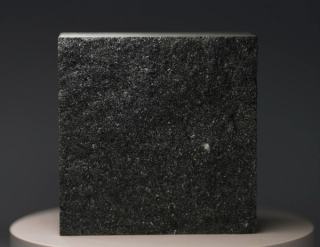
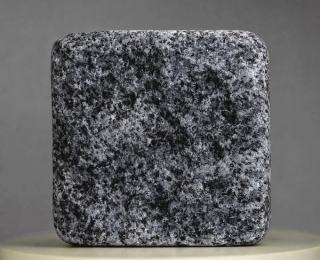
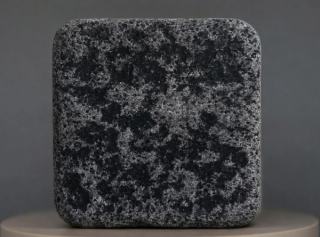
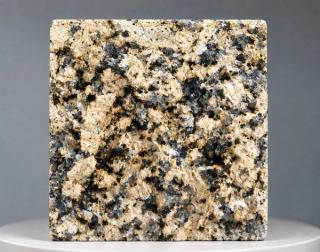
Natural granite is a multi mineral aggregate stone; subtle natural veining is a normal physical characteristic. However, large scale, dense mineral imperfections represent a core issue arising from substandard raw material screening and quality control, and constitute a quality risk that high-end European landscape design projects actively seek to avoid.
The production of standard, mass-market Horseshoe Stone is often haphazard, lacking a tiered raw material screening process. As a result, iron veins, dark polycrystalline clusters and superficial mineral spots inherent in the raw stone are not removed in advance. Once installed, this frequently leads to three common defects: yellowing at the base, dense black spots and irregular mottling. These defects are structural mineral flaws that run through the entire stone body; they are not merely surface stains and cannot be remedied through cleaning, polishing or refurbishment. They constitute irreversible, permanent quality issues.
Yellow staining is the primary defect that undermines the aesthetic quality of high-end landscaping. When active iron minerals within the stone are exposed to outdoor rainwater, moisture and oxygen over time, they continue to oxidise and spread, forming streaky or patchy yellow-brown patterns. When laid in large quantities, the resulting overall colour variation and mottling, coupled with chaotic patterns, significantly diminish the high-end aesthetic of courtyard paving, municipal footpaths and commercial landscapes. This is also a key issue that leads to immediate rejection by European landscape architects during inspection.
Dense black spots and irregular blemishes severely compromise the visual uniformity of the stone. Low-grade raw materials feature haphazard mineral distribution and insufficient crystal purity, resulting in a murky, dull surface. This completely negates the clean, dense and uniform natural premium texture of dark granite, failing to meet the aesthetic and engineering standards required for minimalist courtyards, understated luxury water features and high-end outdoor paving.
Most low-end processing plants rely solely on surface polishing and skinning to mask impurities, which can only conceal surface flaws temporarily. The active minerals deep within the stone remain, and after three to six months of exposure to the elements outdoors, these impurities will repeatedly resurface, causing yellowing and the reappearance of stains. This leads to after-sales issues such as project repairs, colour inconsistencies and a diminished aesthetic value of the landscape.
High-end, carefully selected Horseshoe Stone rejects this crude production model, instead establishing a multi-tiered standardised quality control system comprising raw stone pre-selection, manual precision inspection and finished surface treatment. During the raw material cutting stage, substandard blocks with excessive iron content, dense mineral veins or clusters of impure crystals are immediately discarded, eliminating quality issues such as yellowing, staining and blackening at the very source of production.
Excessive mineral impurities not only compromise aesthetics but also significantly shorten the stone’s lifespan. The oxidation of iron-containing minerals continuously erodes the crystalline bond structure of granite, causing affected areas to gradually become porous, powdery and prone to flaking, resulting in surface pitting and damage. Consequently, high-end landscape projects prioritise raw stone that has undergone multi-stage precision screening, as its installation stability, weather resistance and overall integrity far surpass those of standard commercial stone.
European procurement of high-end outdoor stone places the utmost importance on raw material purity and long-term weather resistance. High-end landscape projects, private luxury gardens and premium public landscapes strictly prohibit the use of stone with extensive yellow veining or dense black spots. Industry-standard inspection criteria are clear: if visible defects account for more than 10% of a batch, the raw material is deemed to have failed screening and is classified as substandard.
The subtle, natural veining of natural stone offers a unique aesthetic appeal; however, extensive mineral impurities—which can be avoided through careful processing—are by no means a natural characteristic of the stone. Rather, they are a direct reflection of compromised quality control during production and a downgrading of raw material grades. Selecting highly refined, multi-screened ‘Horseshoe Stone’ ensures pure colouration, a consistent finish and enduring weather resistance, fully meeting the implementation standards for high-end landscapes worldwide.
— ARTICLE
Analysis of Impurity Identification and High-End Selection Processes for Horseshoe Stone
Architectural Grade Granite SettsRust-Free Luxury Exterior StonePremium Sorted Landscape Cobblestone